Thanks a lot to Dag, a Norwegian Telephone collector who helped me a lot with finding important background information.
This Elektrisk Buerau made device was commissioned by the Norwegian Army in 1930, acquired in 1931, and remained in use up to and during WWII. Elektrisk Bureau had already developed and sold a very similar device to the Turkish Army in 1929, and that earlier model served as the basis for the Norwegian version. In 1932, a dial unit and an amplifier attachment were added. In 1934, minor updates were made to the electrical system: the simple primary/secondary coil was replaced with an anti-sidetone coil setup. The earlier units were then designated as the “A model", while the updated versions became the “B model". An oval plate was mounted on top of the sets, marked with either A or B accordingly [1][2][5][6][11][12].
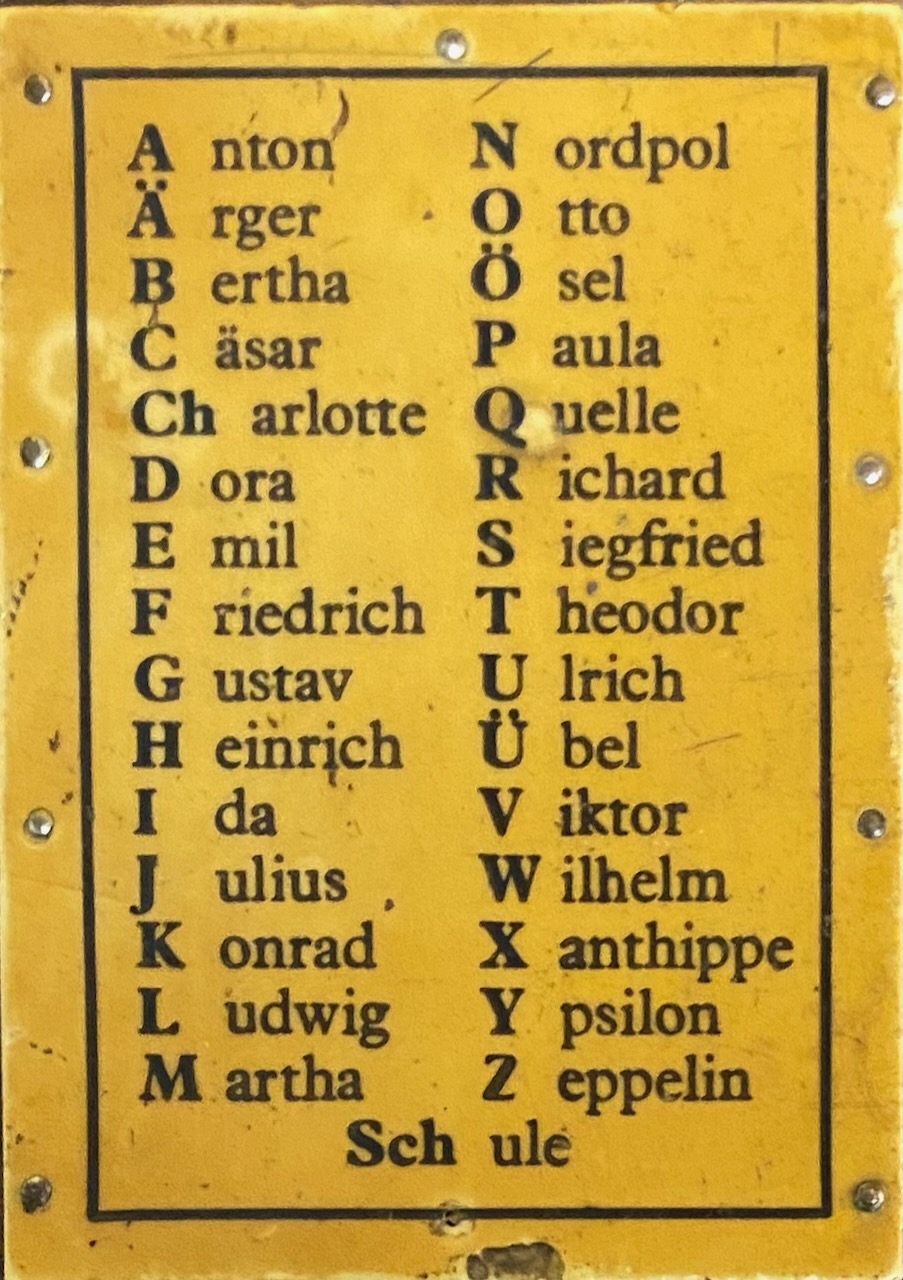
This specimen is a later “B” version, produced after 1934. It was seized by the Germans during the occupation of Norway, as indicated by the German spelling table attached to it. Most of the “B model” devices found on DigitaltMuseum also appear with German spelling tables and sometimes German user guides attached.
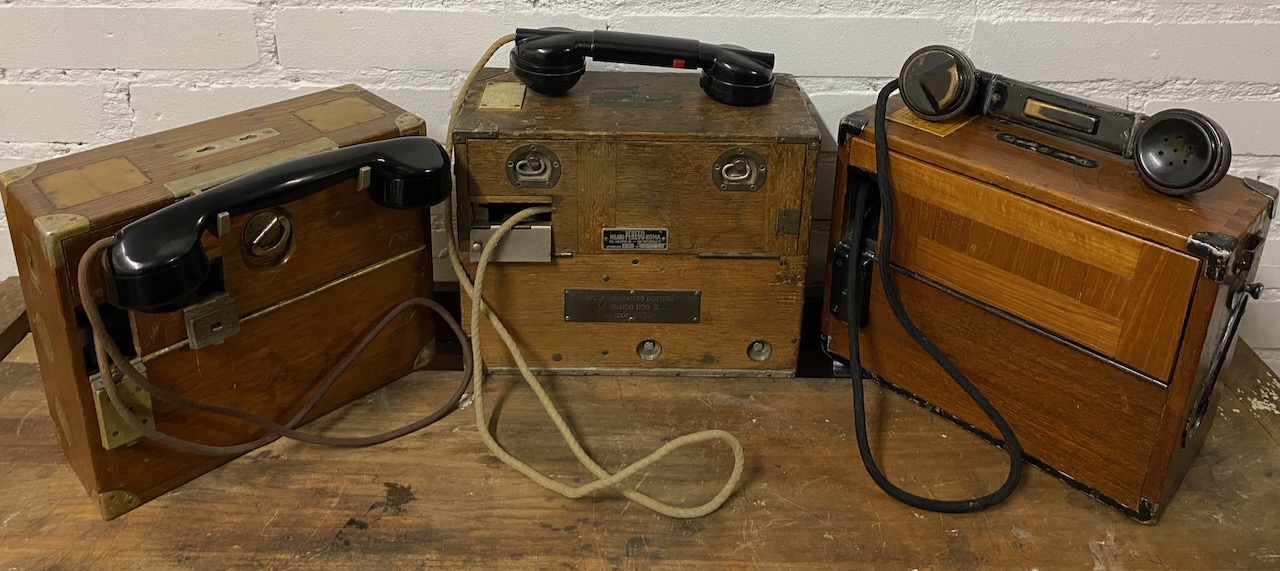
The mechanical construction is very similar to the Italian G.A. Mod. 1931 and the Austrian M35. The resemblance is unlikely to be coincidental, but it remains unclear which design came first. My assumption is that the Elektrisk Bureau model for the Turkish Army (~1929) was probably the original.
"New Field Telephone Instruments" (Ericsson Review 1935) [3]:
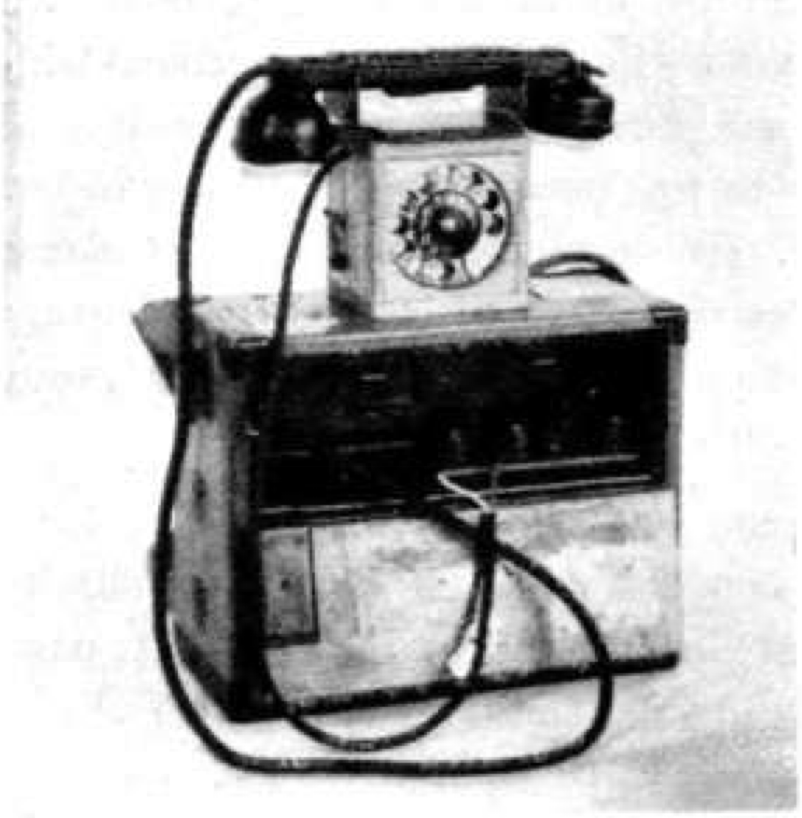
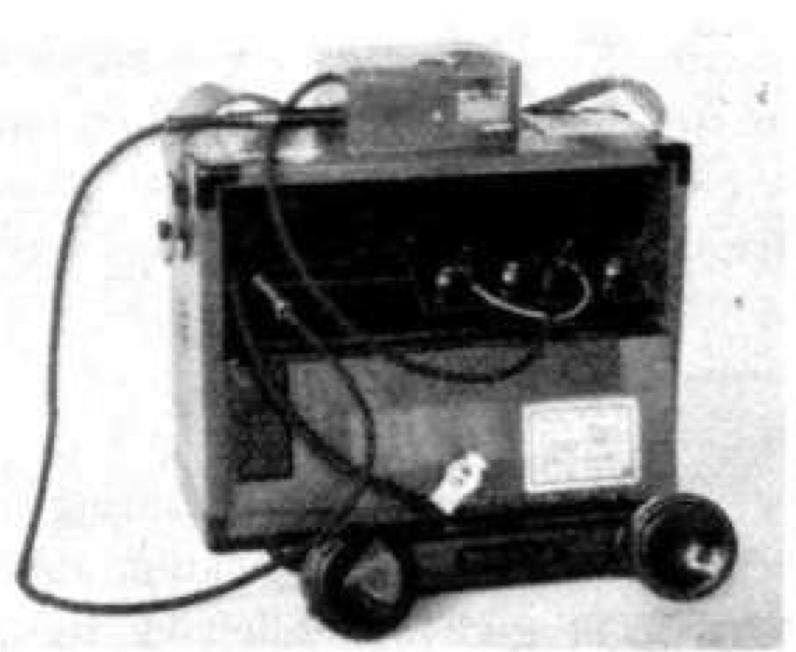
The field telephone instrument constructed by AS Elektrisk Bureau, Oslo, is designed for connection to one or two-wire telephone networks on the LB system. For connection to CB or automatic systems, the instrument requires additional equipment in the form of a special set mounted on top of the instrument case. This equipment comprises condenser, holding coil, switch and dial. A set for voice-frequency telegraphy can likewise be mounted on the top of the instrument case. The instrument is equipped with a parallel jack and a series jack as well as a connecting cord with plug at either end so that two instruments at an intermediate station may be connected either in parallel or in series. [...] An earthing rod is attached to the carrying strap and wire for earthing is to be found in the accessory compartment which also contains various tools.
A fitting mounted into the instrument top can take up either an external dial unit, an external buzzer unit [3] or also an amplifier unit [6].
(*A weight of 7.8kg is often documented (eg. [3]), It can be assumed this was including accessories like a patch-cord, headgear and carrying strap, and maybe also version "A model" was slightly heavier in general).
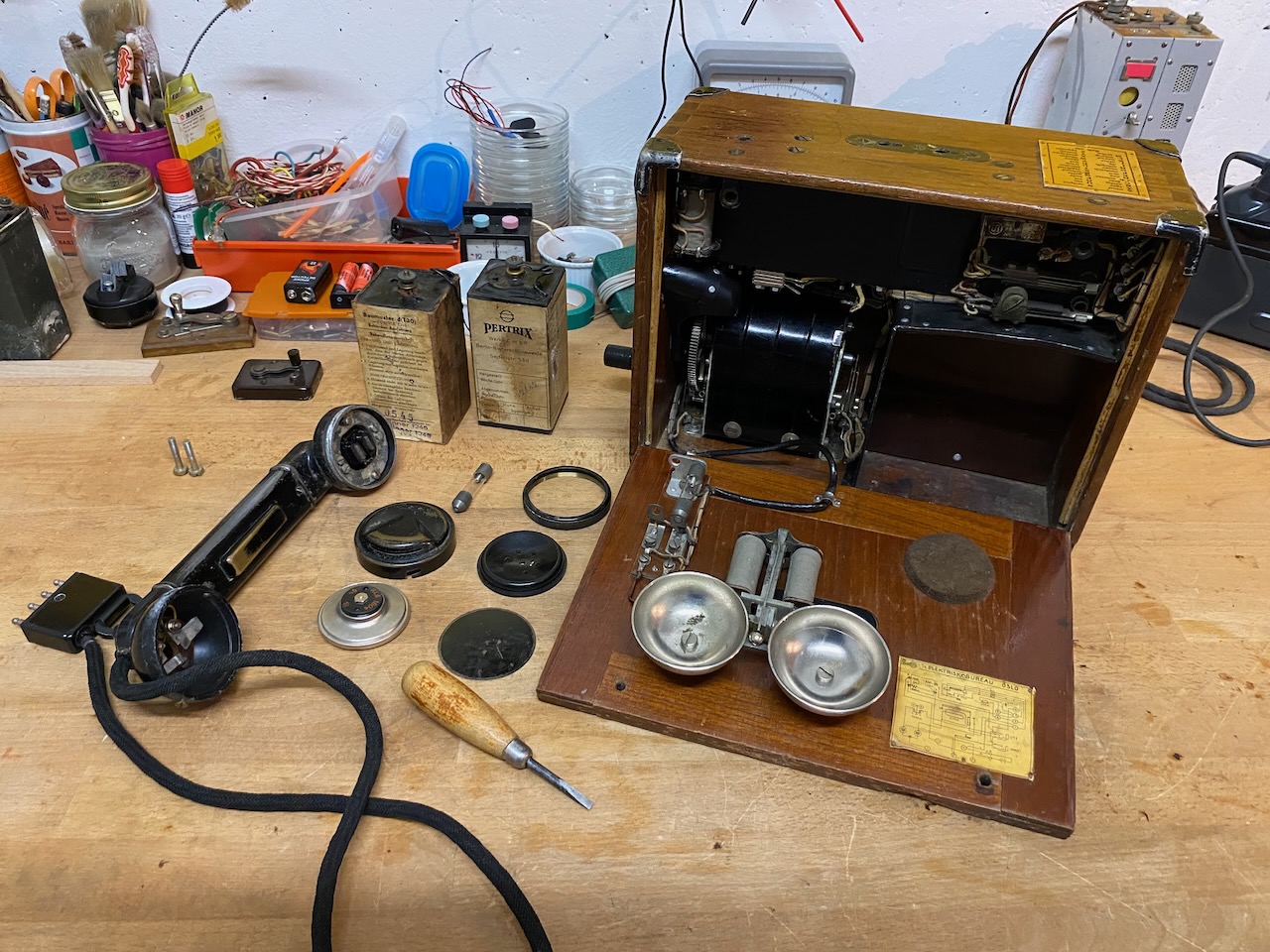
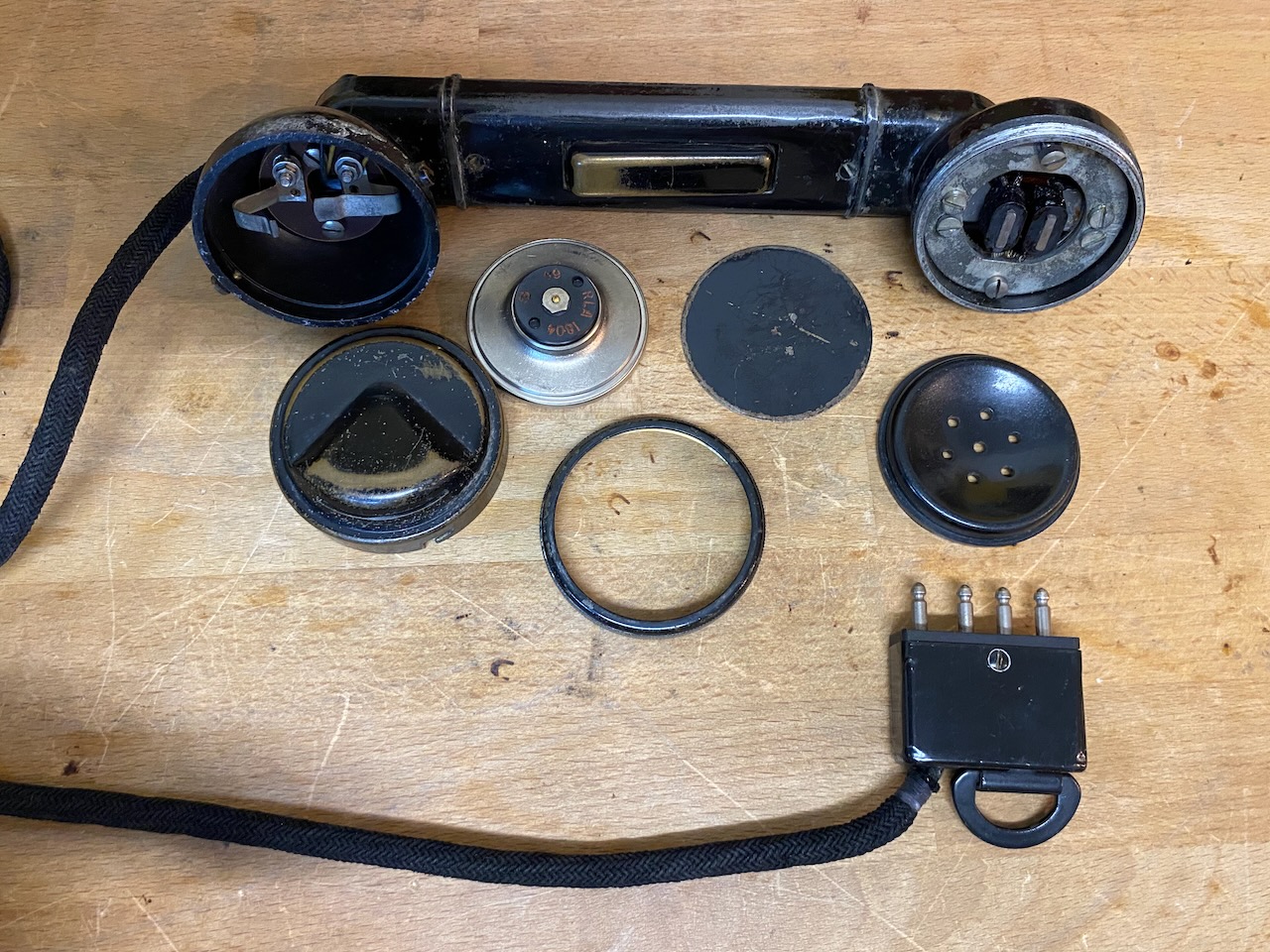
Disassembled.
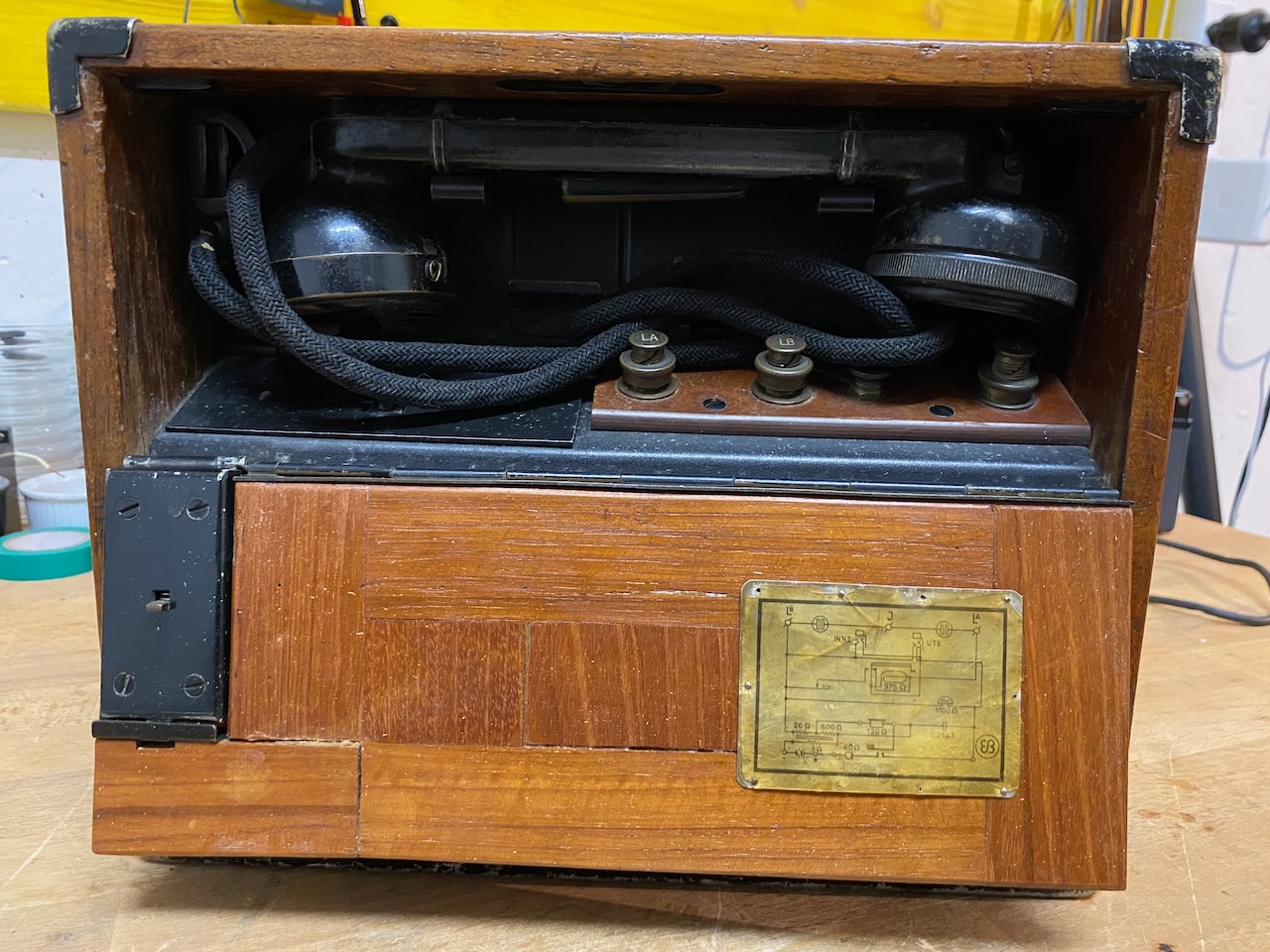
Wiring diagram mounted inside back door.
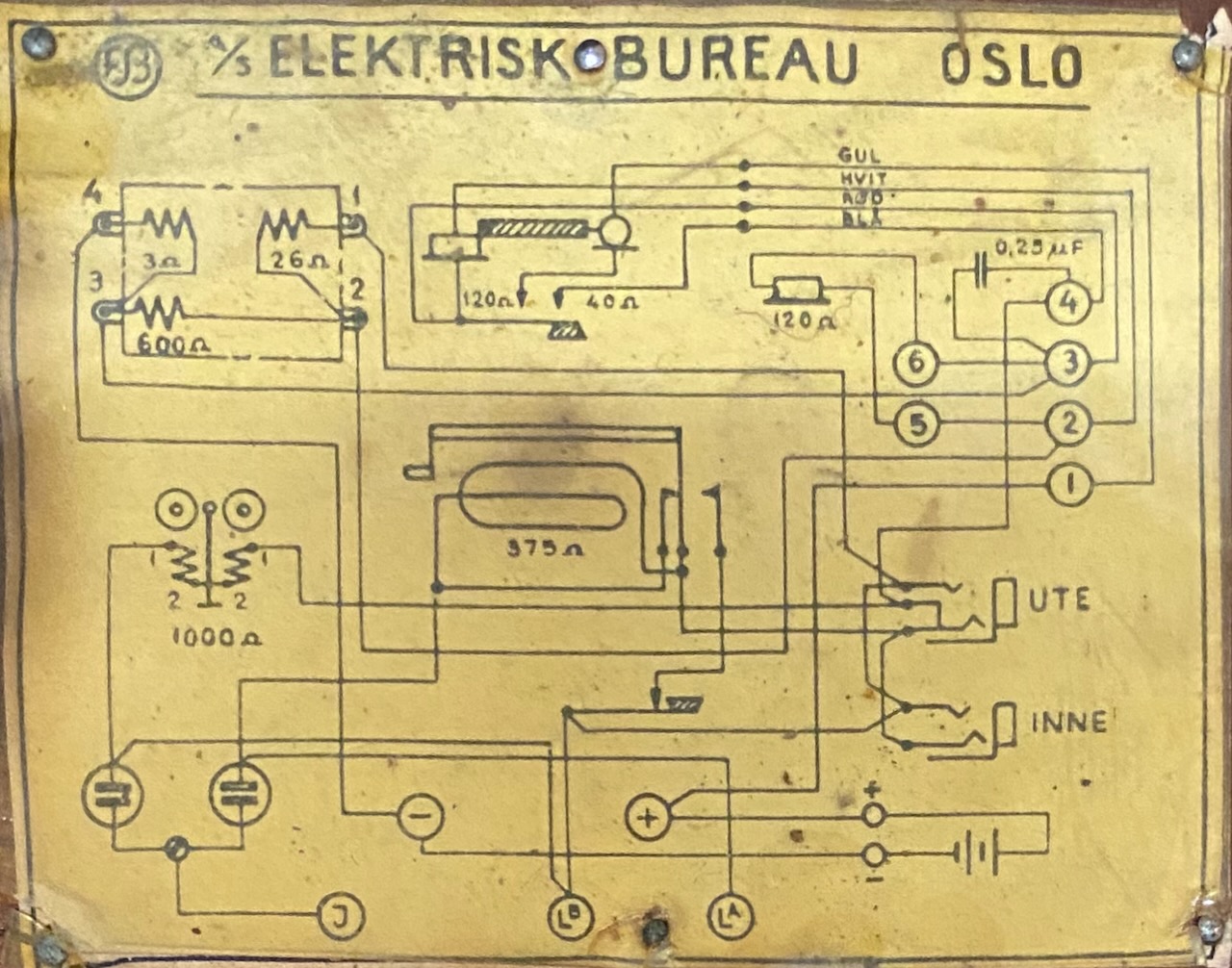
Electrical diagram mounted inside front door.
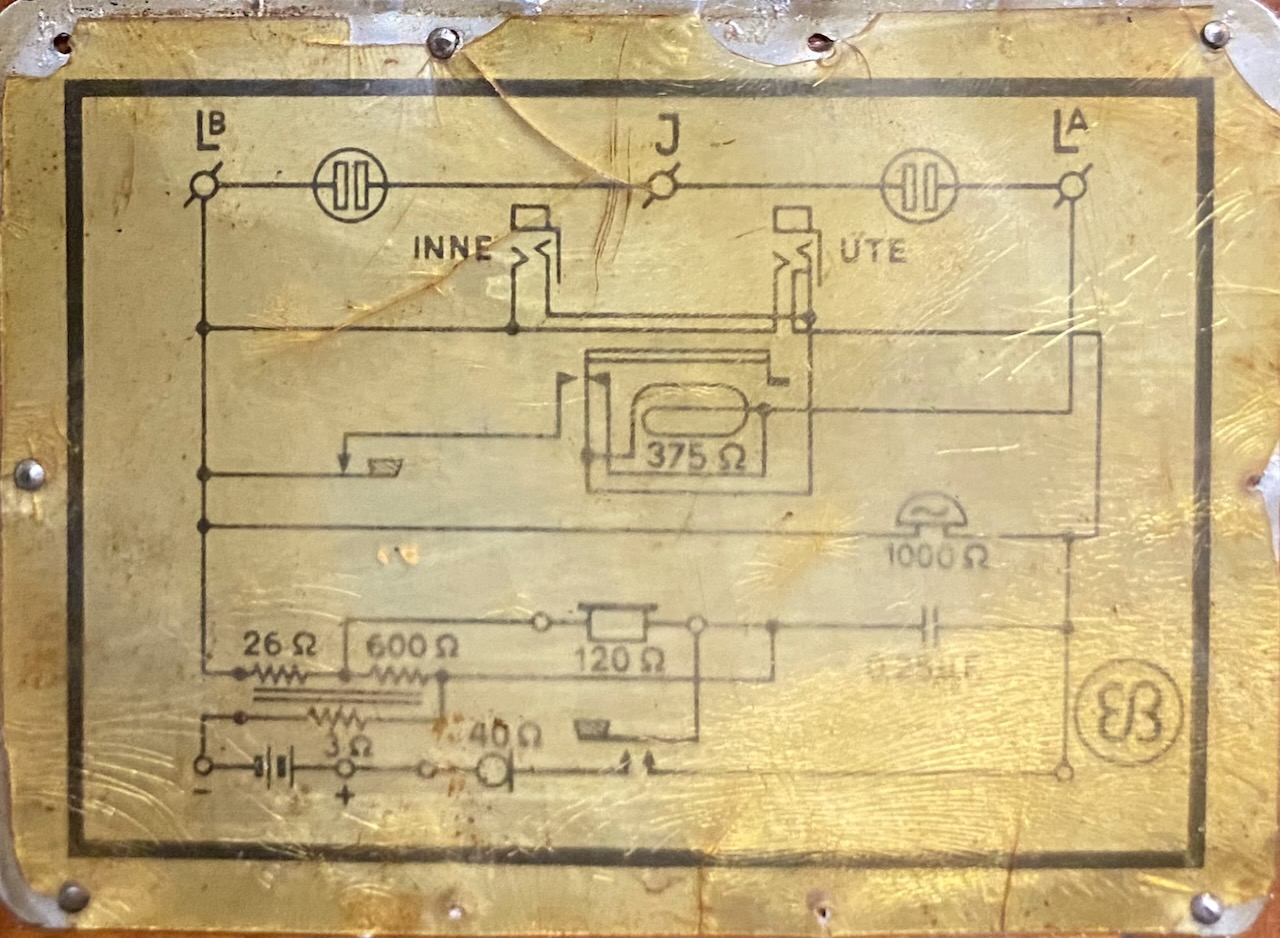
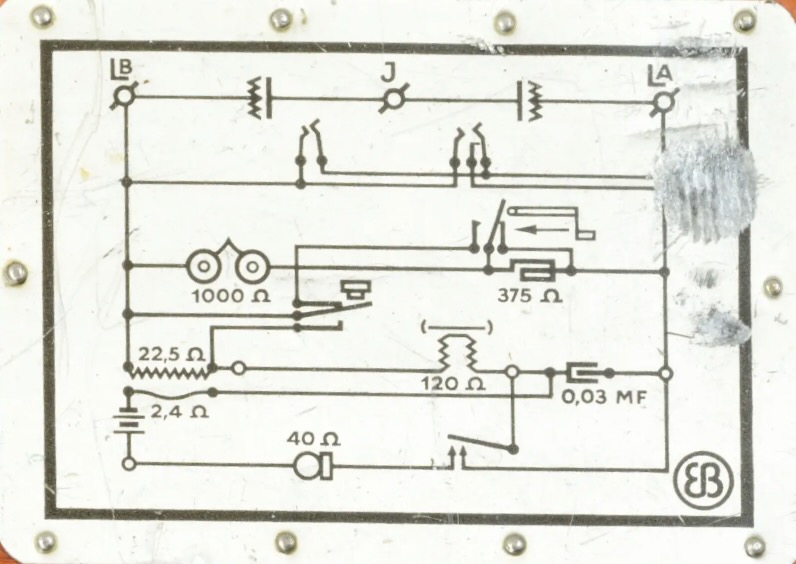
Electrical diagram of a "A model" for comparison.
Note the different setup between line and magneto and the simpel primary/secondary speech coil instead of an anti-sidetone setup.
The symbols for the lightning arrestor also point to the use of an older serrated arrester setup instead of rare-gas tubes [11].
The attached spelling alphabet is german, I assume this set was seized by the germans during the occupation of Norway.
It corresponds to the german spelling alphabet version of post 1939 apart from "Ösel" (which is typically "Ödipus" on german spelling tables of that era).
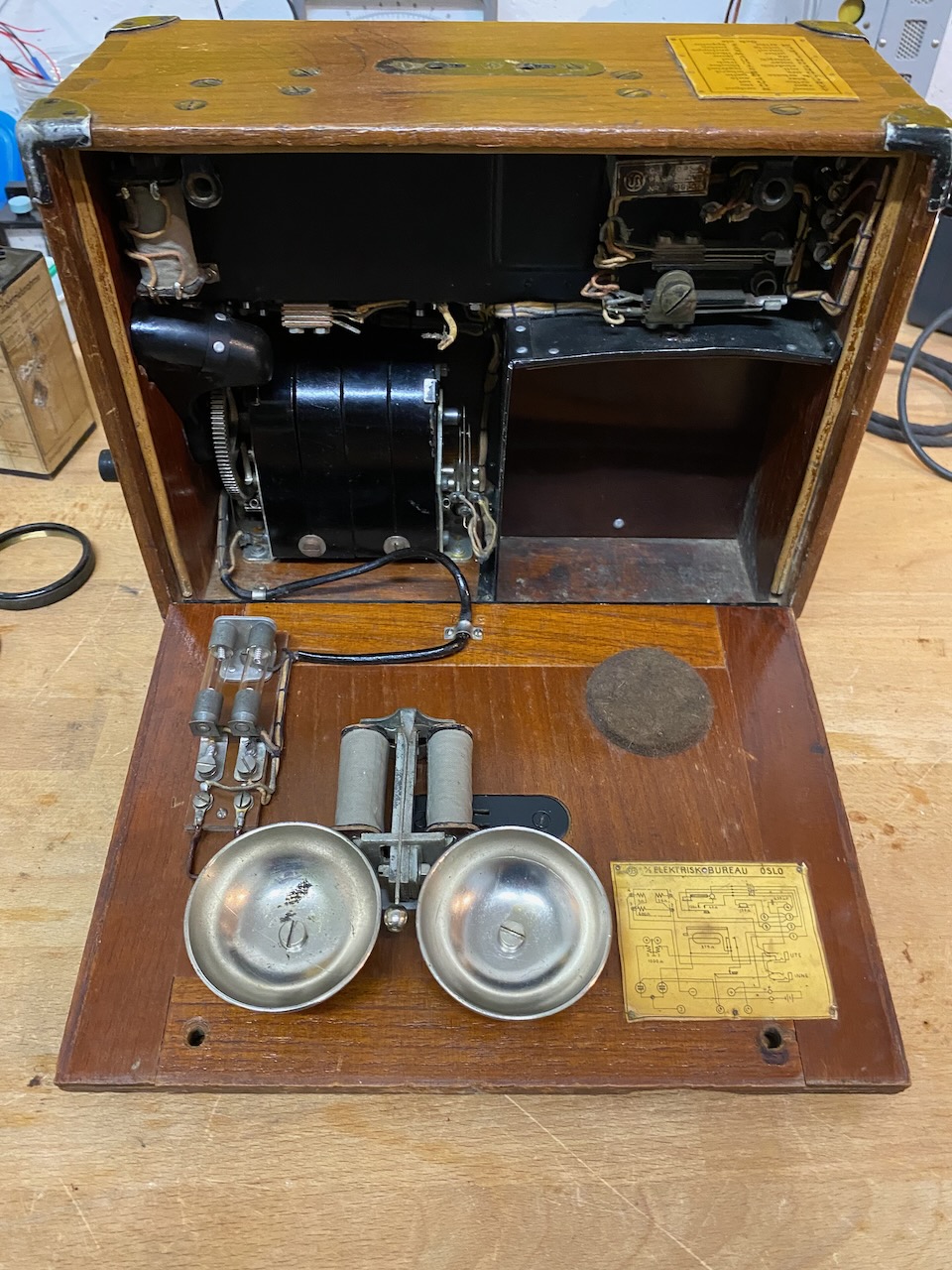
The backdoor gives access to the battery compartment and all relevant components.
The ringer and the surge protectors (rare-gas tubes) are mounted to the door.
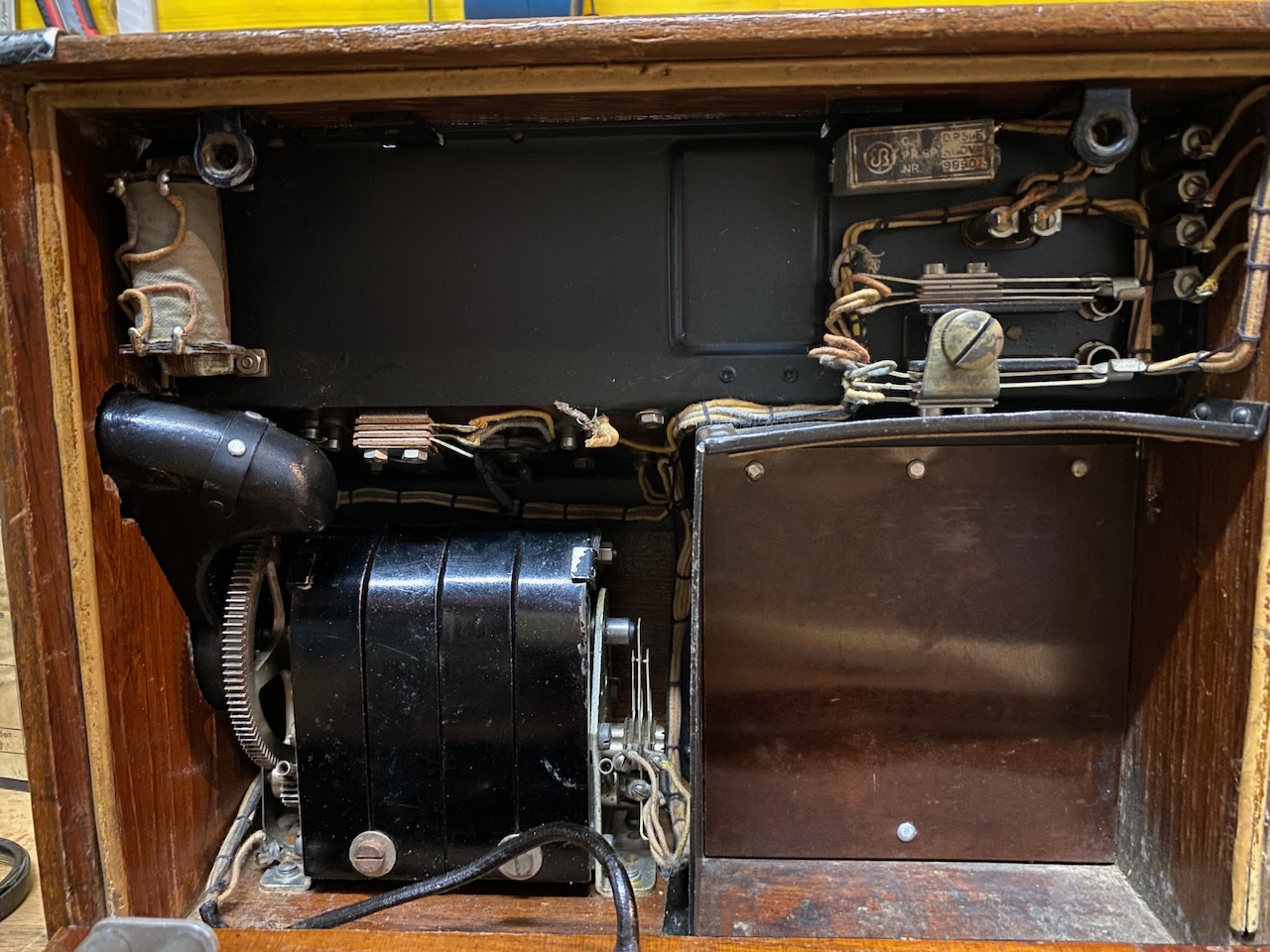
Top left the main coil.
Below it the 4-bar magneto.
To the right the battery compartment.
Above it all the sockets: line, headset, handset.
And the capacitor.
From the front to the right the binding posts and to the left the accessory compartment and the sockets.
The door has been repaired, originally it would also have had a latch to fix when closed.
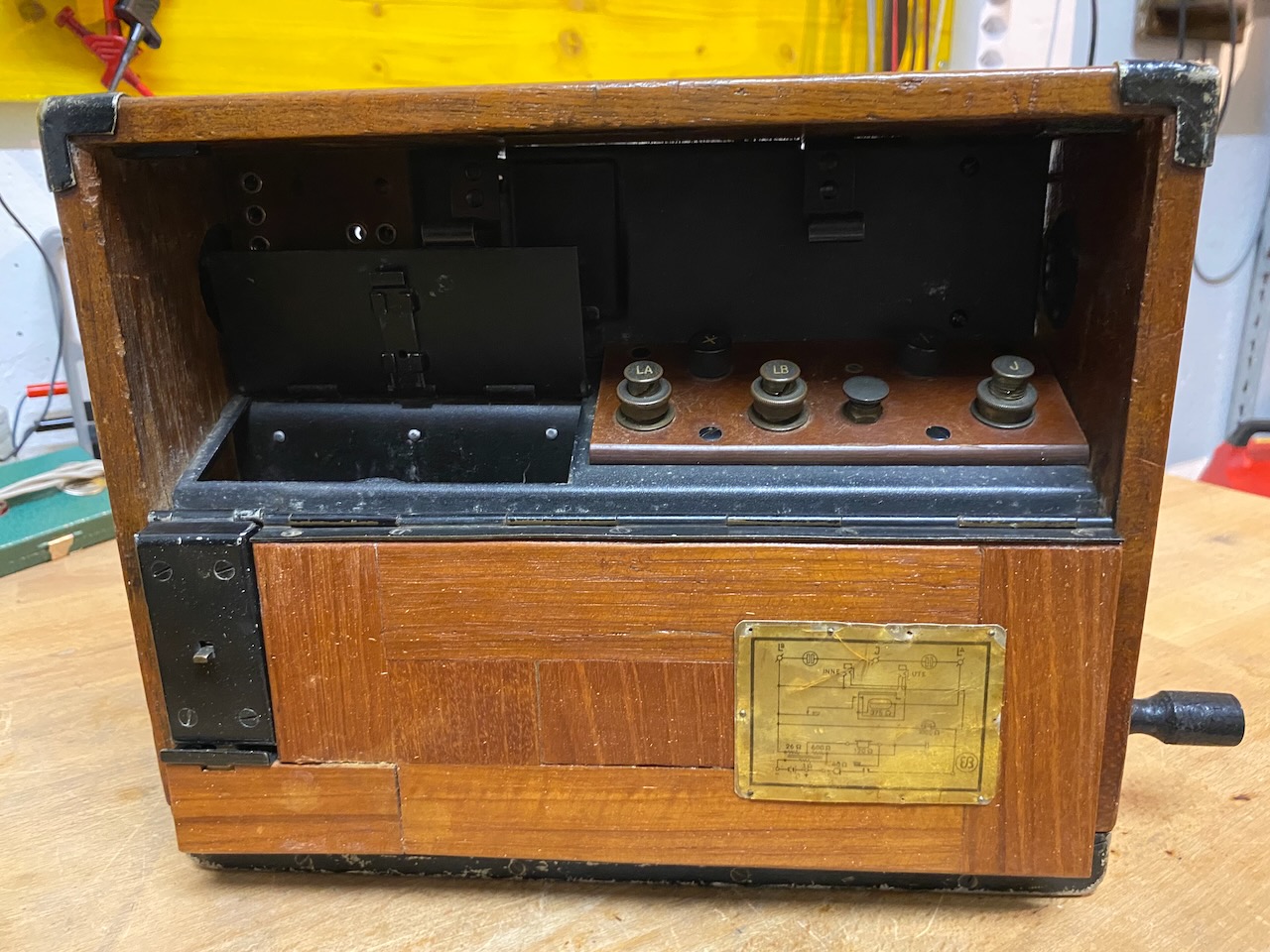
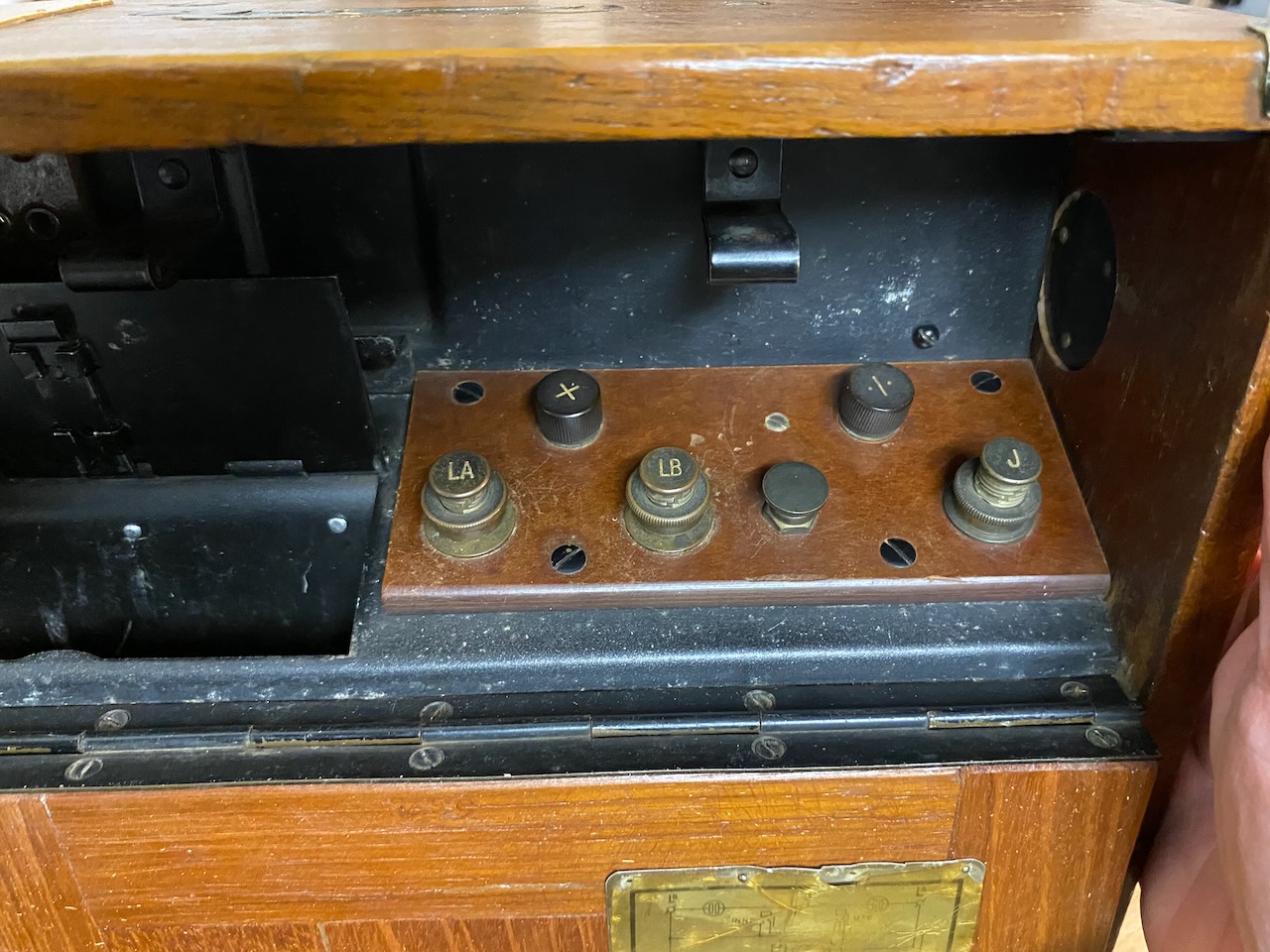
Line (La, Lb) and Earth (J) binding posts.
Between them the line test button.
Towards the back binding posts for an external battery.
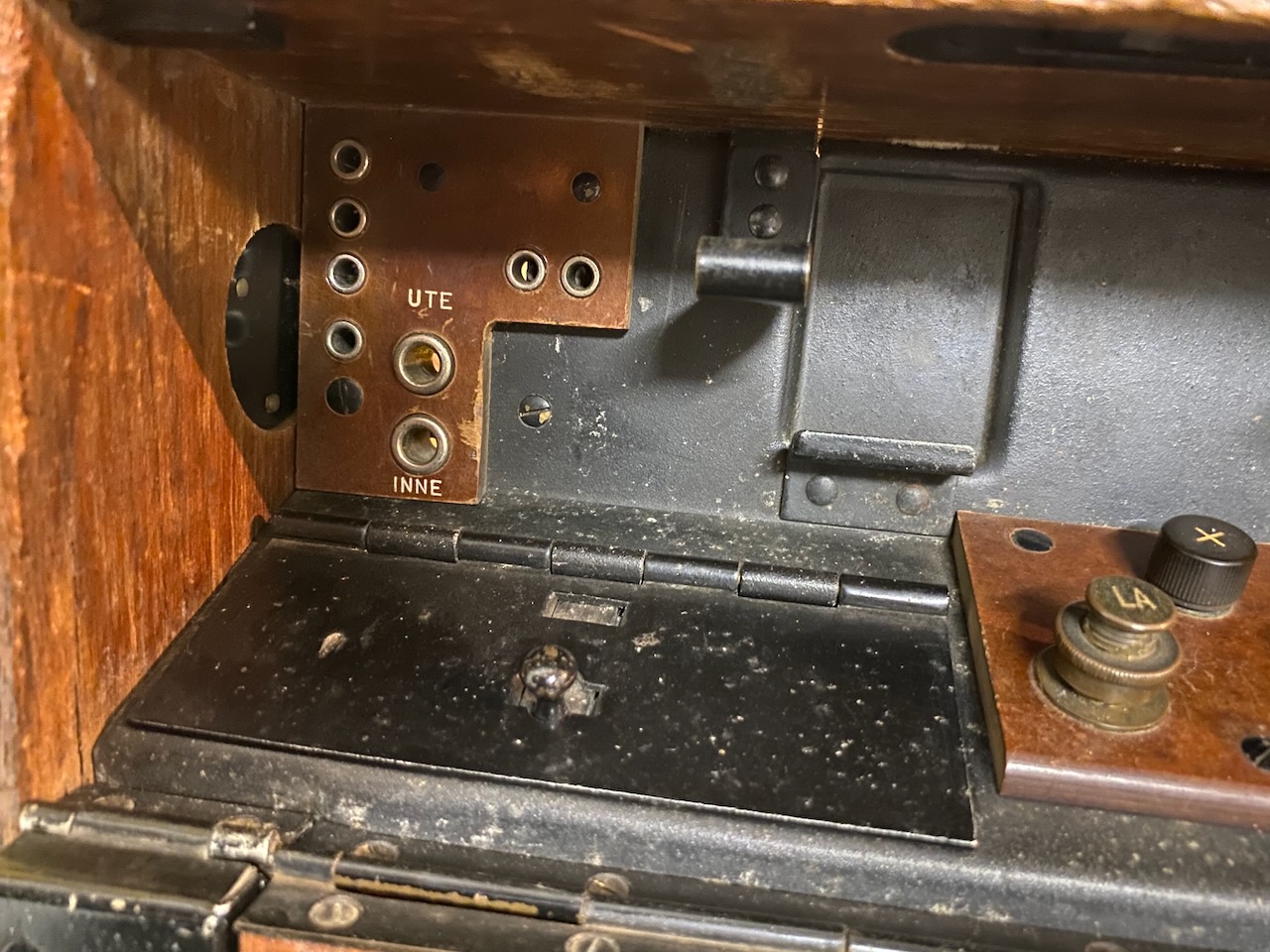
The 4 prong handset socket, 2 prong headset socket and the line sockets, "UTE" disconnects the instrument and only connects the line, "INNE" connects line and instrument.
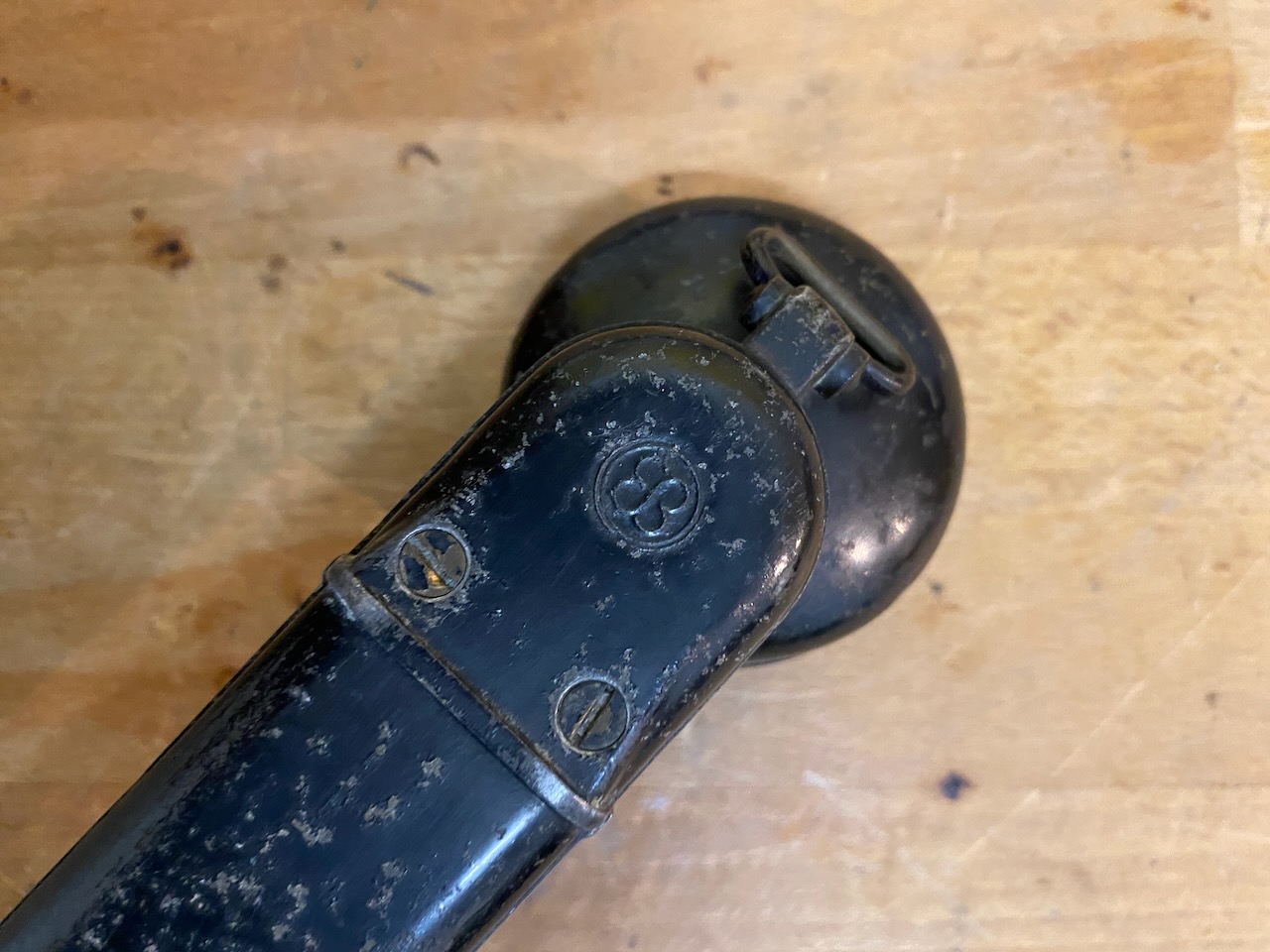
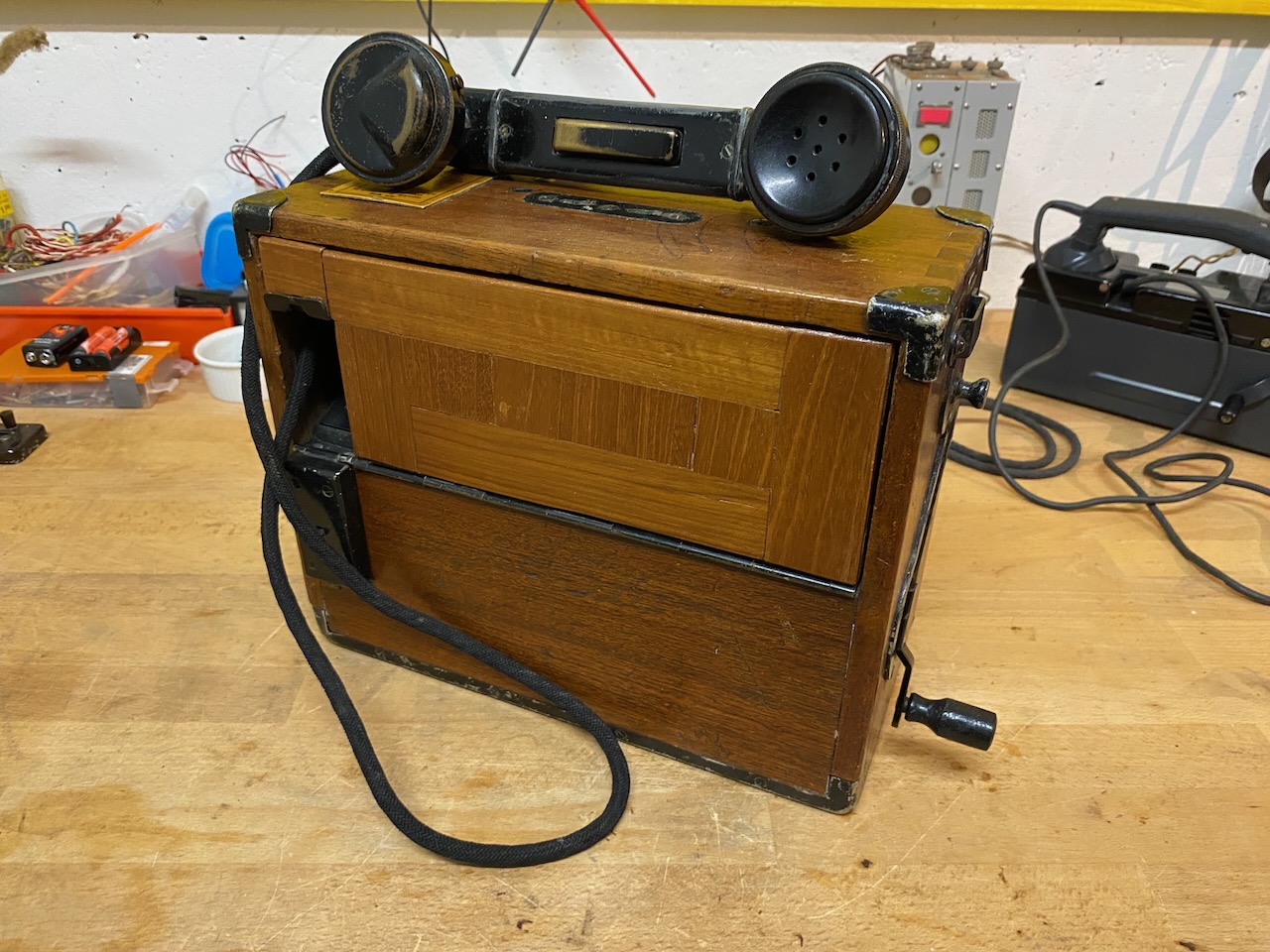
The metallic handset.
Fixed on the receiver side, modular on the transmitter side.
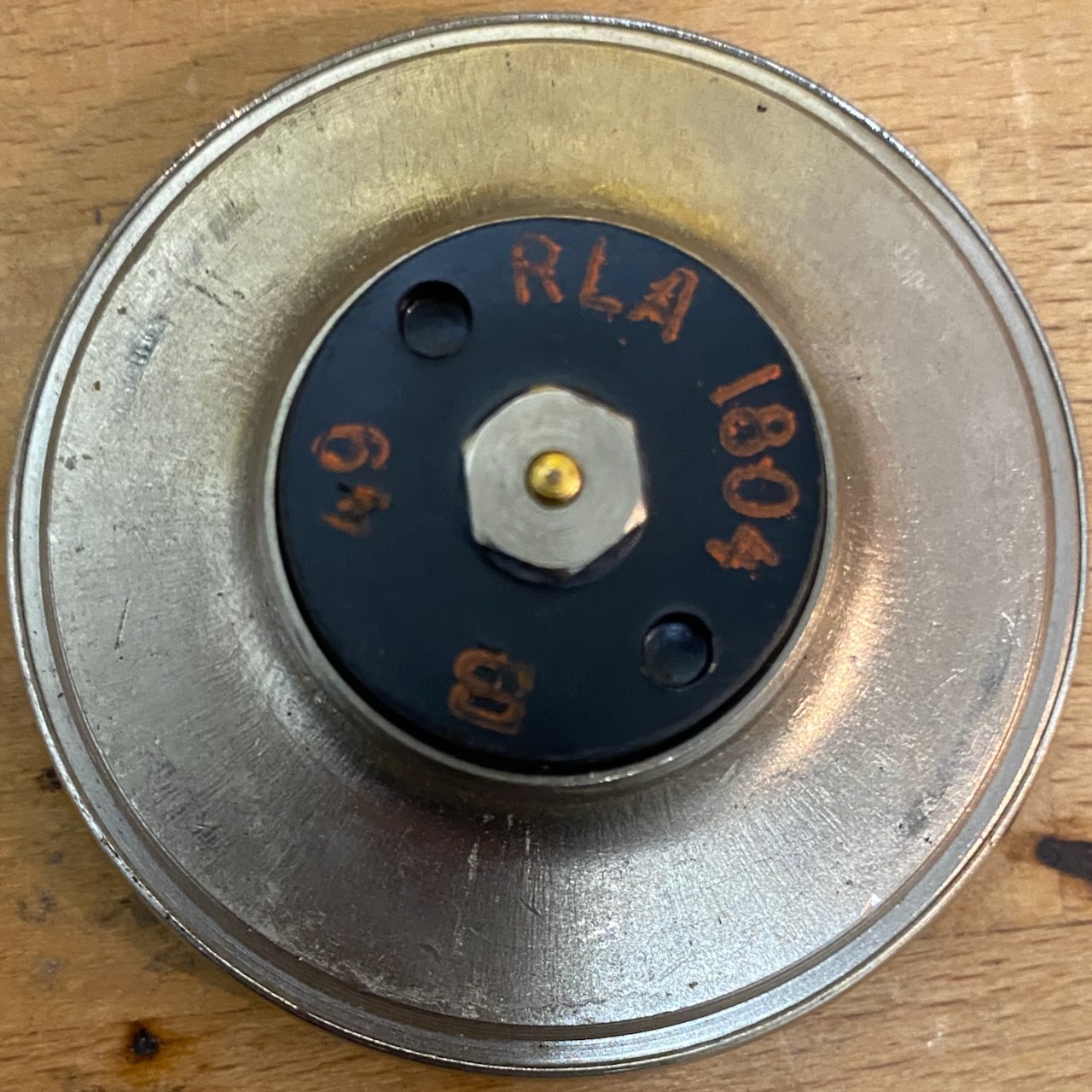
The transmitter capsule is an Ericsson type for local battery (as indicated by the ..04 [4]) made in 1949.
The bakelite RX lid was made by "NTP".
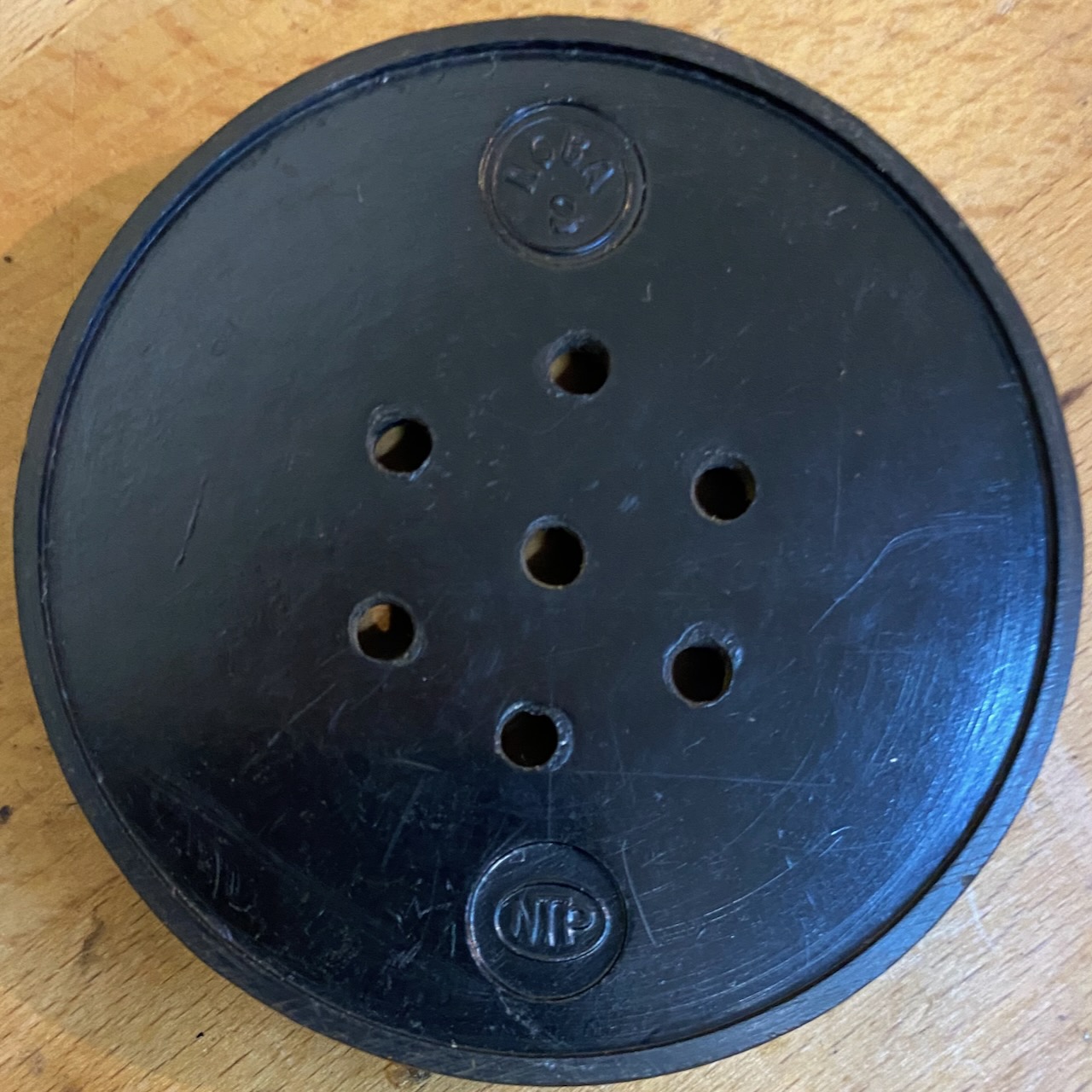
The Elektrisk Buerau emblem on the back of the handset.
Ready to use.
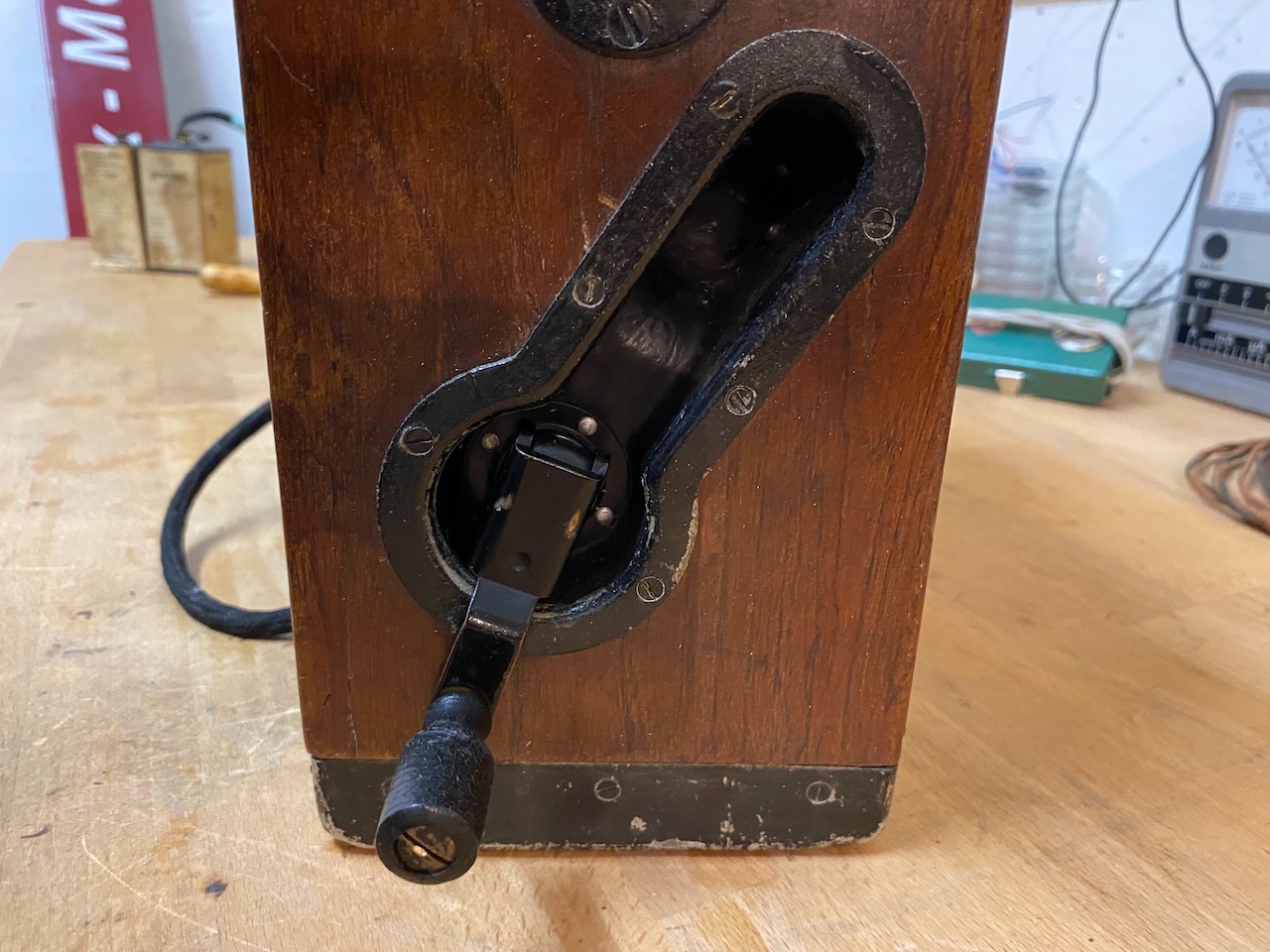
The fold out magneto handle.
Handset stored.
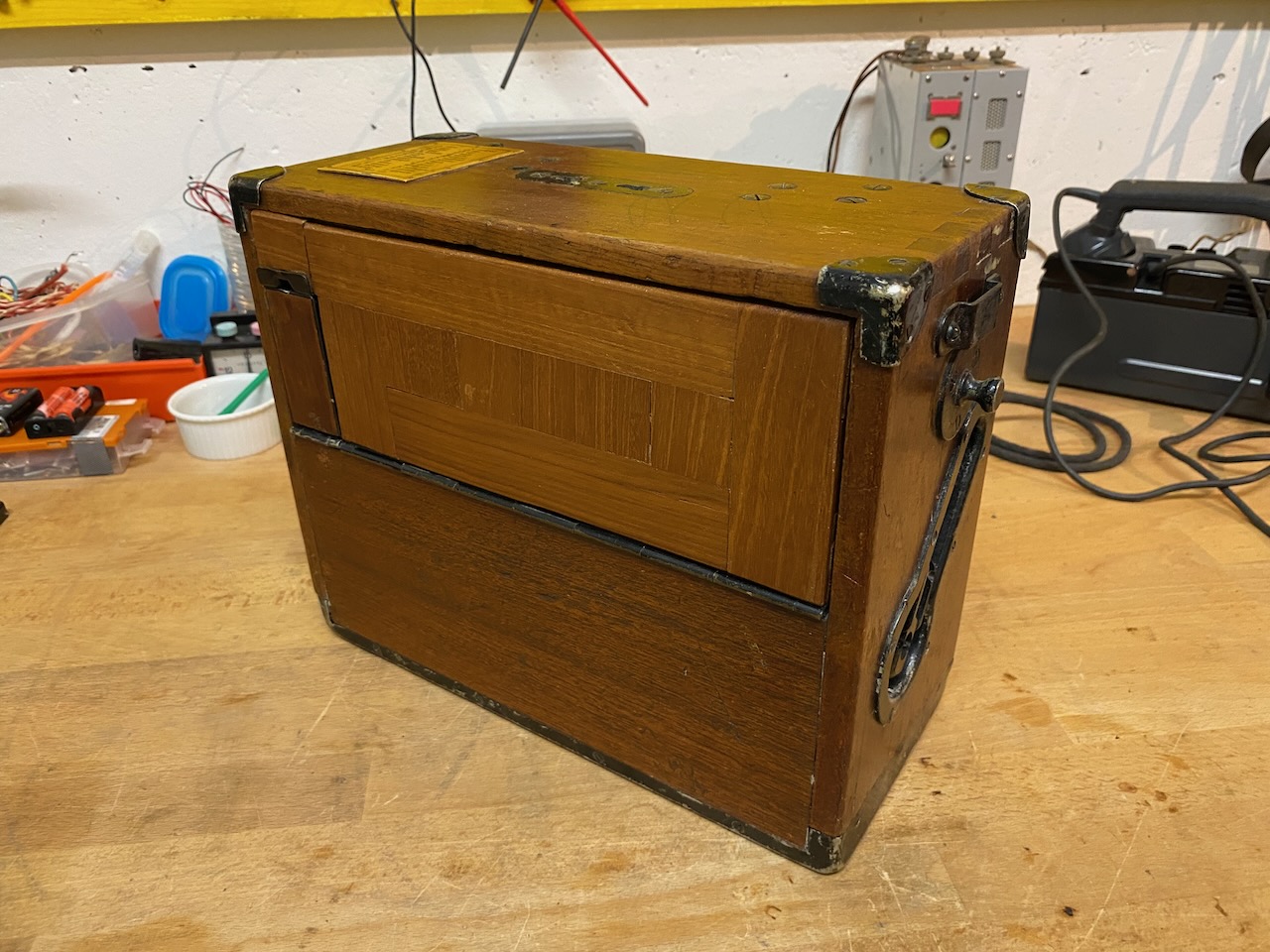
Ready for transport.
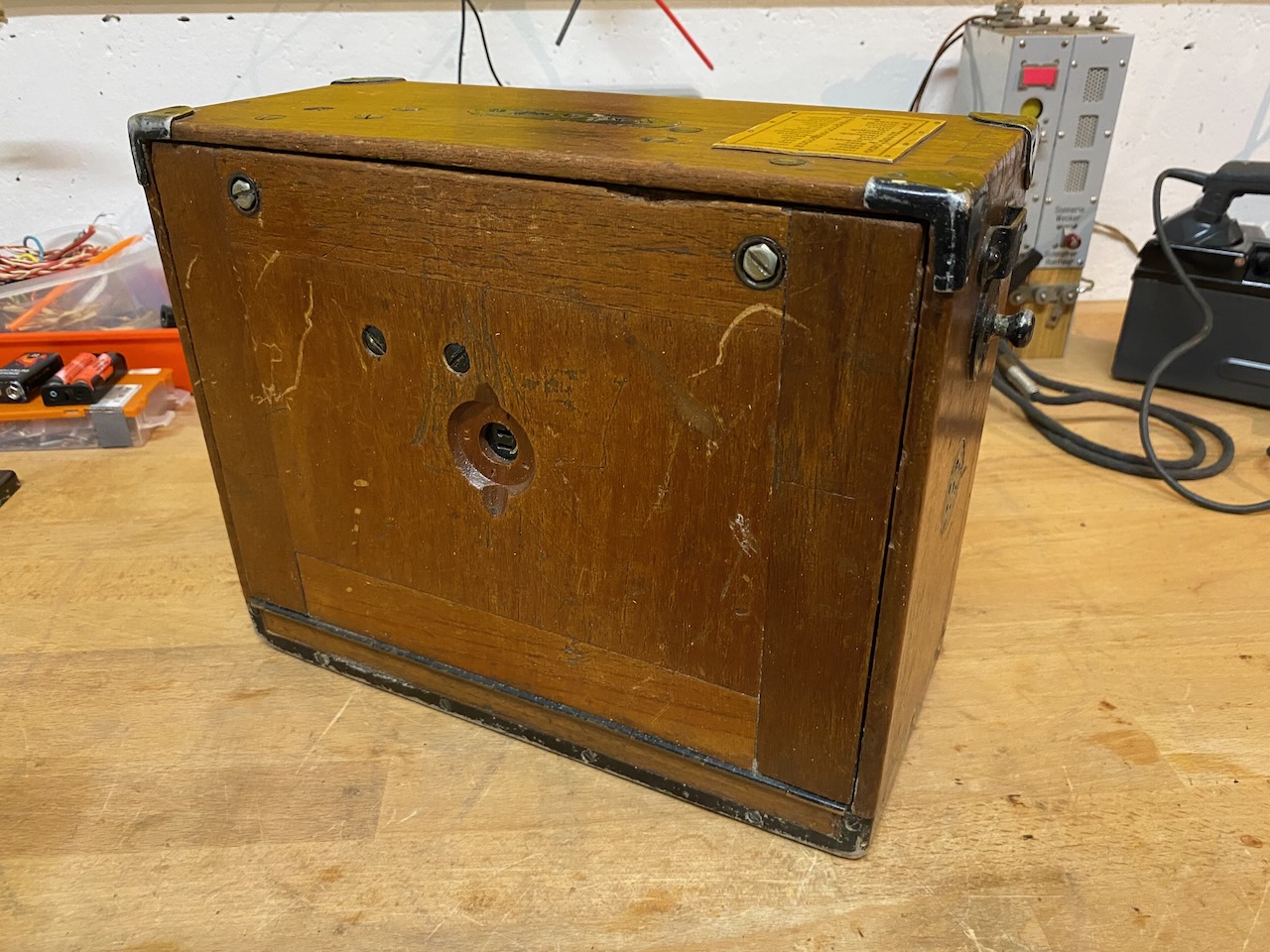
From the back.
The closing screws are not original.
In the middle the small handle to draw out the door when opening is missing.
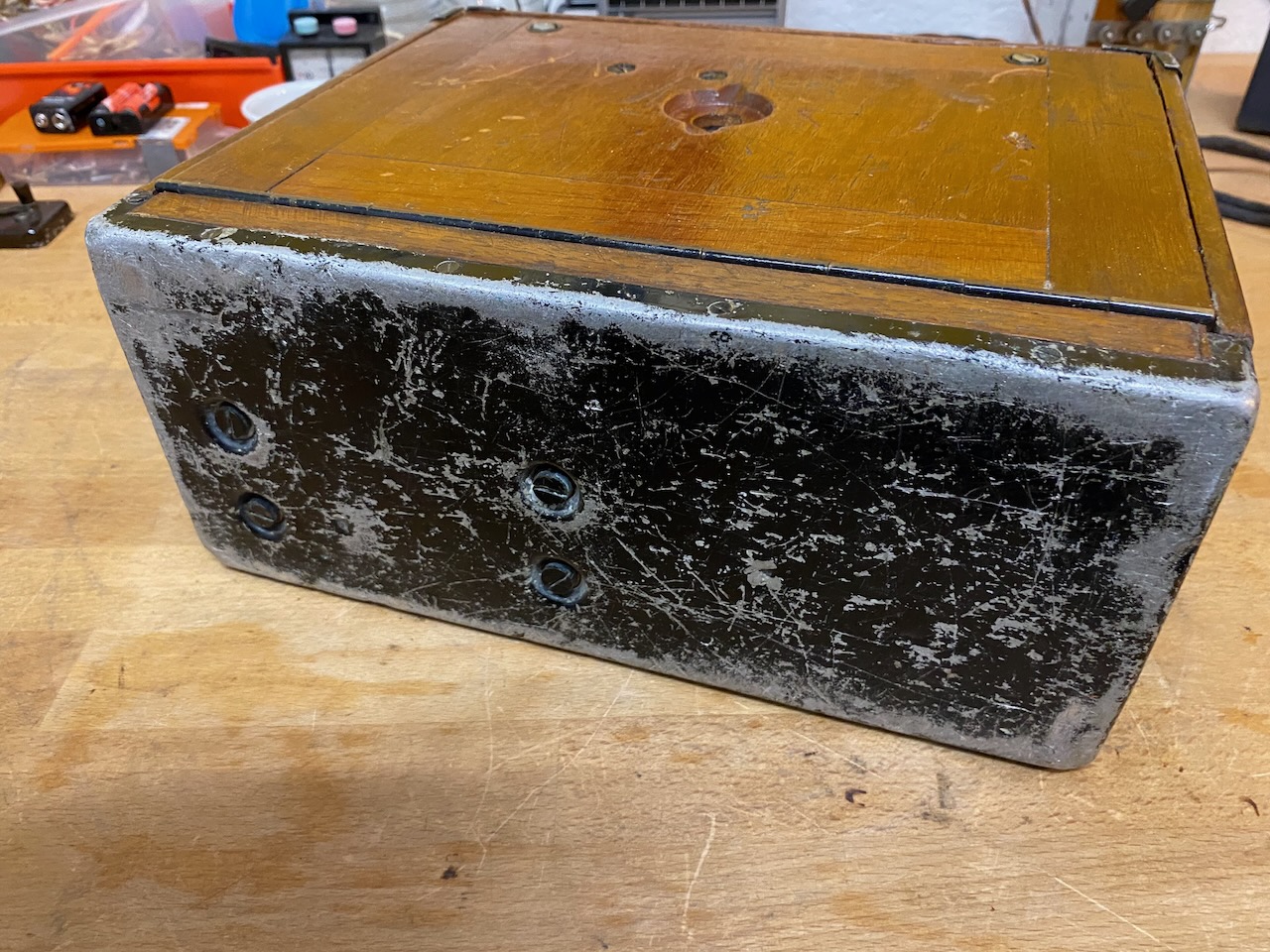
The bottom is well protected by an aluminium sheet.
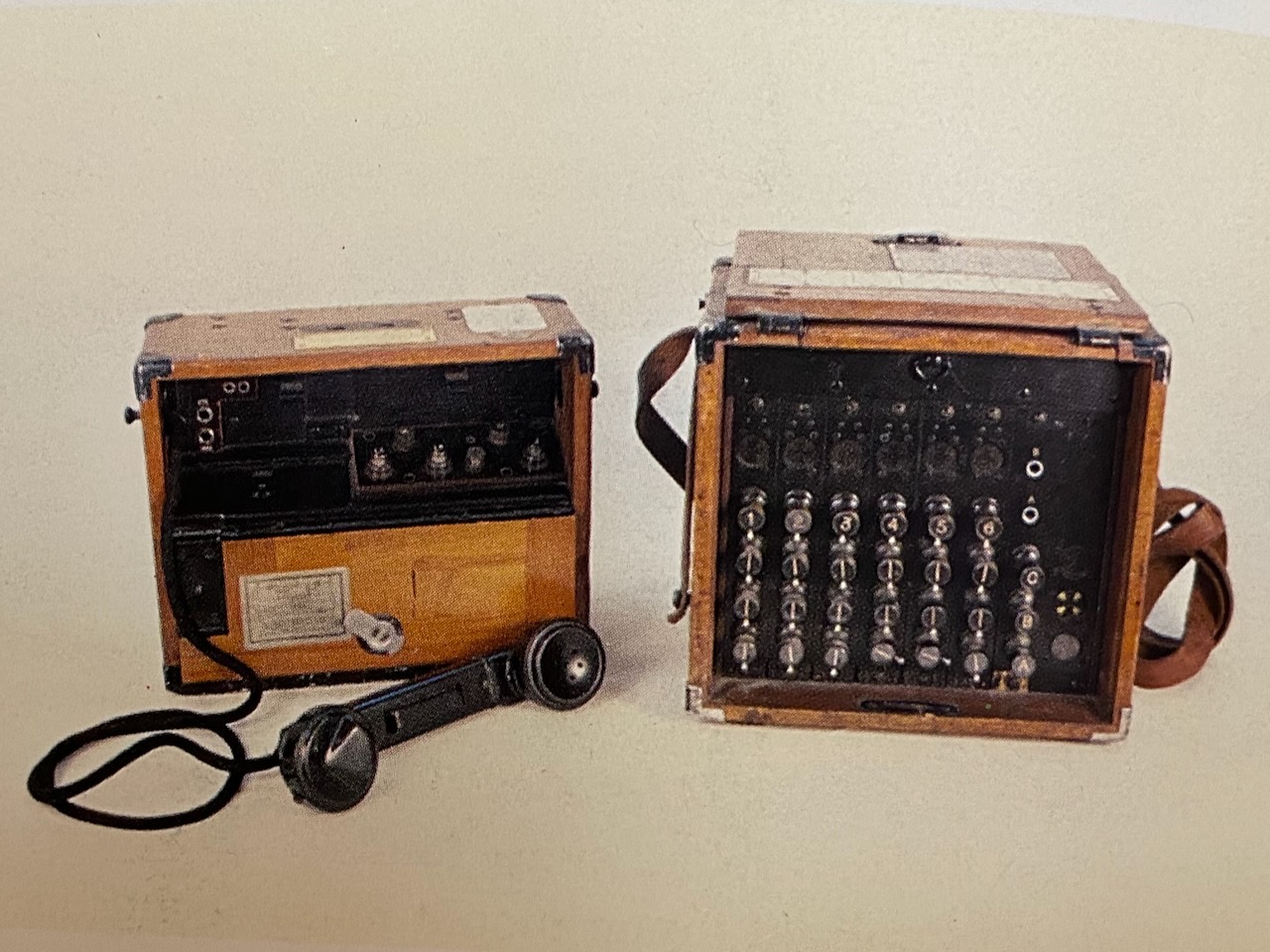
The device alongside a small 6 line field switchboard as pictured in "Over alle grenser" [5].
The latch to close the front door which is missing on my instrument is visible.
With the external dial unit (Screenshot from [3]).
With the external buzzer unit (Screenshot from [3]).
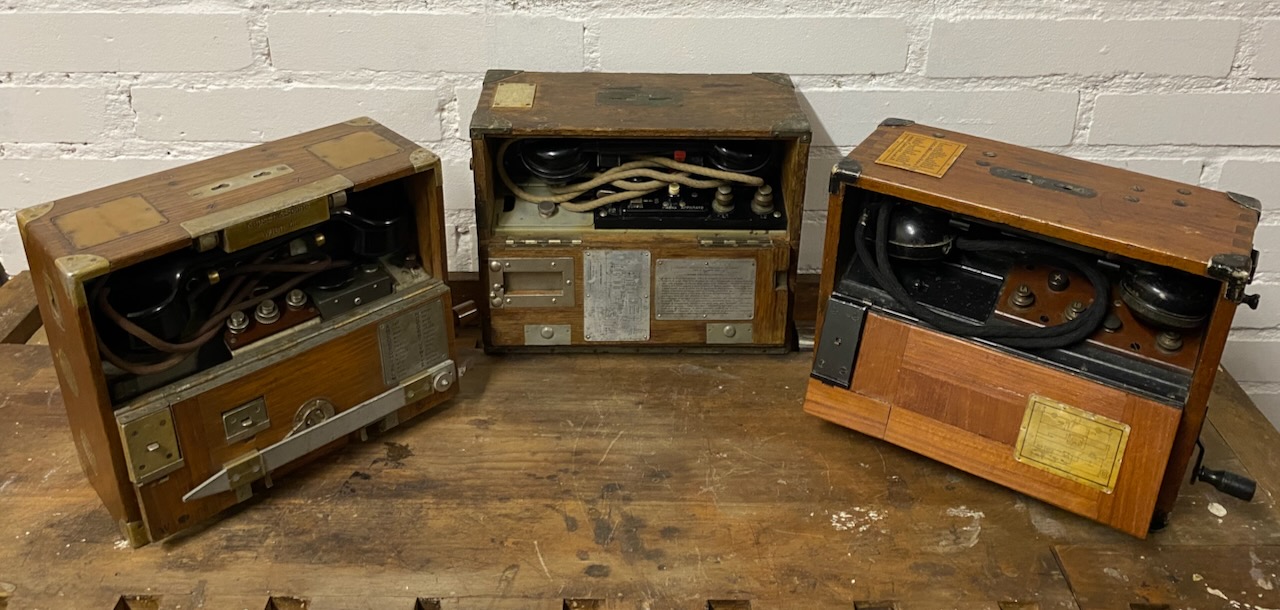
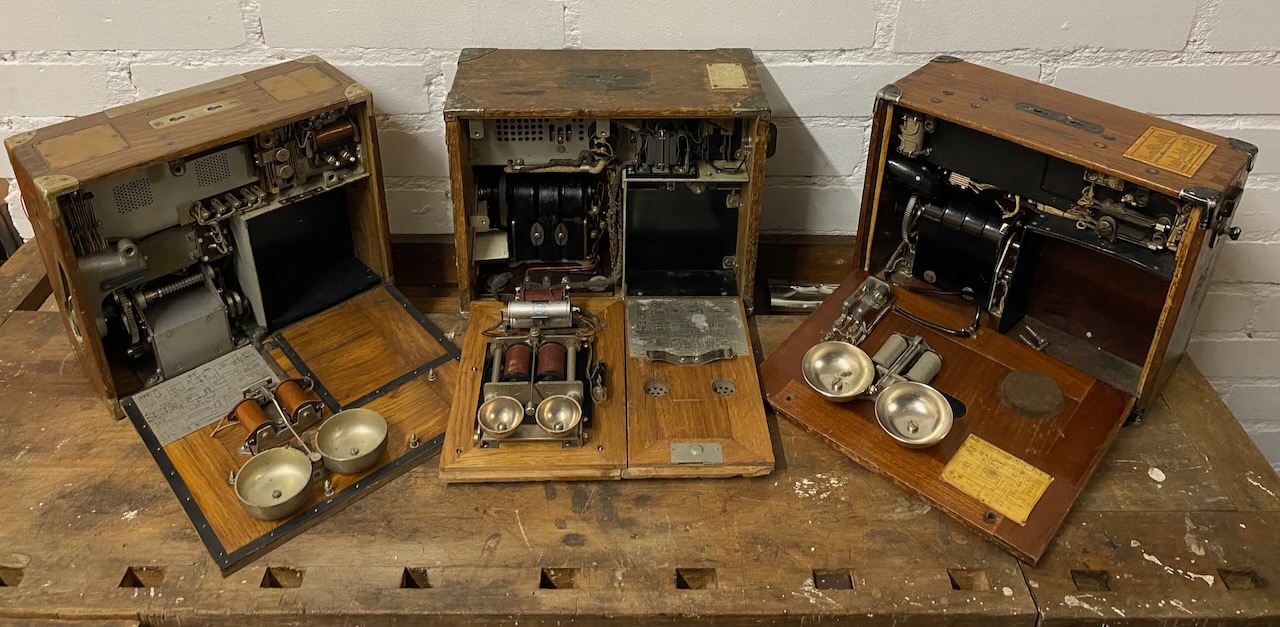
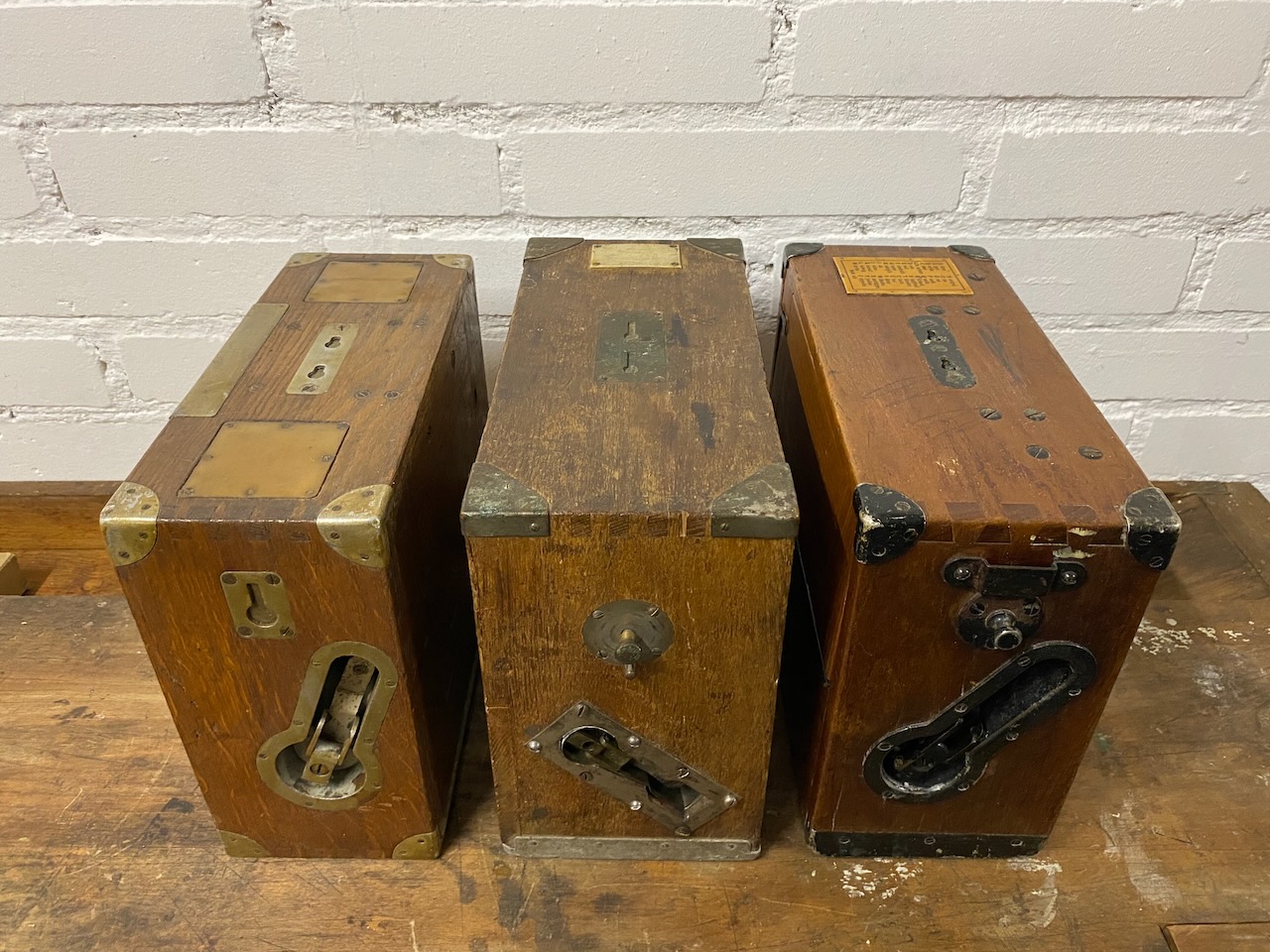
Comparison of the Austrian M35, the Italien G.A. Mod. 1931. and the Norwegian instrument.
They are too similar to be developed independently.
I assume EB was the first from whom the others then copied some Ideas.
Creative Commons Attribution-ShareAlike 4.0 International License