Following the end of World War II in 1945, the Soviet occupation zone of Germany established new police and paramilitary organisations, which eventually developed into the armed forces of the German Democratic Republic (GDR), founded in 1949. The Kasernierte Volkspolizei (KVP), established in 1952, formed the basis of the National People's Army (NVA), officially founded in 1956. During this period, the East German military developed its own communications equipment, initially drawing heavily on pre-war German designs [4].
The Feldfernsprecher 53 (FF 53) is an evolution of the German World War II-era FF 33 field telephone. It retains a similar form factor and Bakelite housing, including the familiar protective lids for the connection sockets and magneto crank hole. The identification plate and phonetic spelling table on the lid also follow the earlier design, as does the handset connector.
Several technical improvements distinguish the FF 53 from its predecessor. It accommodates two batteries, normally connected in parallel, with the option of connecting them in series to provide 3 V for operation over longer lines. An additional ringing transformer allows a higher ringing voltage to be generated, improving signalling over long or high-resistance telephone lines.
The later (~1960) Funkfernsprecher 53a (FF 53a) is a simplified version intended primarily for remote control of radio stations. Since operation over long telephone lines was no longer required, the ringing transformer and the option to connect the batteries in series are omitted. An additional contact on the handset's push-to-talk switch was introduced (using the middle up to then unused handset plug prong) to remotely switch the connected radio equipment between transmit and receive modes. In 1963 FF53 and FF53a were replaced by the new Feldfernsprecher 63 [3].
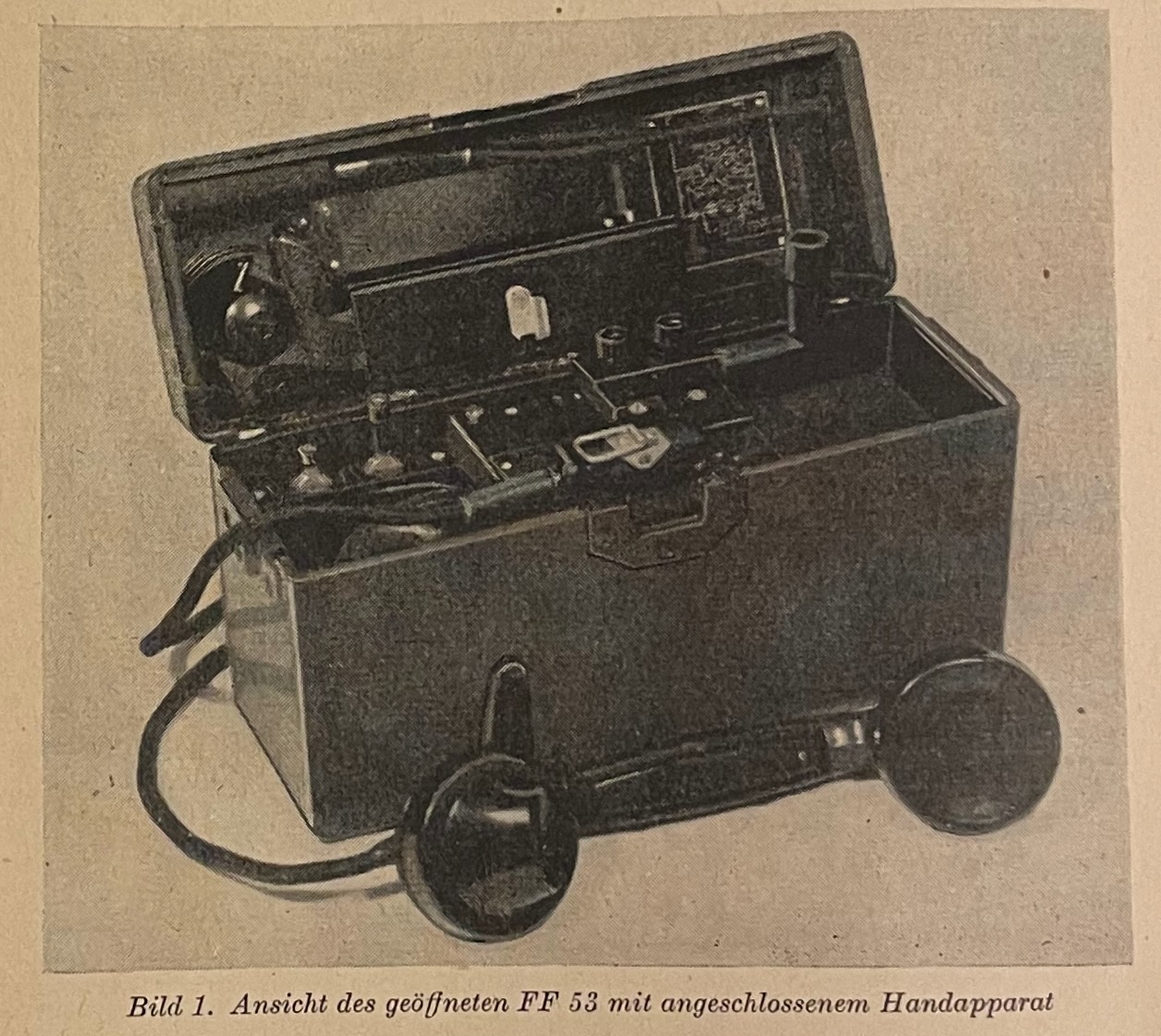
Der Feldfernsprecher 53 [1]:
The Field Telephone 53 (FF 53) is the primary device used for wire-based communication. It is characterized by its operational reliability, ease of use, and the fact that it does not require operators with specialized technical training. The FF 53 is a "local battery" (OB) device, meaning that the power required for voice communication is supplied by dry-cell batteries housed within the unit itself. The FF 53 is the most advanced field telephone produced in the GDR; it is designed for mobile use and is highly resistant to weather conditions. It is utilized by all the armed forces of our workers' and farmers' state. The FF 53 is manufactured by the state-owned industry of the GDR. When connected to a telephone line, it enables direct, two-way communication between the parties involved.
(Original german: Der Feldfernsprecher 53 (FF 53) ist das Grundgerät der DrahtNachrichtenverbindung. Er zeichnet sich besonders durch seine betriebstechnische Zuverlässigkeit aus, ist einfach zu bedienen und erfordert kein besonders technisch vorgebildetes Bedienungspersonal. Der FF 53 ist ein OB-Gerät (Orts-Batterie-Gerät), da der zur Sprechverständigung benötigte Strom von den im Apparateeinsatz befindlichen Monozellen geliefert wird. Der FF 53 ist der modernste für den beweglichen Einsatz bestimmte, gegen Witterungseinflüsse weitestgehend geschützte Fernsprechapparat der DDR. Er findet Verwendung bei allen bewaffneten Kräften unseres Arbeiter-und-Bauern-Staates. Der FF 53 wird von der volkseigenen Industrie der DDR hergestellt. Angeschlossen an die Fernsprechleitung ermöglicht er einen direkten Gedankenaustausch zwischen den Gesprächspartnern.)
Ergänzung für den FF53a (Funkfernsprecher) [2]:
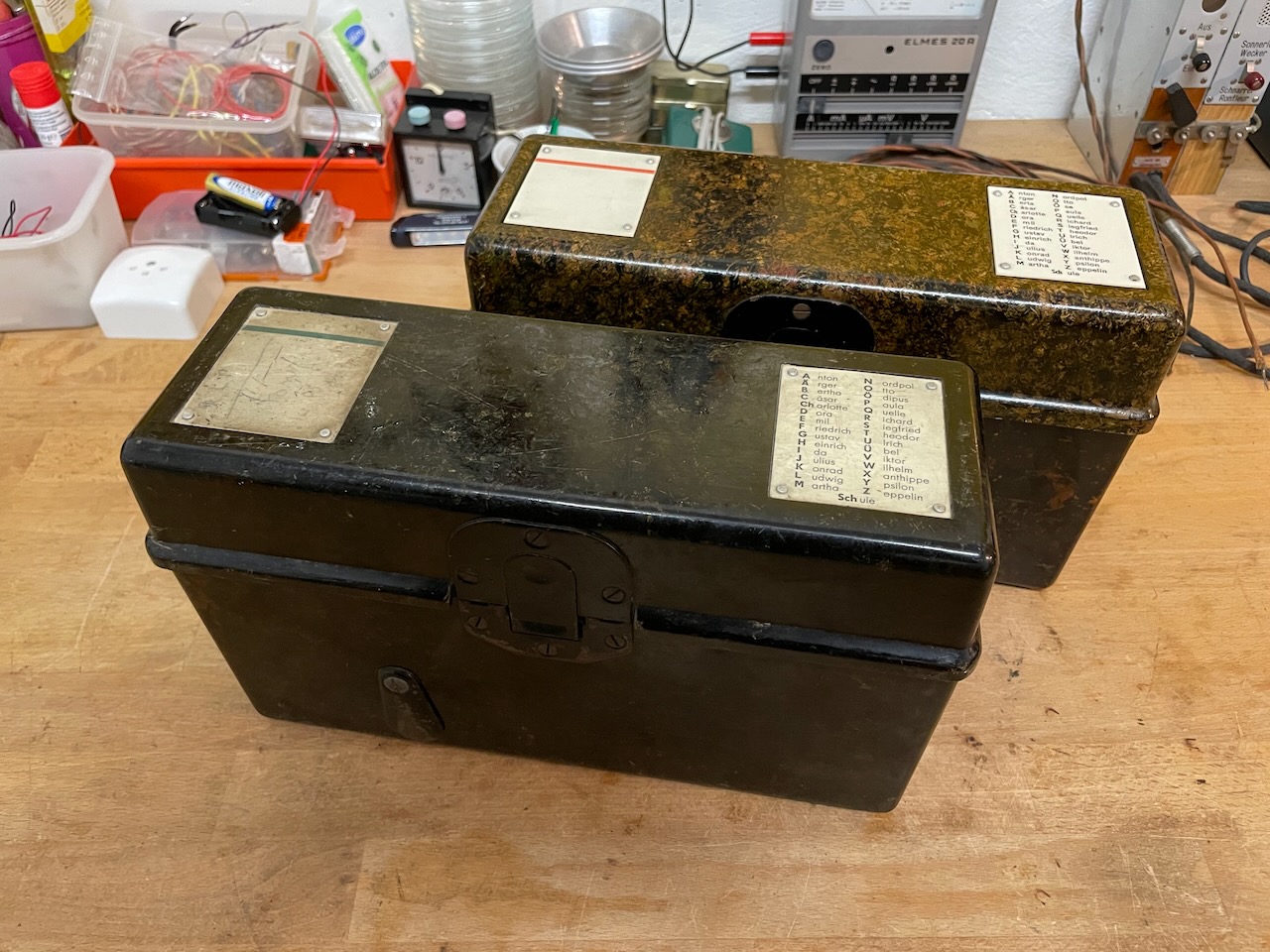
To distinguish the FF 53a from the FF 53 externally, a red stripe has been added to the identification plate below the green stripe on the FF 53a. The FF 53a allows for the remote operation of low- and medium-power radio stations via field cable lines. A contact integrated into the handset—activated when the push-to-talk button is pressed—controls a dedicated DC circuit used to toggle the radio station's receive relay. The center pin of the handset is wired for this purpose. The toggle switch for extending range—labeled "Call – Speak" ("Rufen – Sprechen")—is absent on the FF 53a. Its removal allowed for the elimination of the ringing transformer from the ringing circuit. The design of the ringer (bell) was improved to increase call sensitivity; this was achieved by modifying the bell gong and the clapper.
(Original german: Zur äußeren Unterscheidung zwischen dem FF 53 und 53a befindet sich beim FF 53a auf der Beschriftungstafel unter dem grünen Streifen zusätzlich ein roter Streiten. Mit dem FF 53a ist es möglich, Funkstationen kleiner und mittlerer Leistung über Feldkabelleitungen fernzubedienen. Mit einem zusätzlich in den Handapparat eingebauten Kontakt wird bei gedrückter Sprechtaste ein besonderer Gleichstromkreis, zum Umschalten des Seide-Empfangsrelais der Funkstation, gesteuert. Der mittlere Stift des Handapparates ist beschaltet. Der Kippschalter zur Reichweitenerhöhung mit der Bezeichnung "Rufen - Sprechen" ist beim FF 53a nicht vorhanden. Durch den Wegfall konnte im Rufstromkreis der Ruftransformator eingespart werden. Der Wecker wurde in seiner Konstruktion verbessert, so daß die Anrufempfindlichkeit größer wurde, was auf eine Änderung der Weckerschale und des Klöppels zurückzuführen ist.)
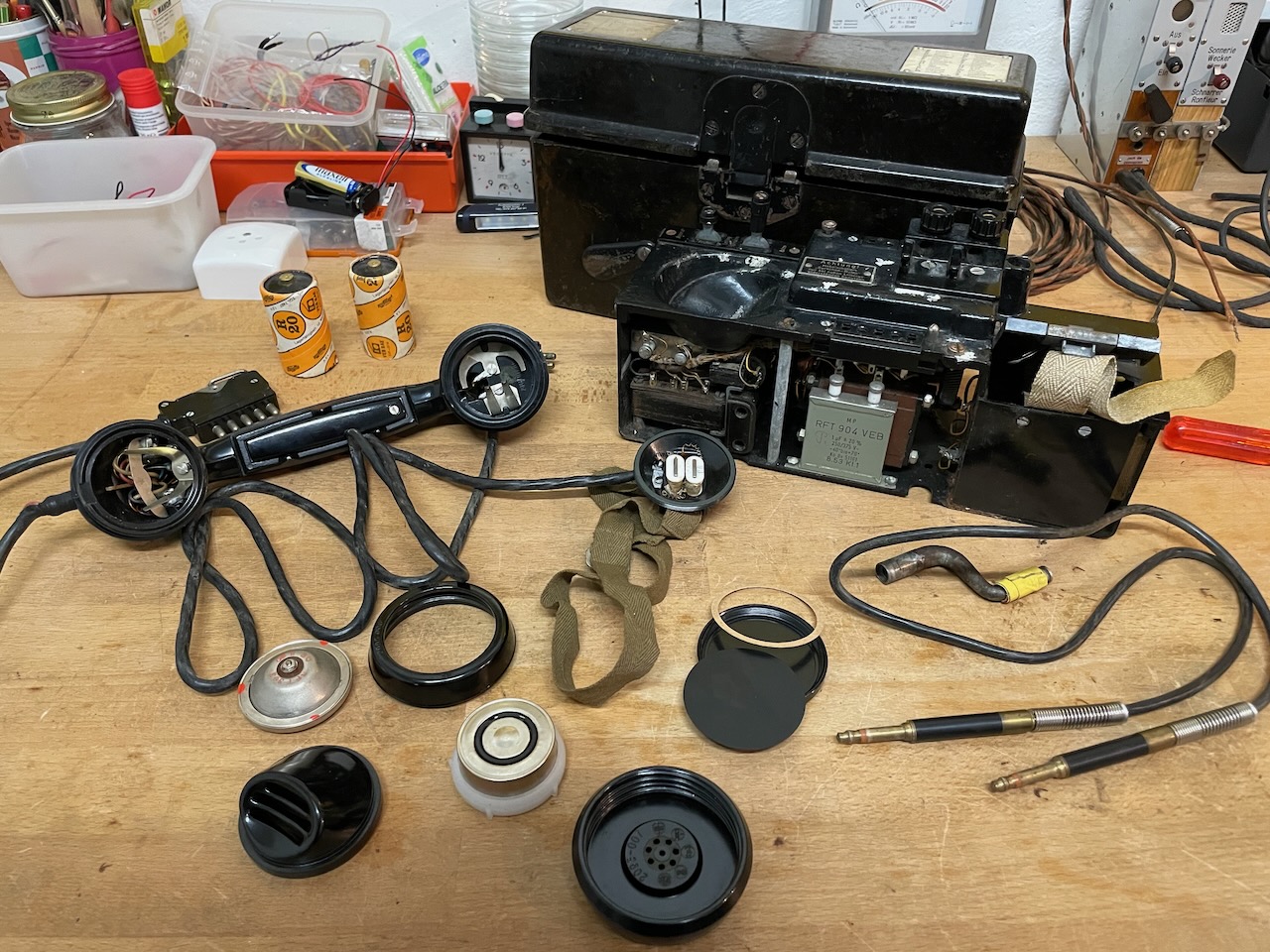
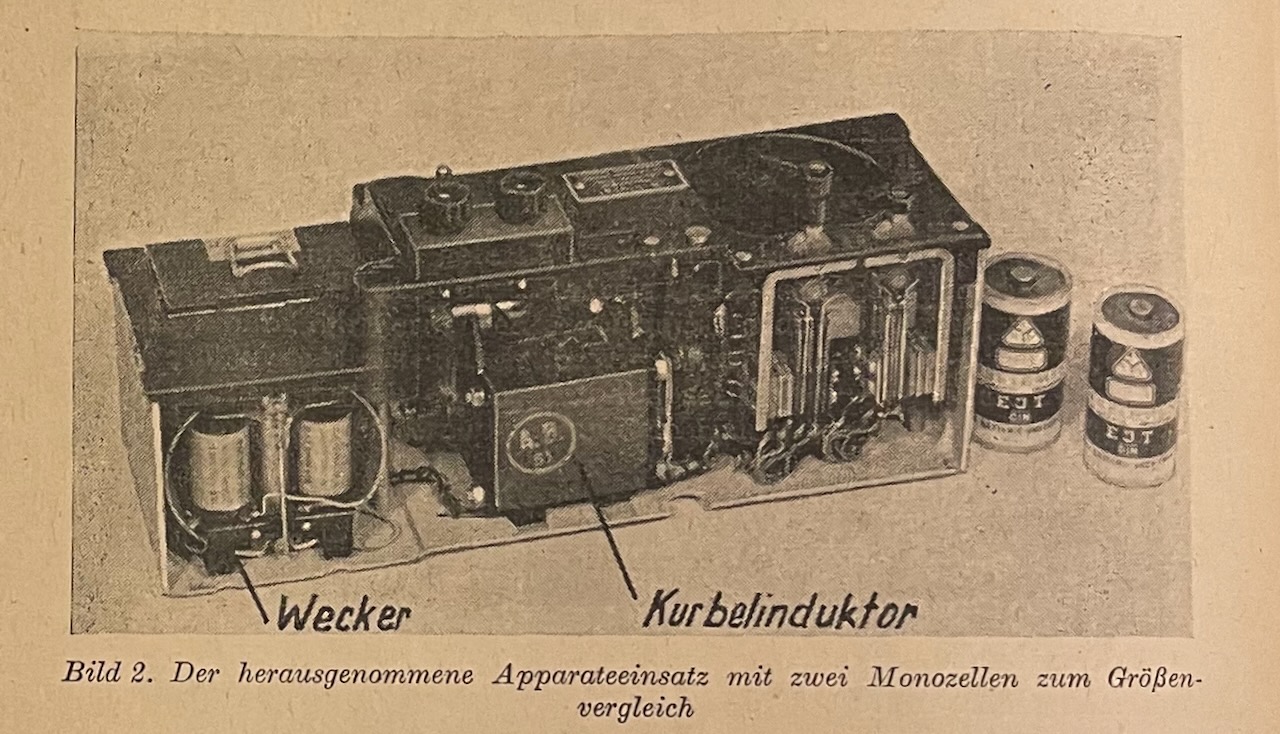
Disassembled.
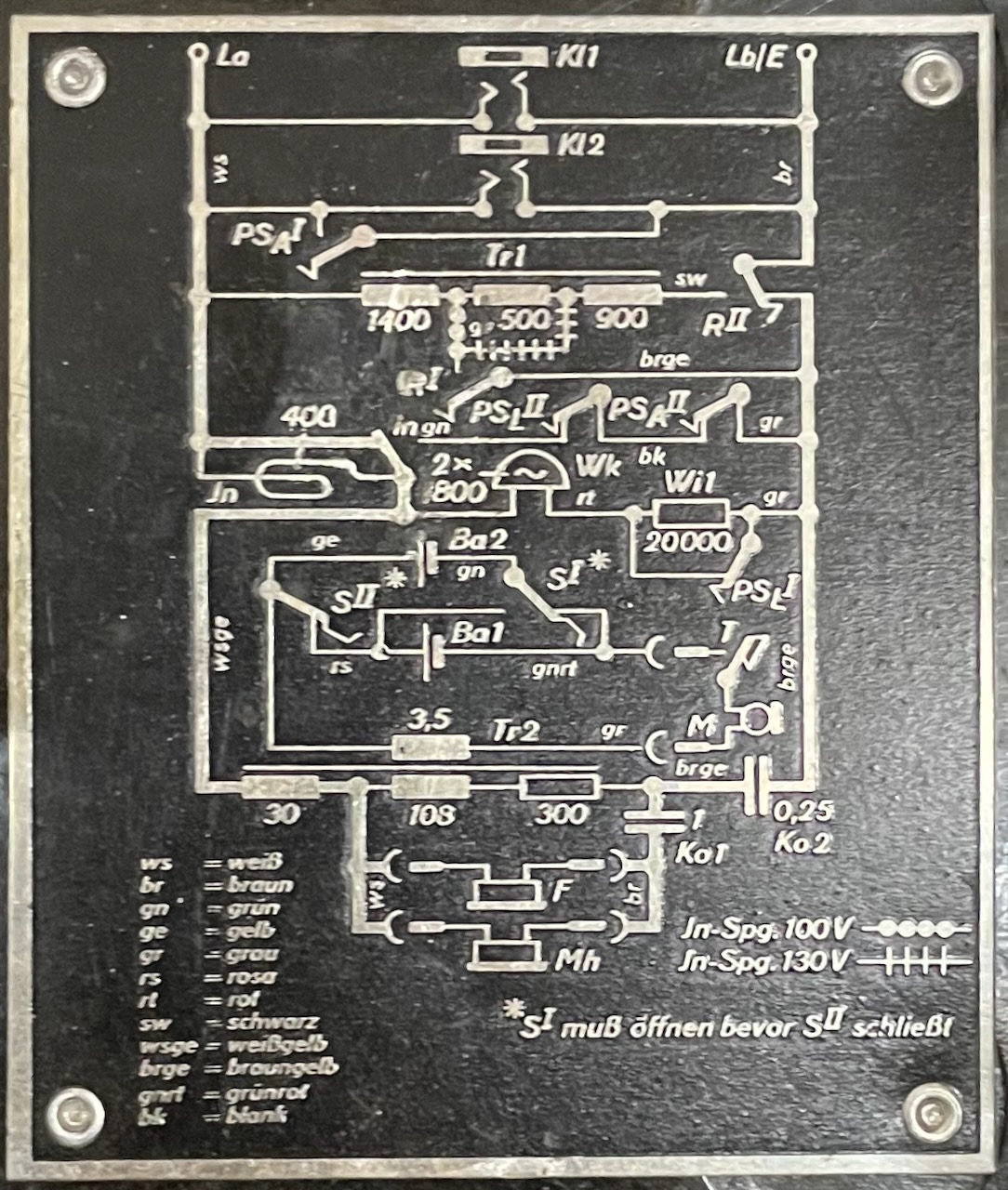
FF 53 wiring diagram.
Special setups are the autotransformer to increase the signalling voltage and the battery switch to change between standard parallel batteries (microphone voltage 1,5V) or for long lines in series batteries (microphone voltage 3V).
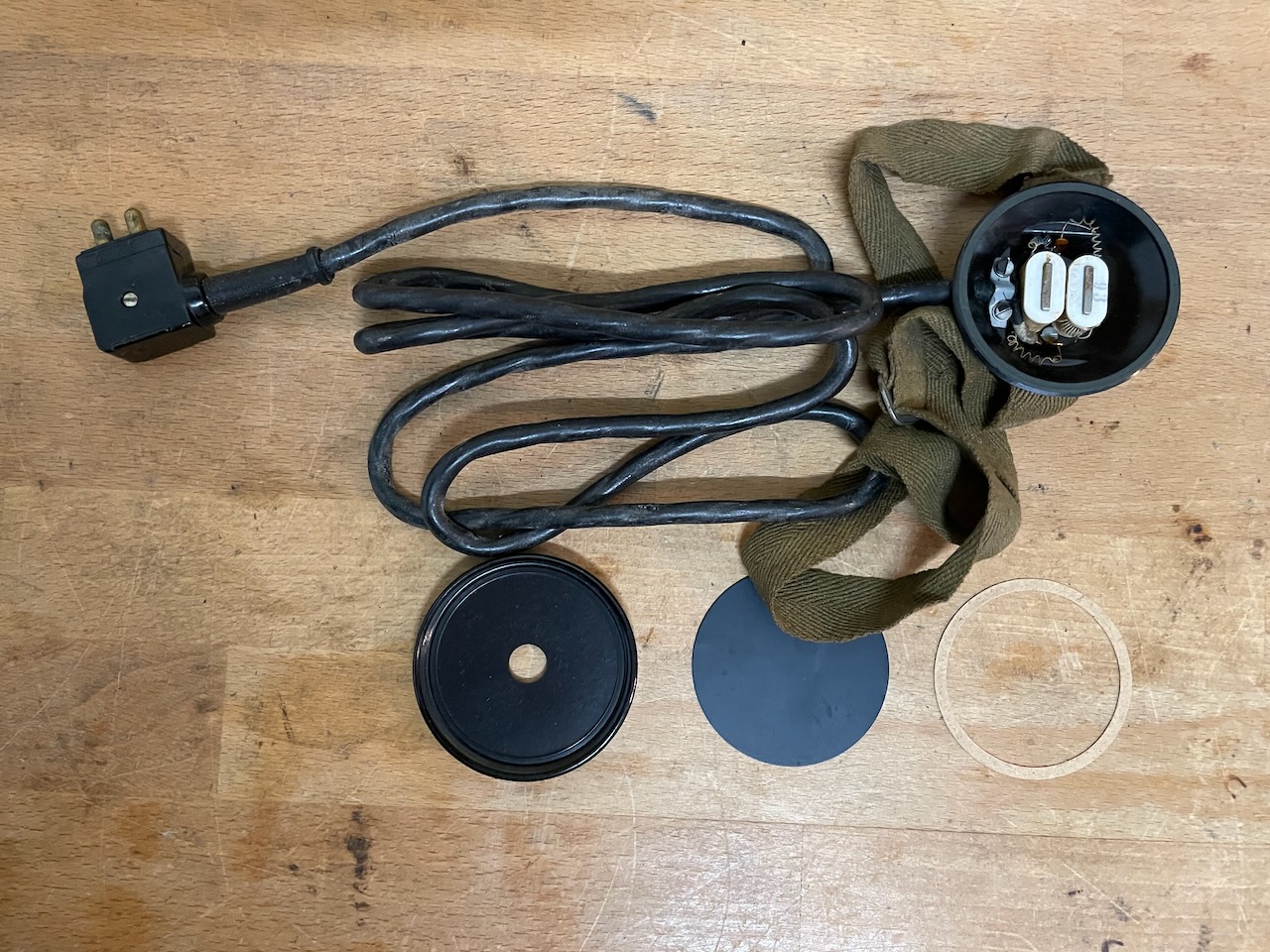
The headset with headband.
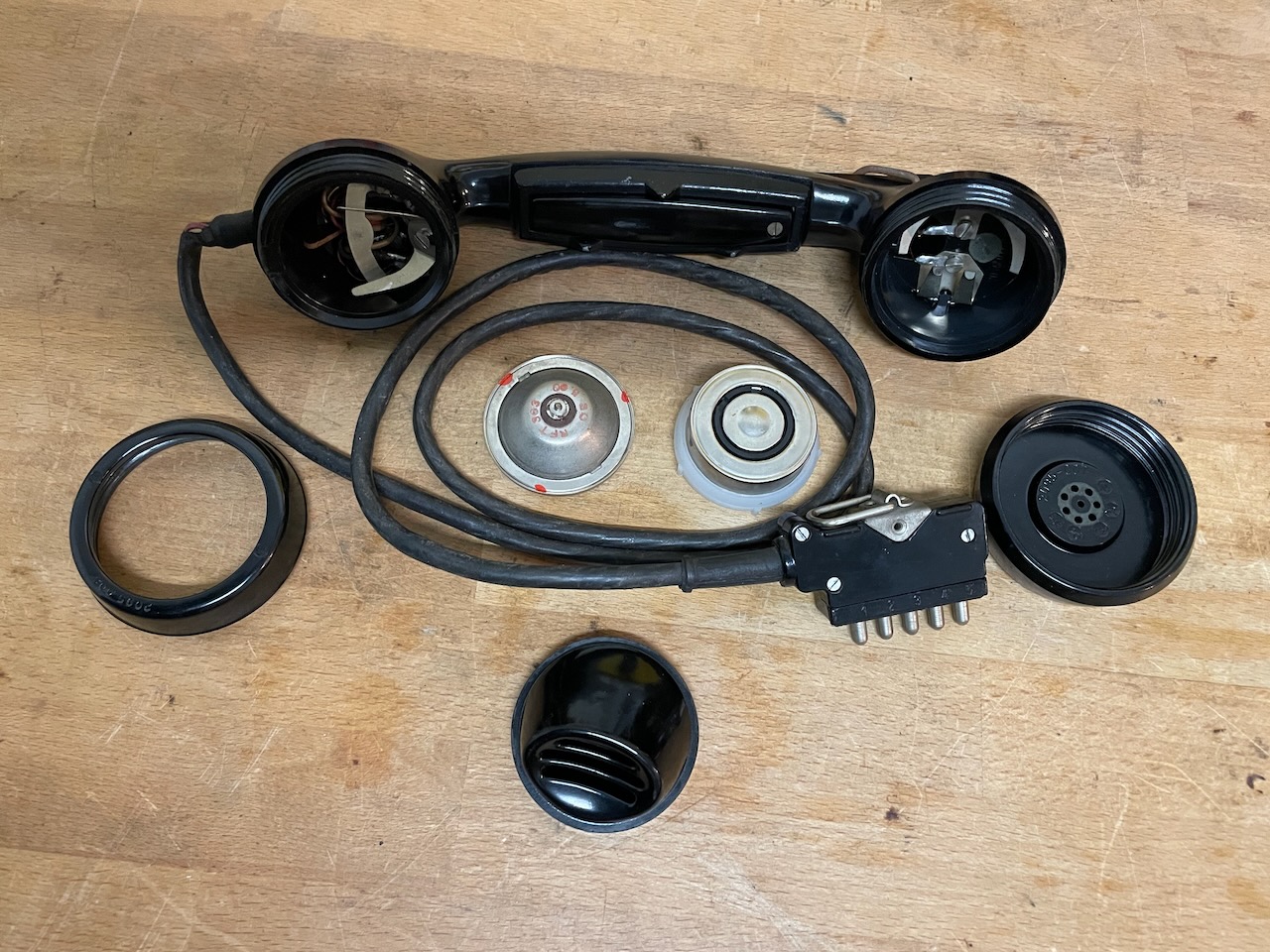
The handset is virtually identical to an FF 33 handset.
Also with the spacer studs to prevent the push-to-talk be pressed when resting the handset on the case.
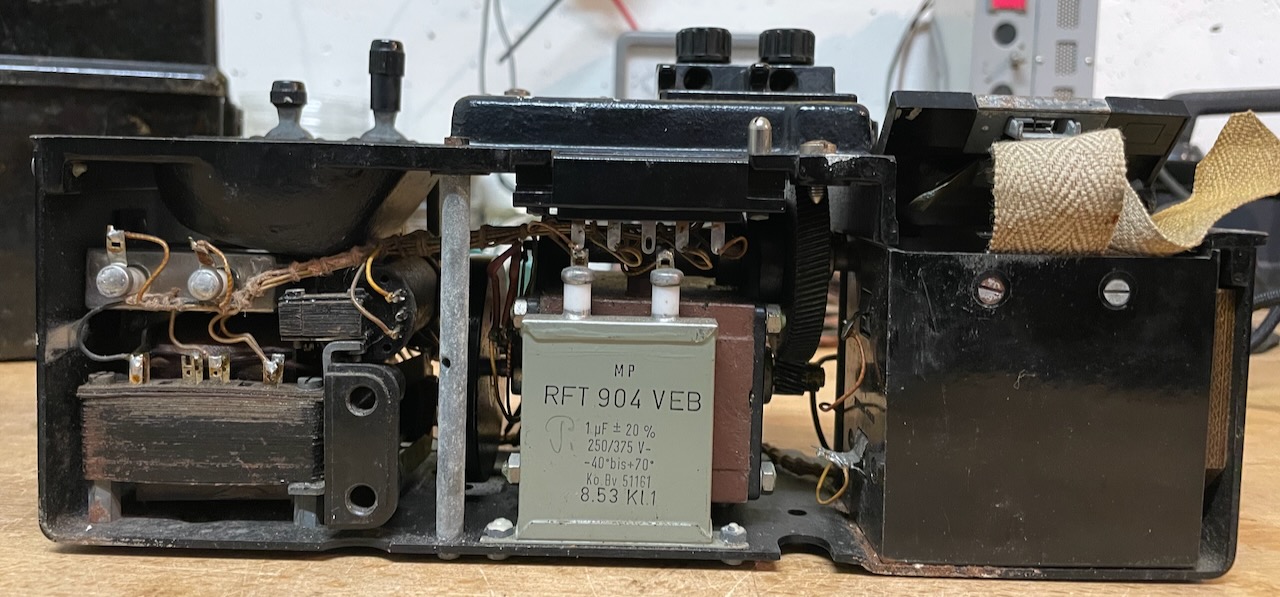
Chassis from the front.
Made in 1953 (capacitor date).
From left to right: 0.25uF cap., speech coil, signalling autotrafo, line sockets, magneto behind 1uF cap., battery cup.
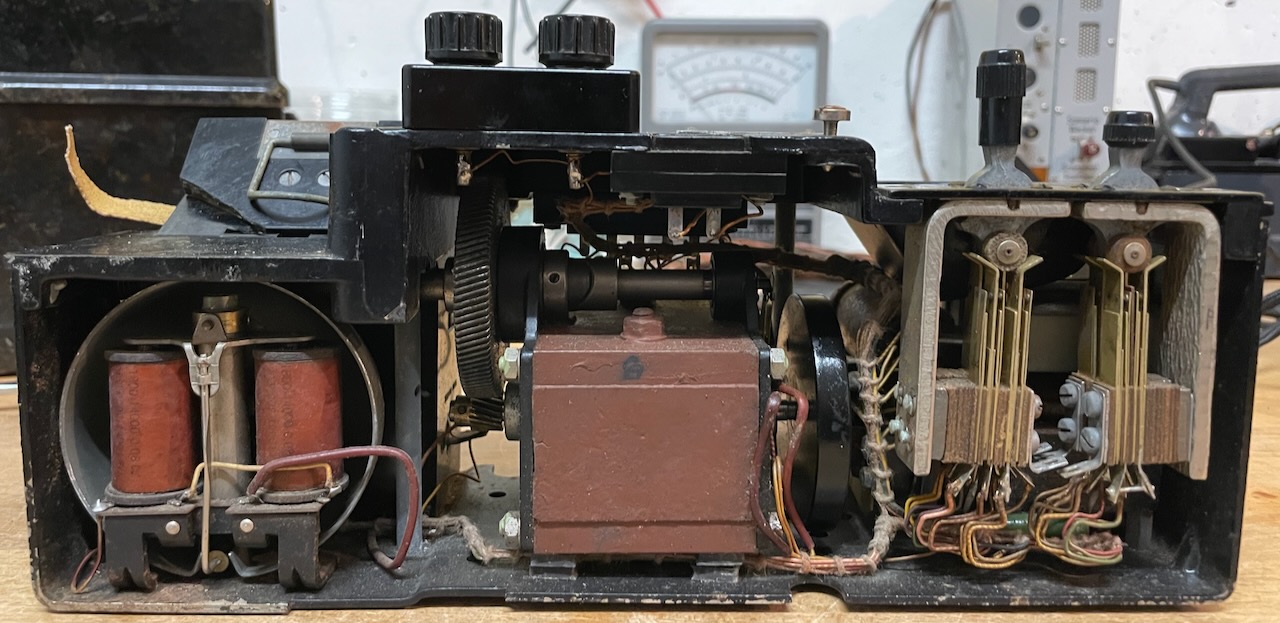
Chassis from the back.
From left to right: ringer, magneto (flywheel to the right of it), long line switch (calling or talking), test switch (line or instrument).
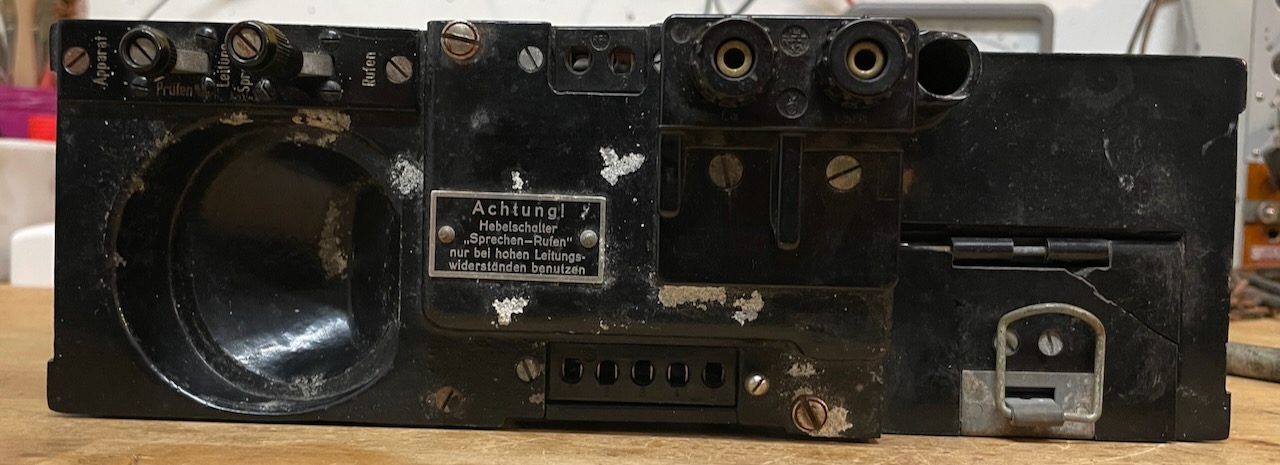
Chassis from top.
Top left: test switch - instrument (Apparat) or line (Leitung), long line switch - talking (Sprechen) or calling (Rufen).
Top middle: 2 prong headset socket, line binding posts.
Bottom: 5 prong handset socket.
To the right: crank storage hole and battery cup lid.
"Achtung! Hebelschalter „Sprechen-Rufen" nur bei hohen Leitungswiderständen benutzen": Attention! Use the "Speak-Call" toggle switch only when line resistance is high.
The two screws marked with red circles hold the chassis in the bakelite case.
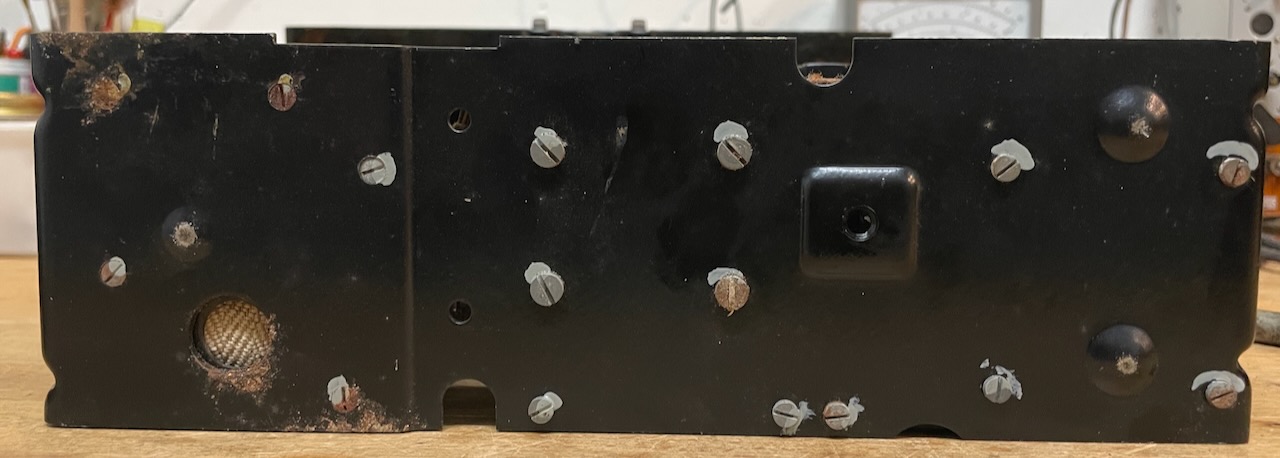
From the bottom, screws tamper sealed.
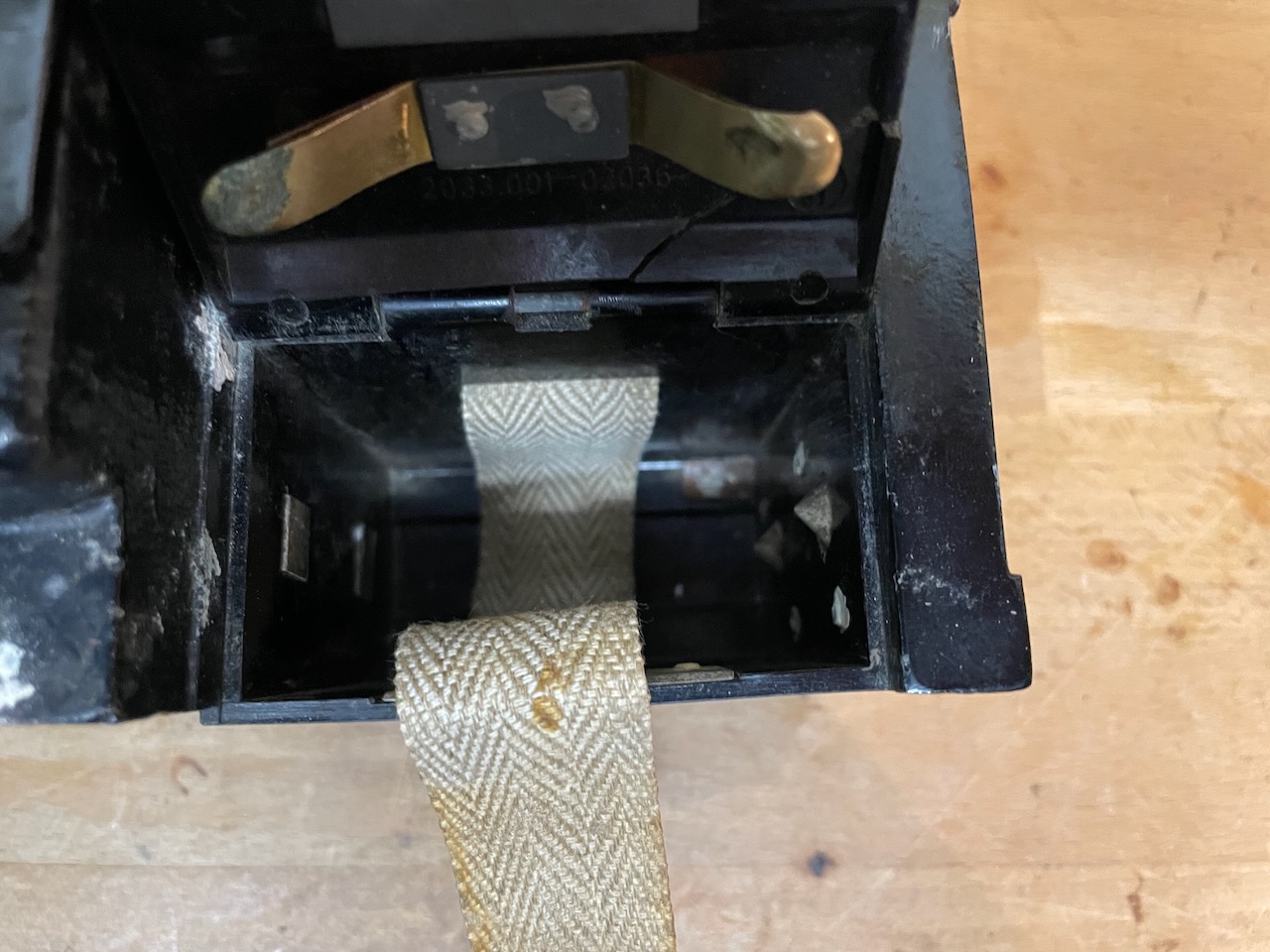
Battery cup with battery remove band.
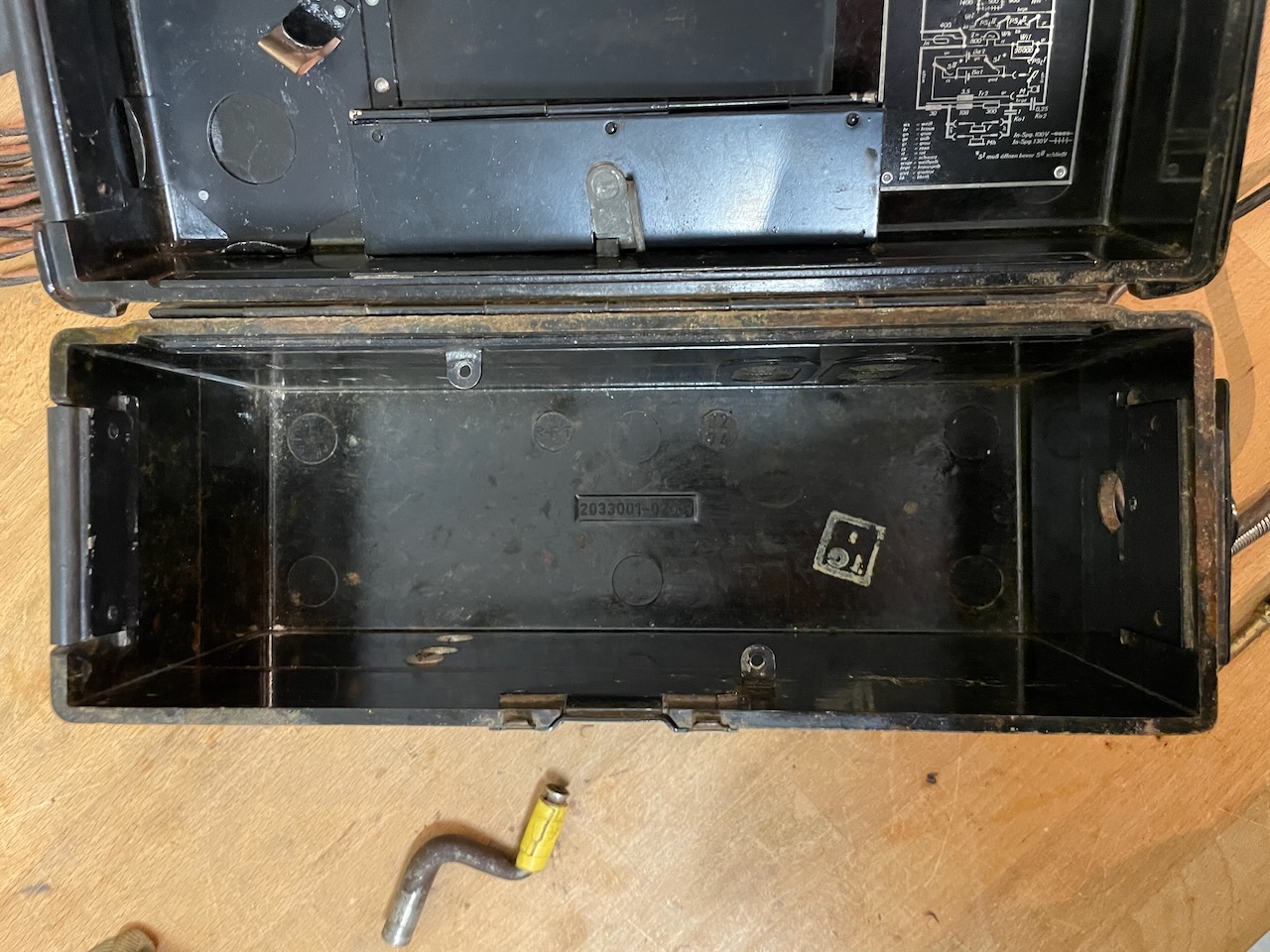
Empty bakelite case.
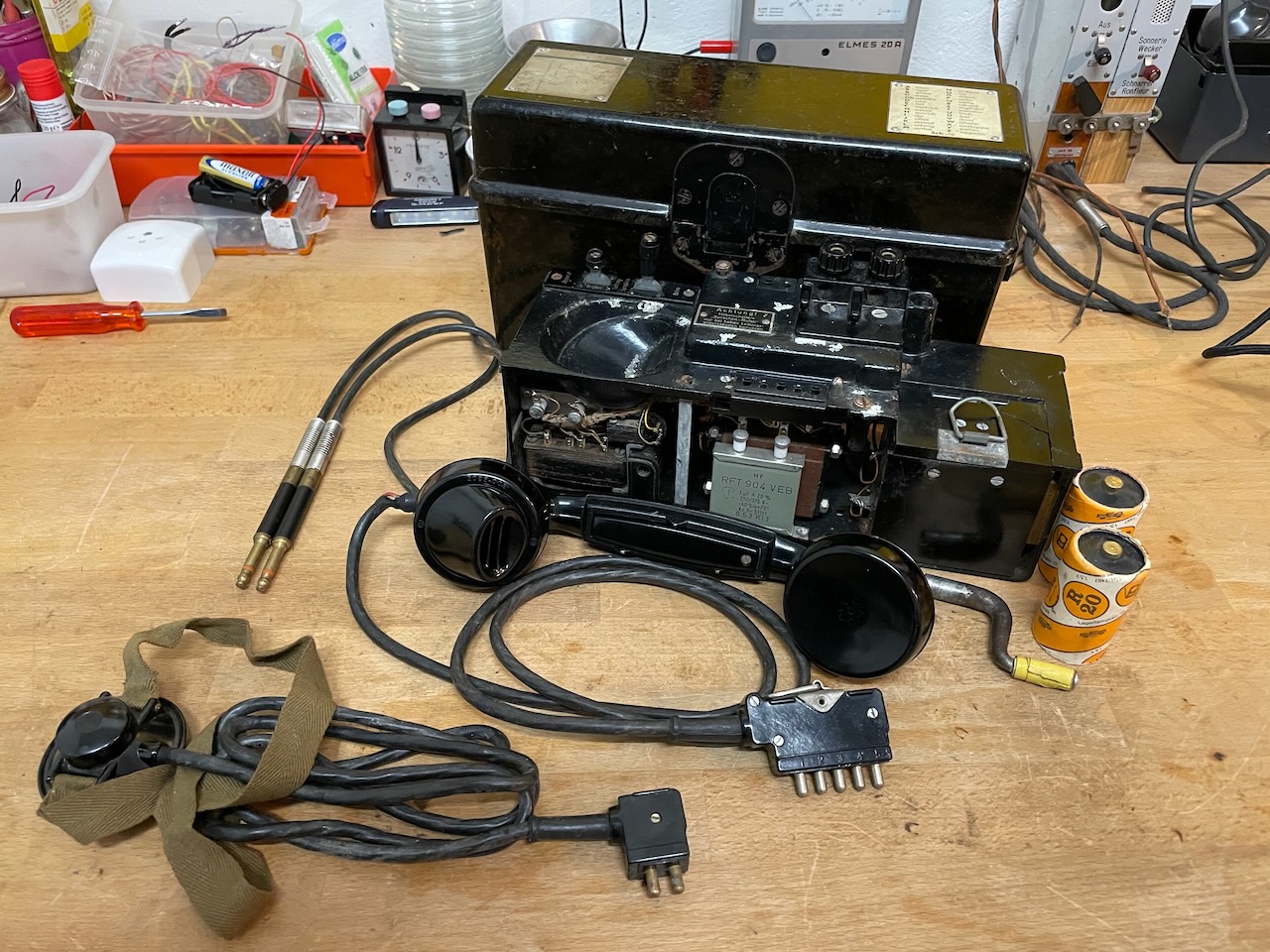
Neatly arranged parts.
The instrument includes a patchcord.
Ready to use.
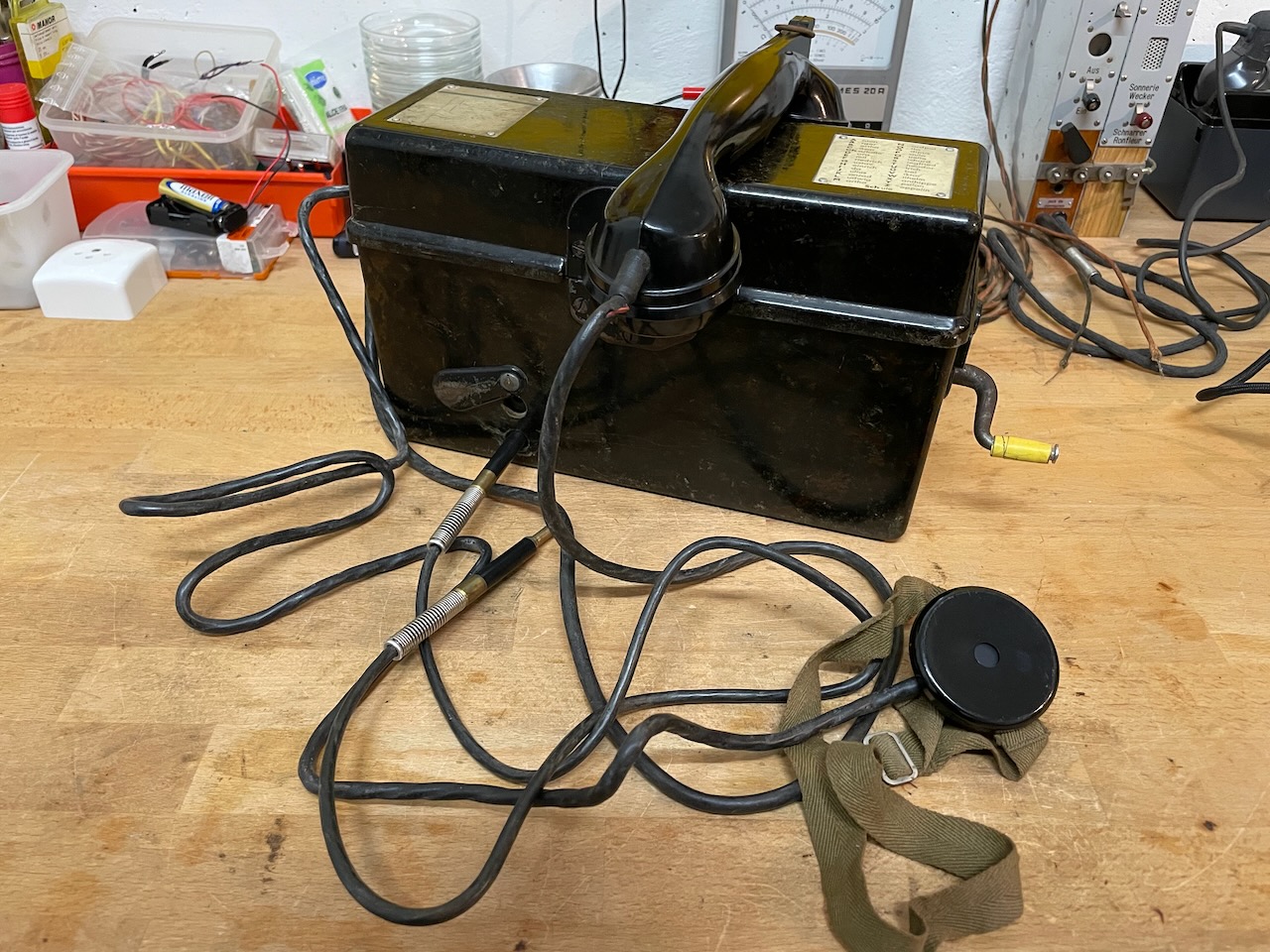
Patchcord and headset stored inside lid.
Handset and magneto crank stored on top of chassis.
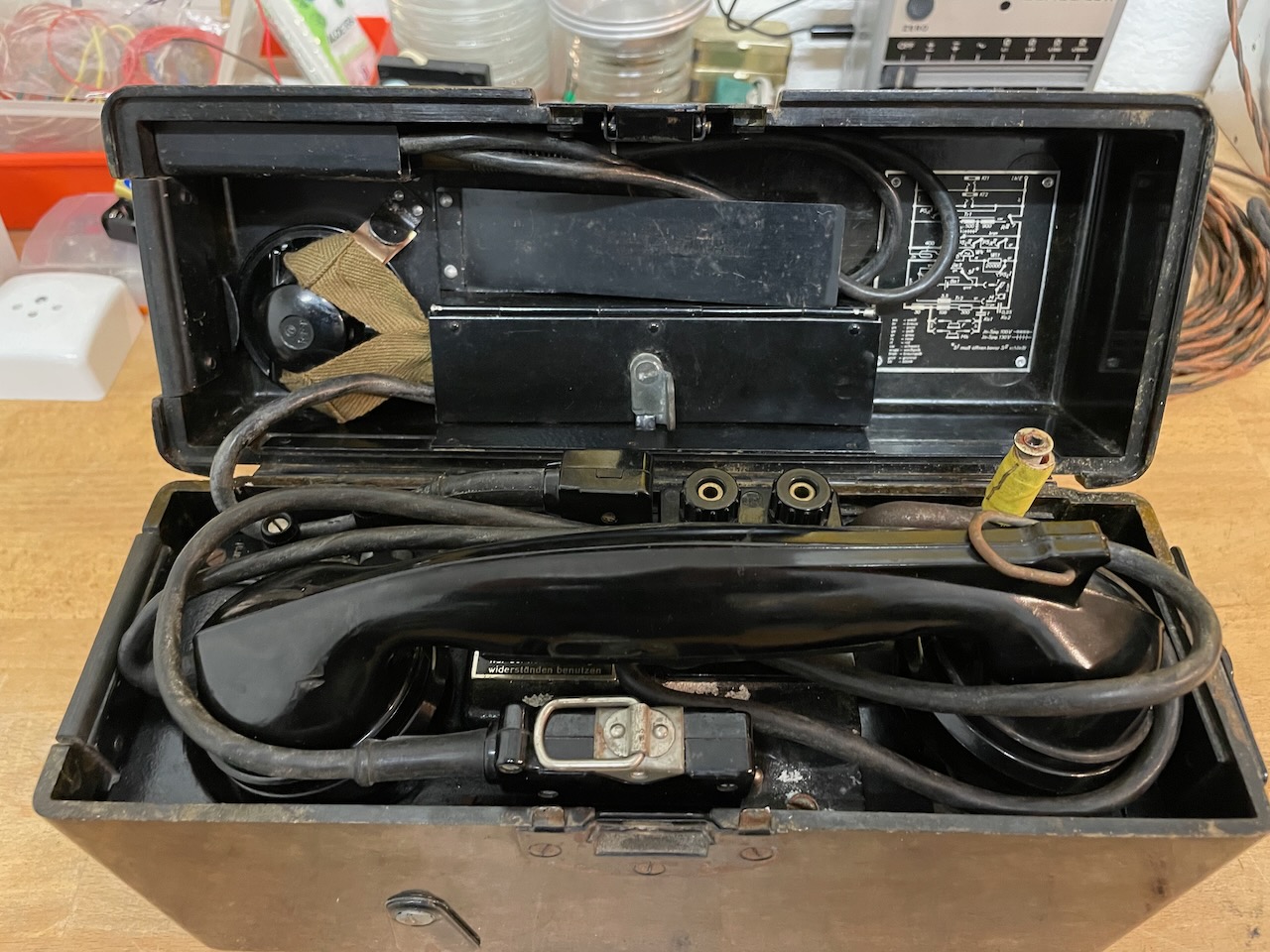
Ready for transport.
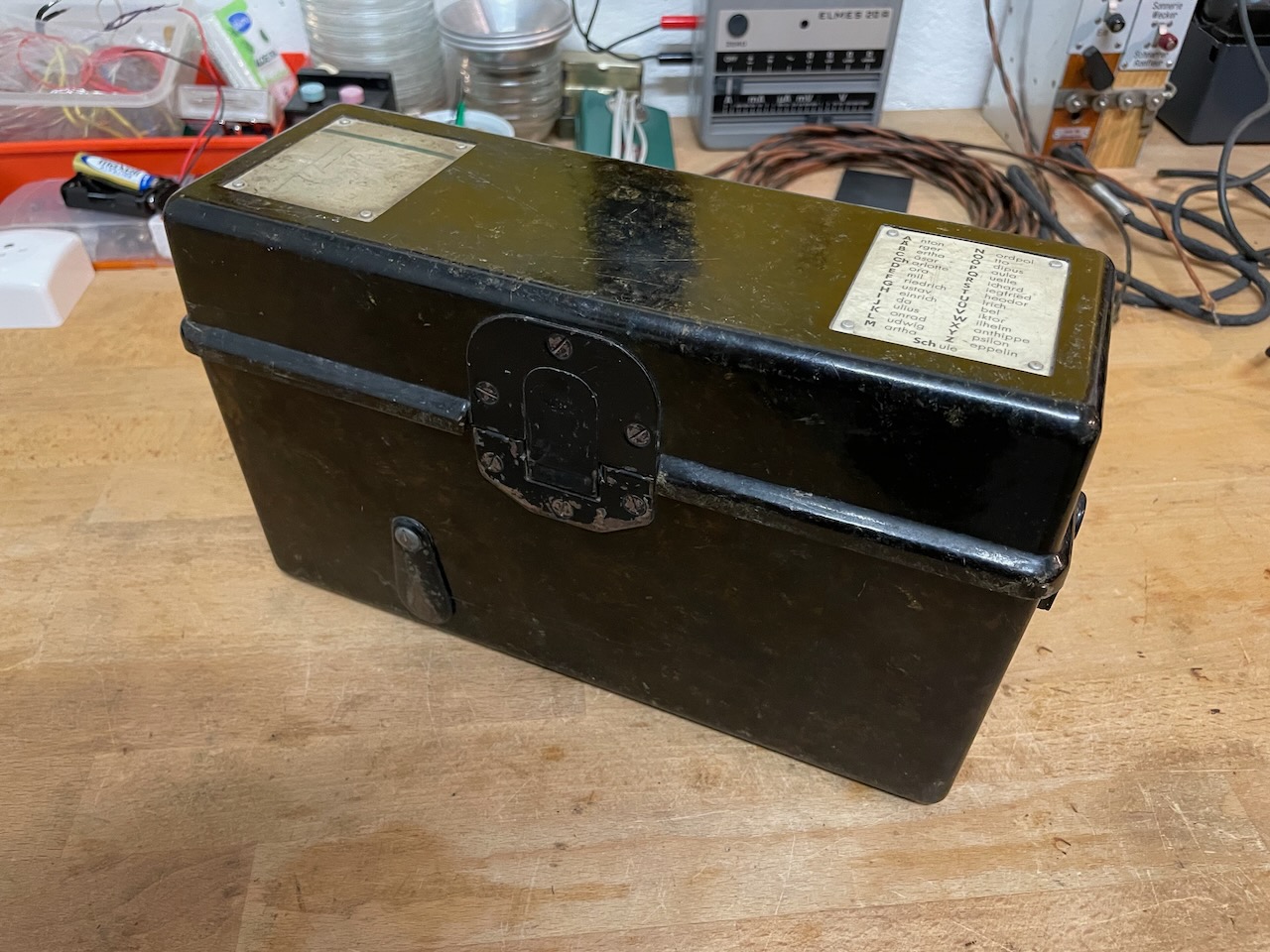
From the back, with ringer grille.
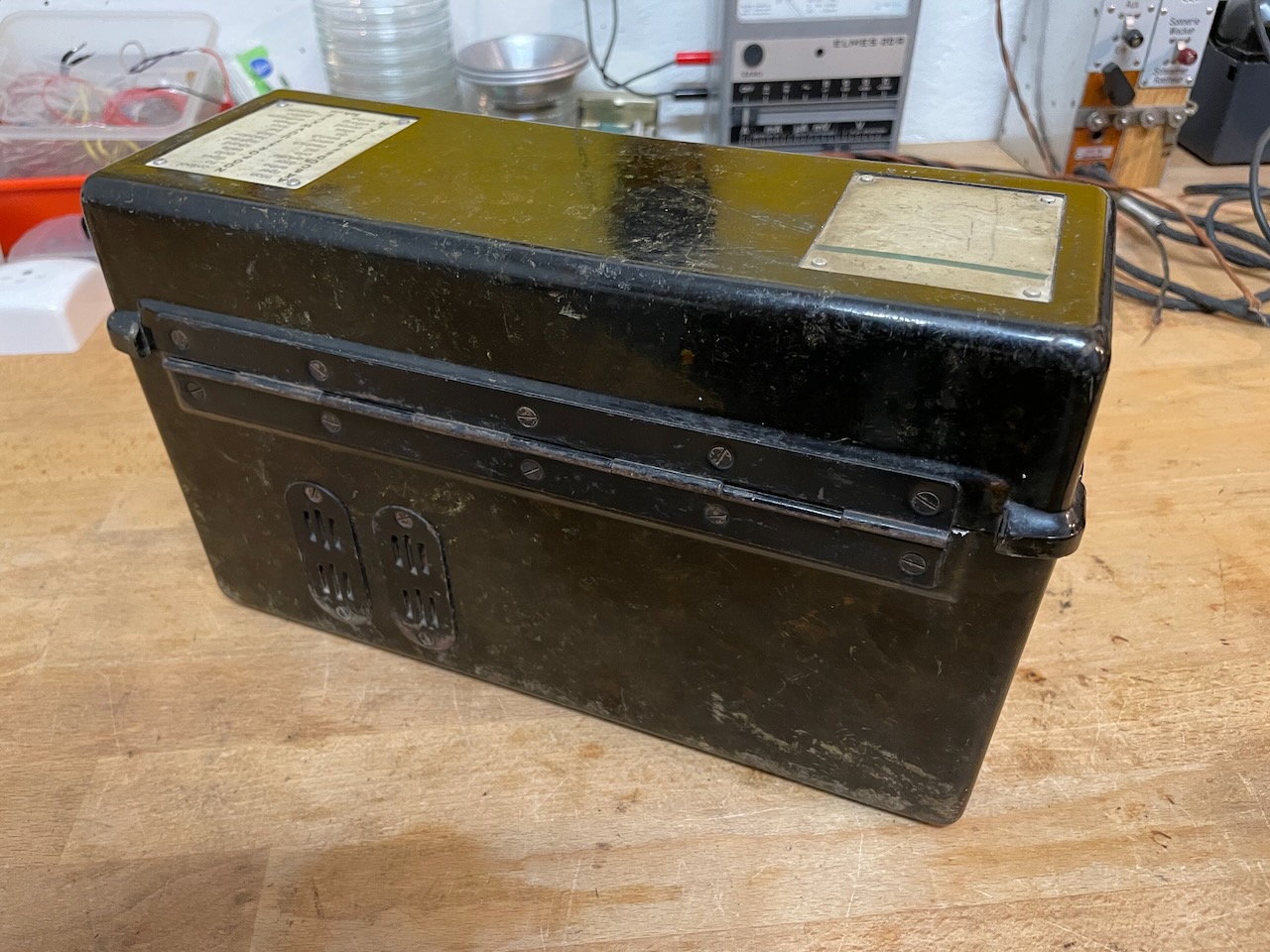
Magneto crank hole covered.
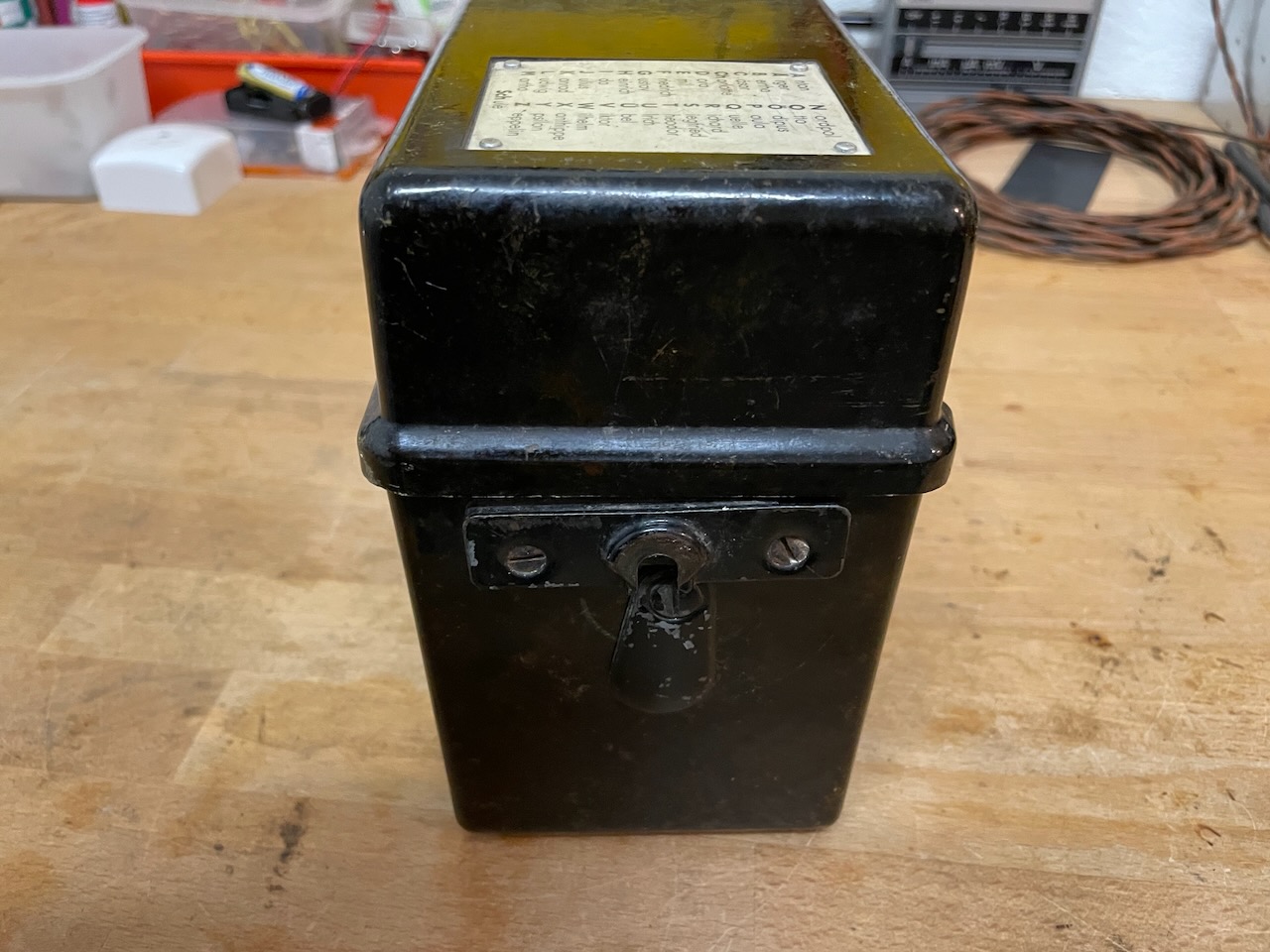
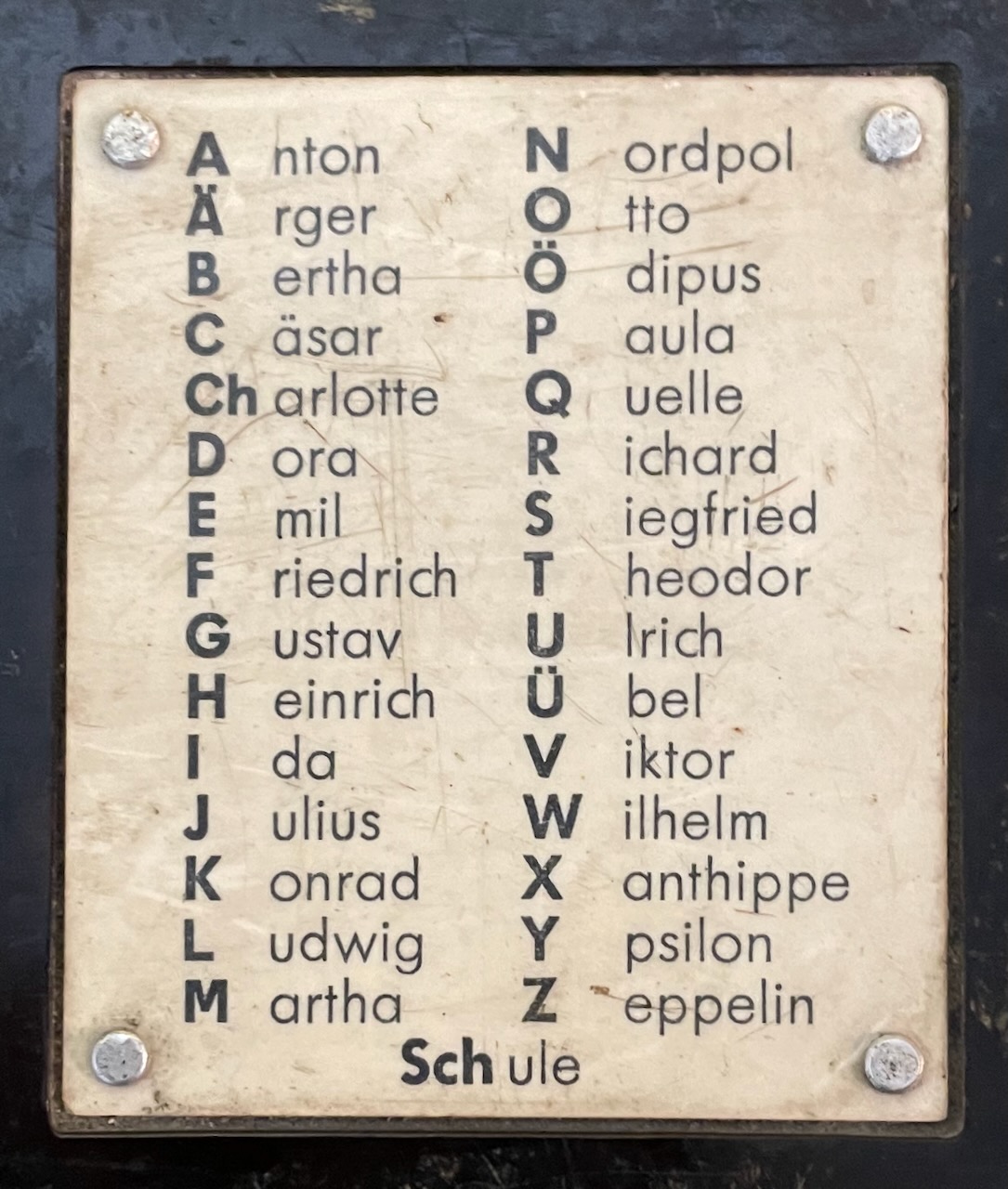
FF 53 Spelling table, still German WWII (post 1939) version used with "ödipus" instead of "öse".
FF53 in front (green line), FF53a in the back (red line).
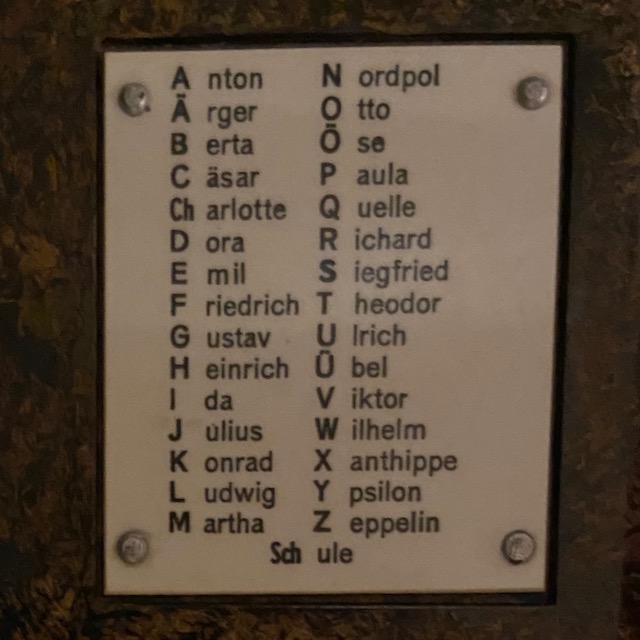
FF 53a Spelling table, German post WWII version.
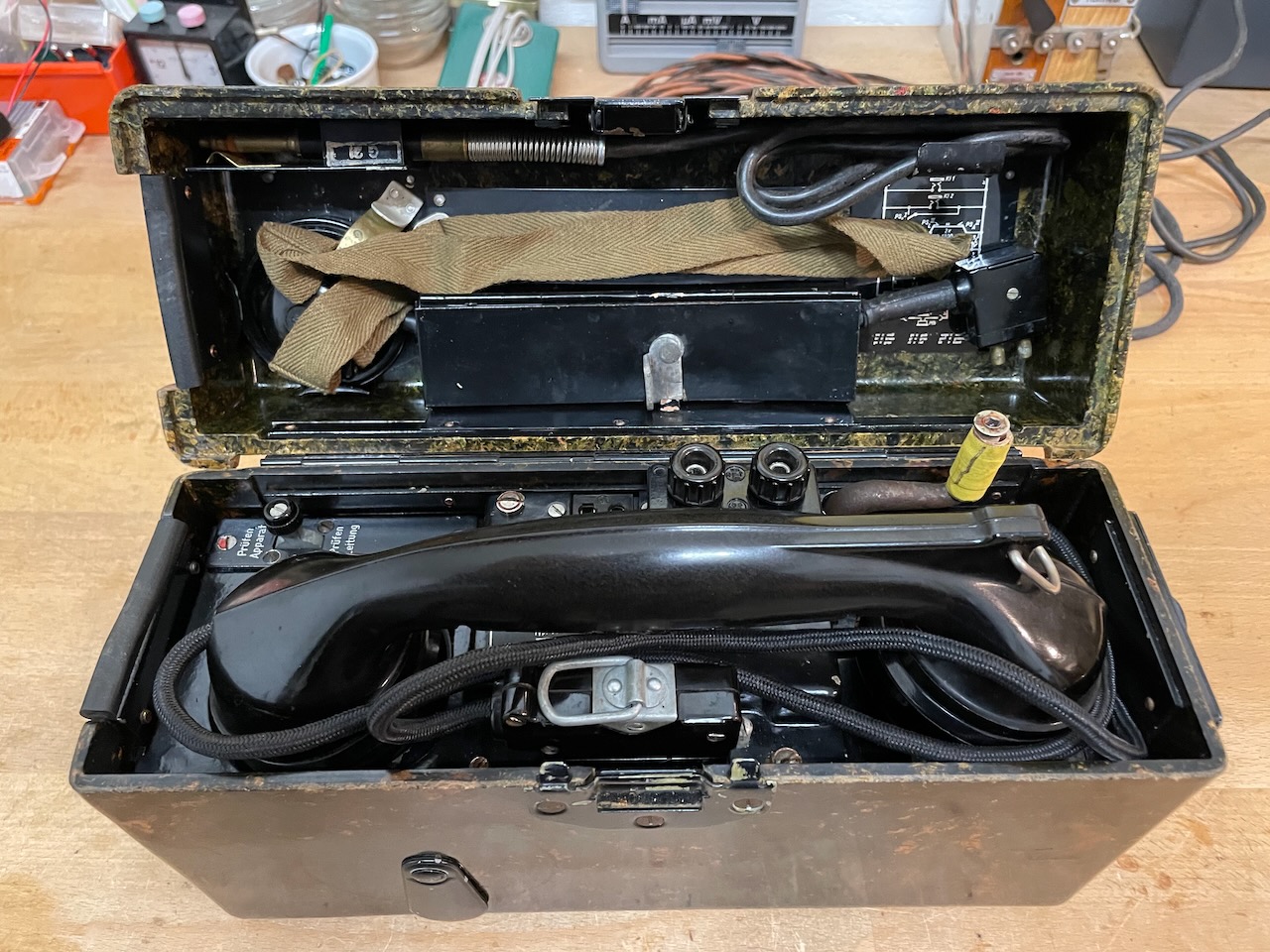
FF53a storage setup inside lid minor differences but generally all same same.
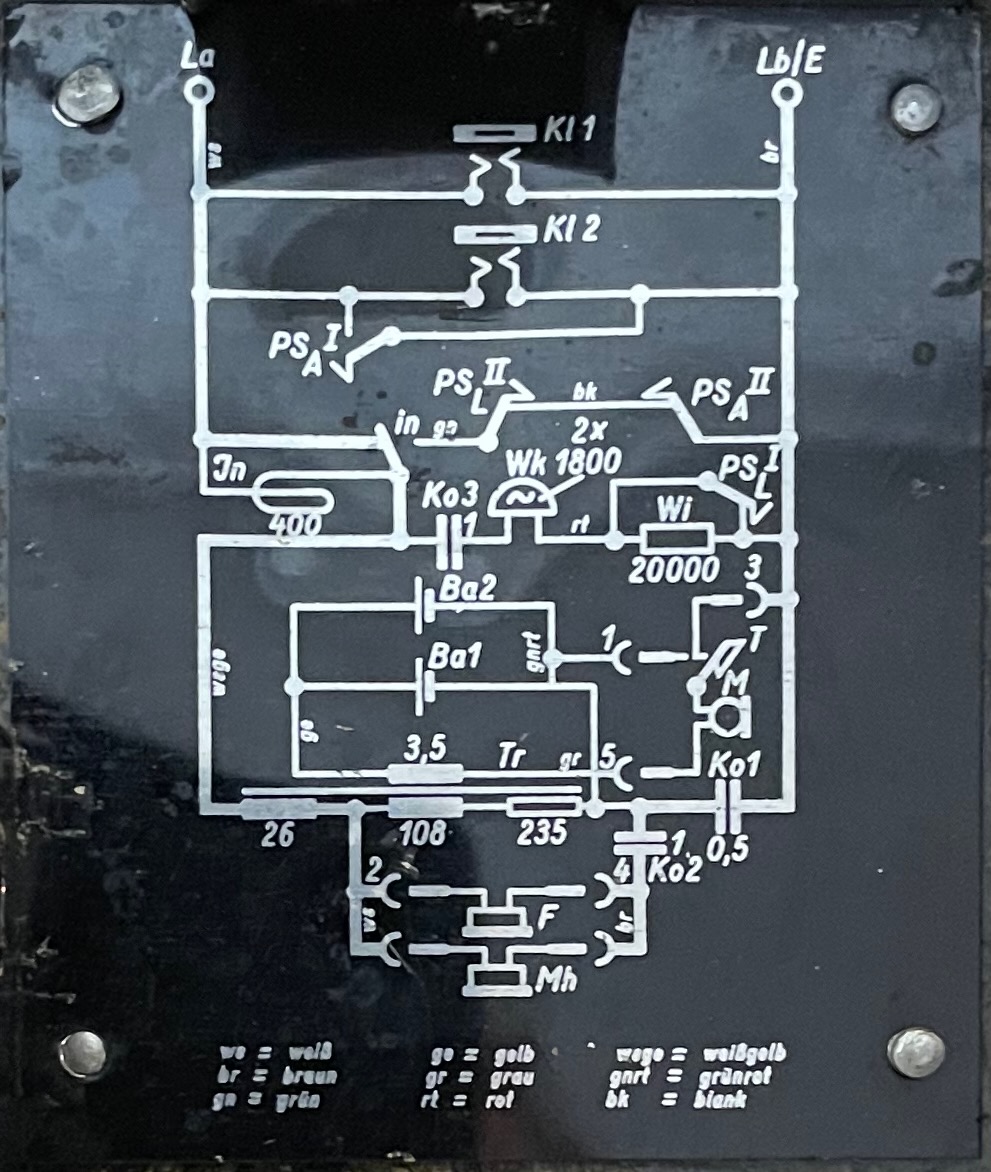
FF53a diagram.
Simpler setup as "long lines" battery switch and autotrafo arrangement is omitted.
But handset prong no. 3 is used to switch a DC current to the line for remote radio switching.
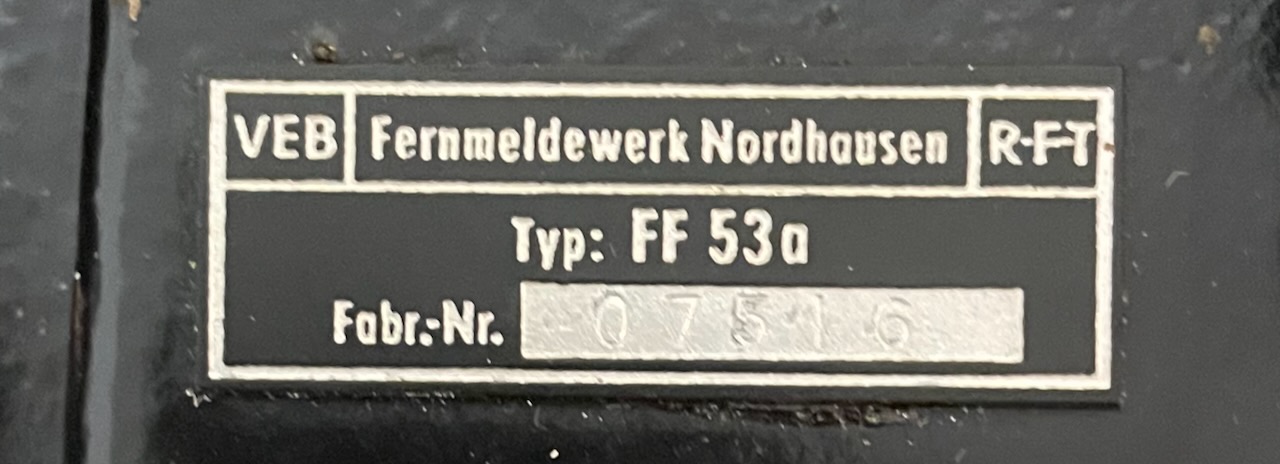
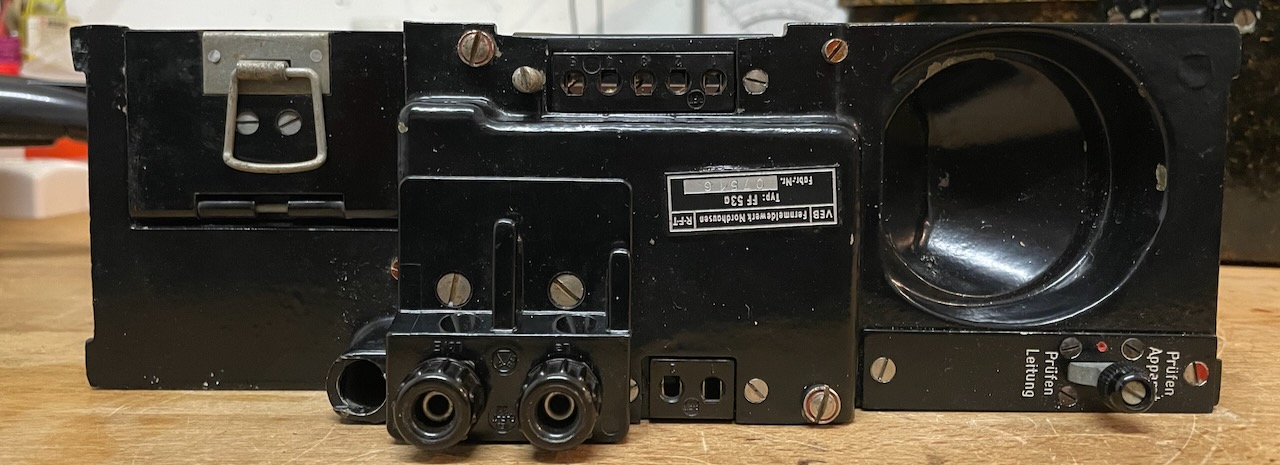
FF53a Made by VEB Fernmeldewerk Nordhausen.
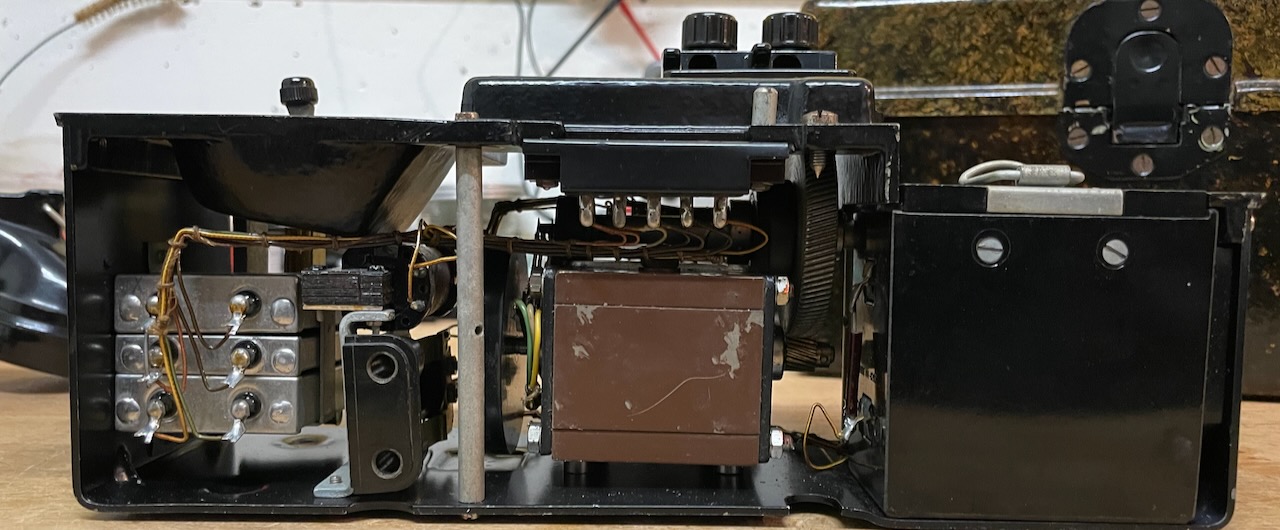
FF53a Chassis from the front.
More space than in the FF53 as no autotrafo fitted.
From left to right: Capacitors, coil, line sockets, magneto, battery cup.
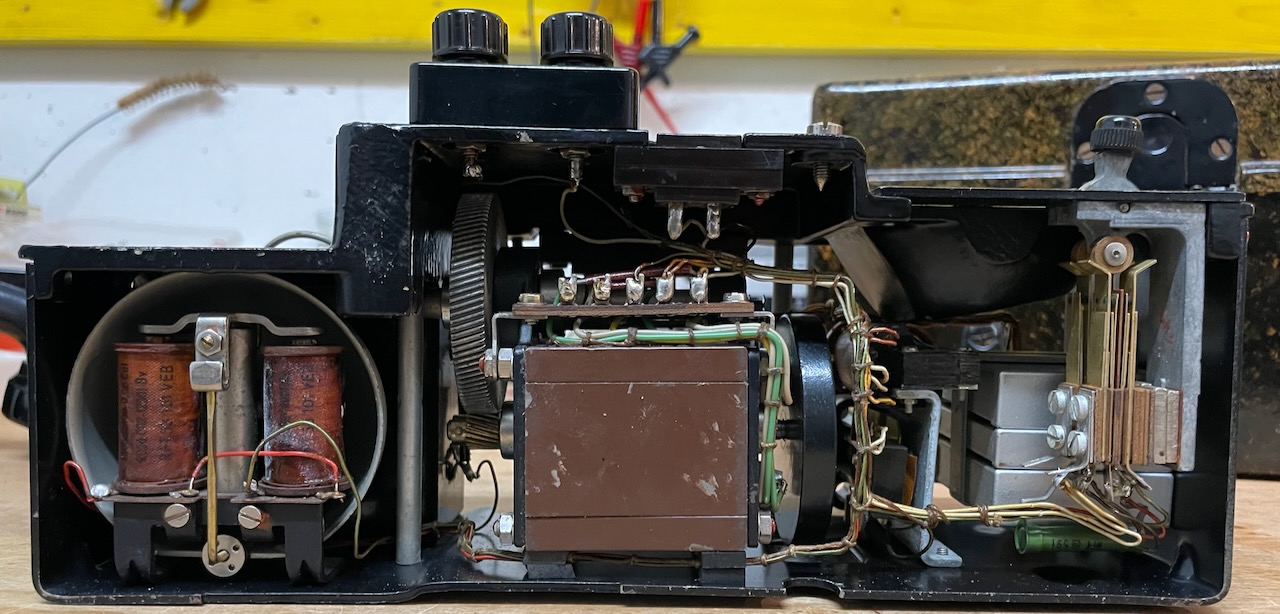
FF53a Chassis from the back.
From left to right: ringer, magneto (flywheel to the right of it), test switch (line or instrument).
FF53a Chassis from top.
Identical setup than the FF53, but no "long lines" switch, only the line test switch.
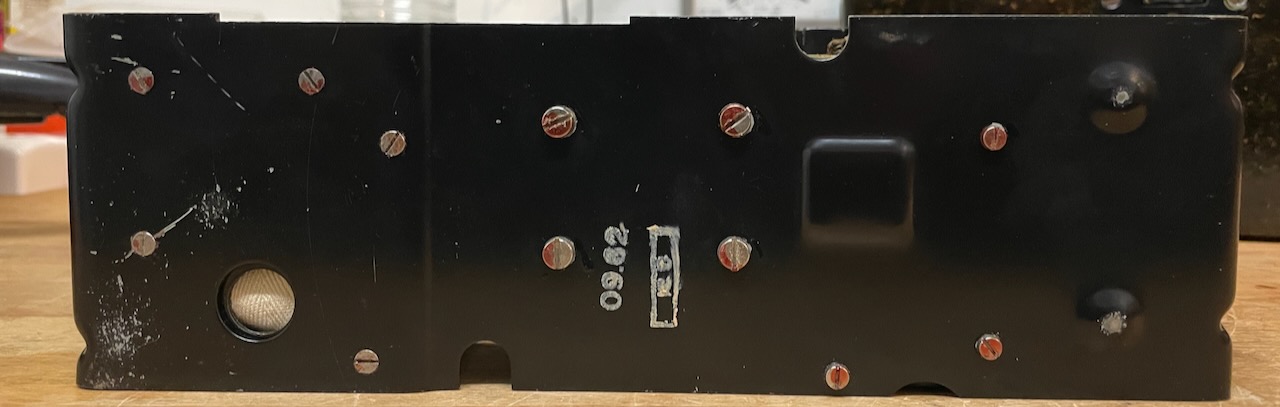
FF53a From the bottom, screws tamper sealed.
Made in 1962.
From "Der Fernsprecher", 1959 [1].
From "Der Fernsprecher", 1959 [1].
Creative Commons Attribution-ShareAlike 4.0 International License