Find more details on British field telephone history on the British Field Telephones Timeline.
Shortly before the First World War, the introduction of the C Mk II (magneto set) and D Mk III (buzzer set) marked a modernisation of the British Army's field telephone equipment [11][12].
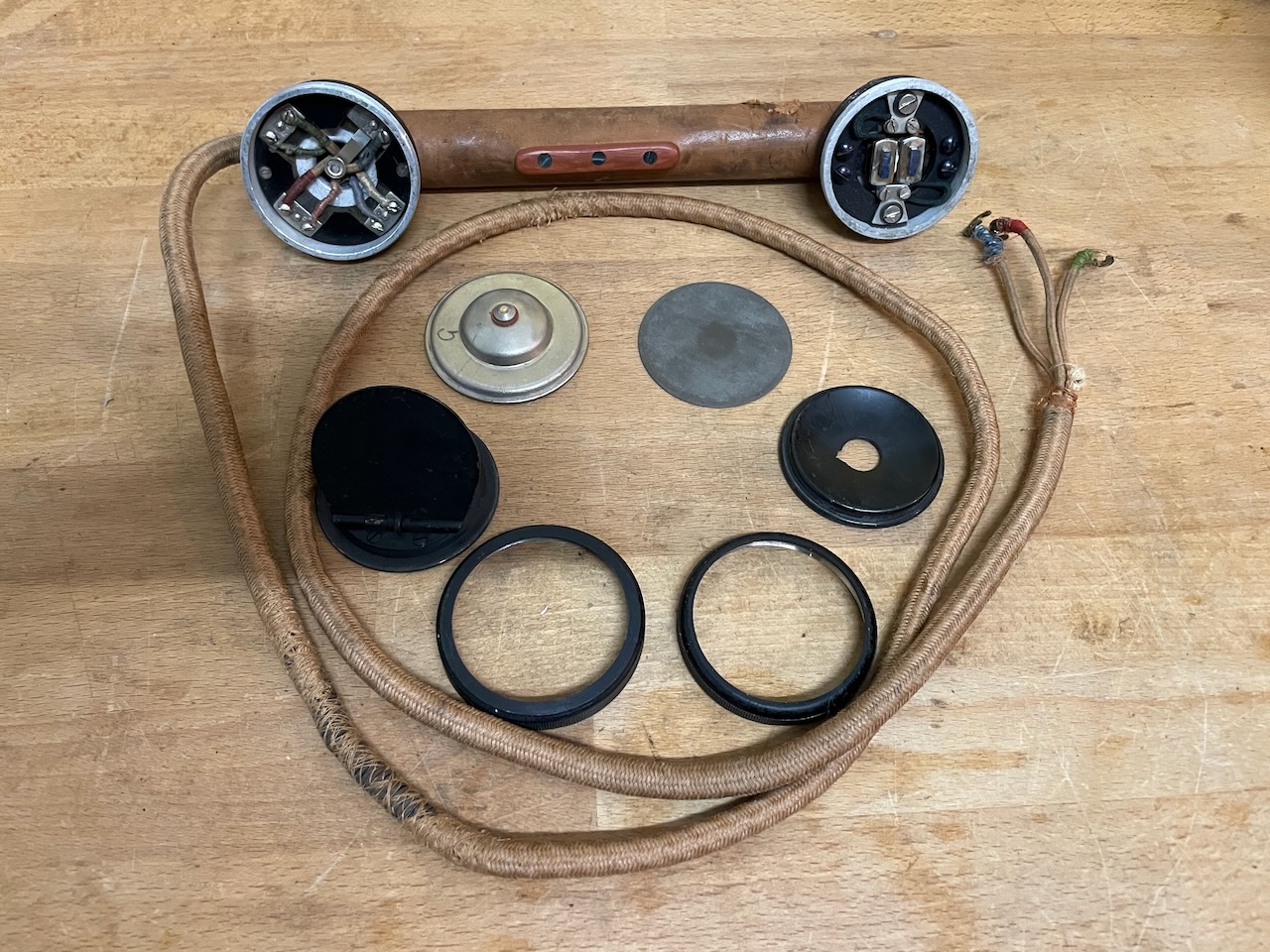
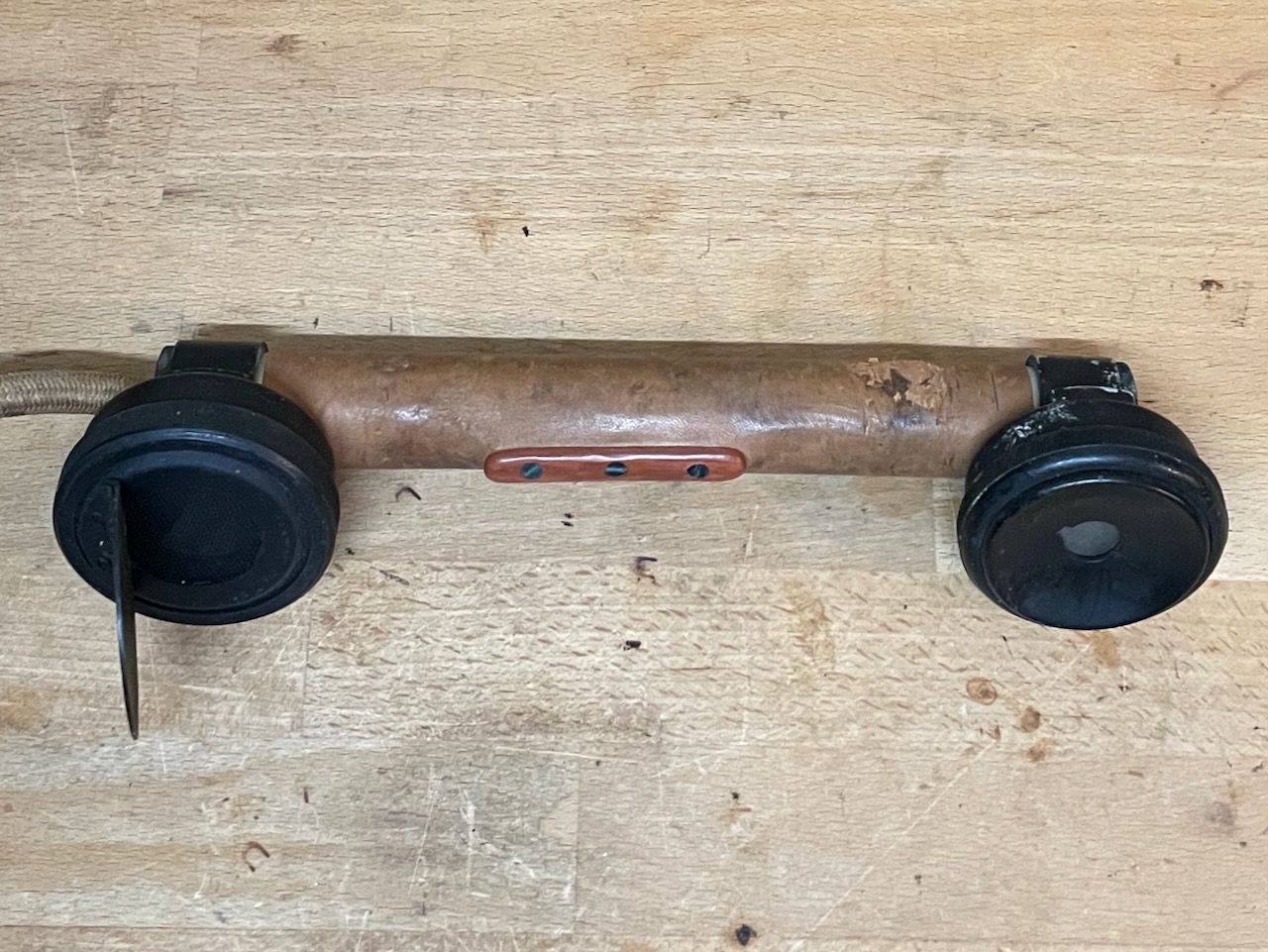
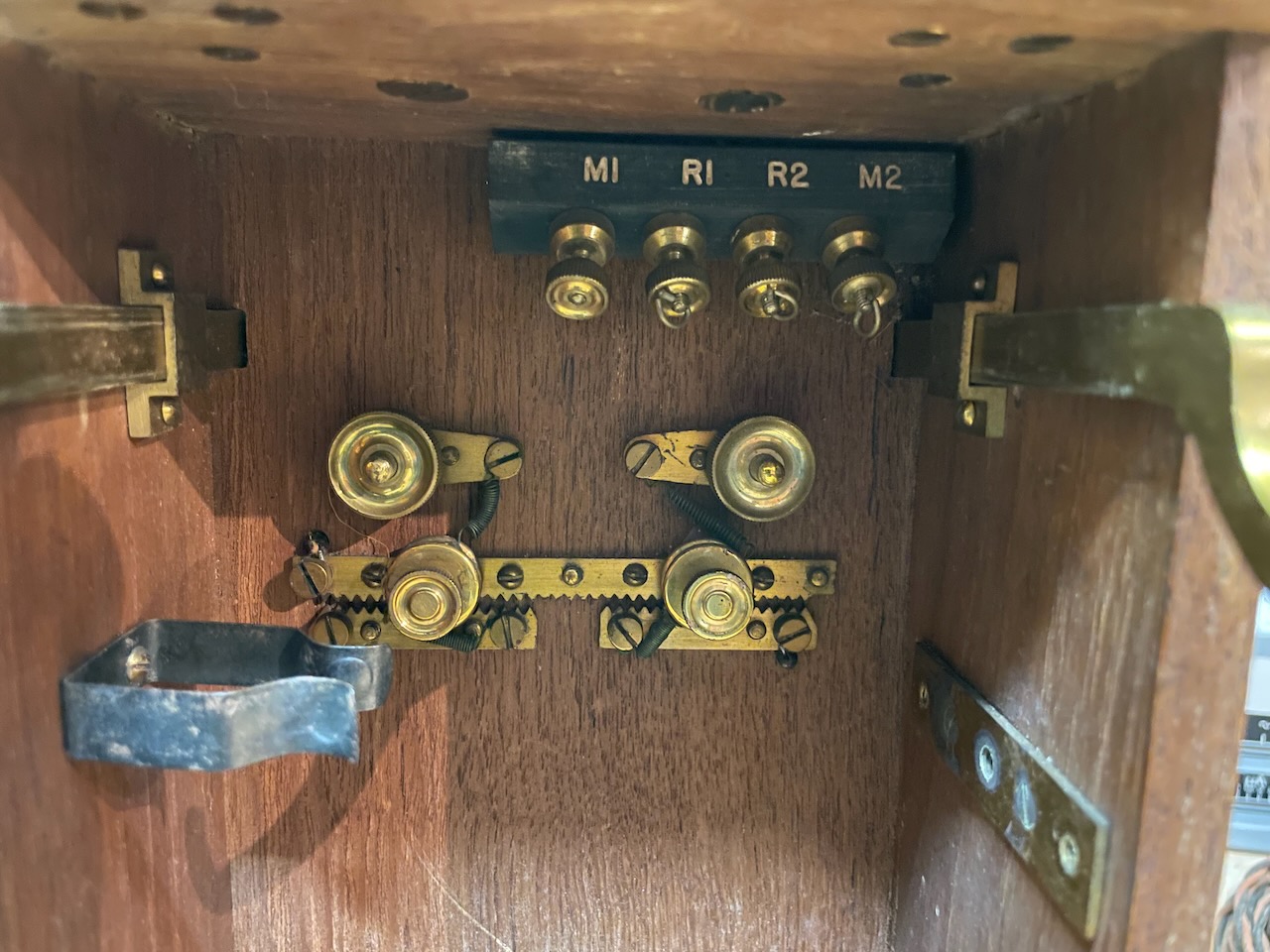
The Telephone Set Portable C Mk II is housed in a sturdy wooden box, providing good protection for the internal components. Weighing approximately 9 kg, it is a rather heavy and bulky field telephone. The electrical arrangement is relatively simple, featuring a hand-cranked magneto generator (short-circuited when not in use), a polarised bell ringer and a simple induction coil with primary and secondary windings. A wire based bobbin lightning discharger is fitted together with spare bobbins and wires. Two dry cells provide power for the speech circuit. The case has two separate lids, one for the operator and another providing access to the battery compartment and internal components for maintenance. The aluminium handset (elephone, Hand, C Mark III), fitted with a leather-covered handle, is stored in the front compartment of the case. The handset is removable, the cord has four conductors: two for the microphone (M1, M2) and two for the receiver (R1, R2). All four corresponding binding posts are present on the instrument, although M2 is not required for this circuit arrangement and has no further internal connection. On my example, the M2 conductor has either broken off or was deliberately cut, as it is not needed.
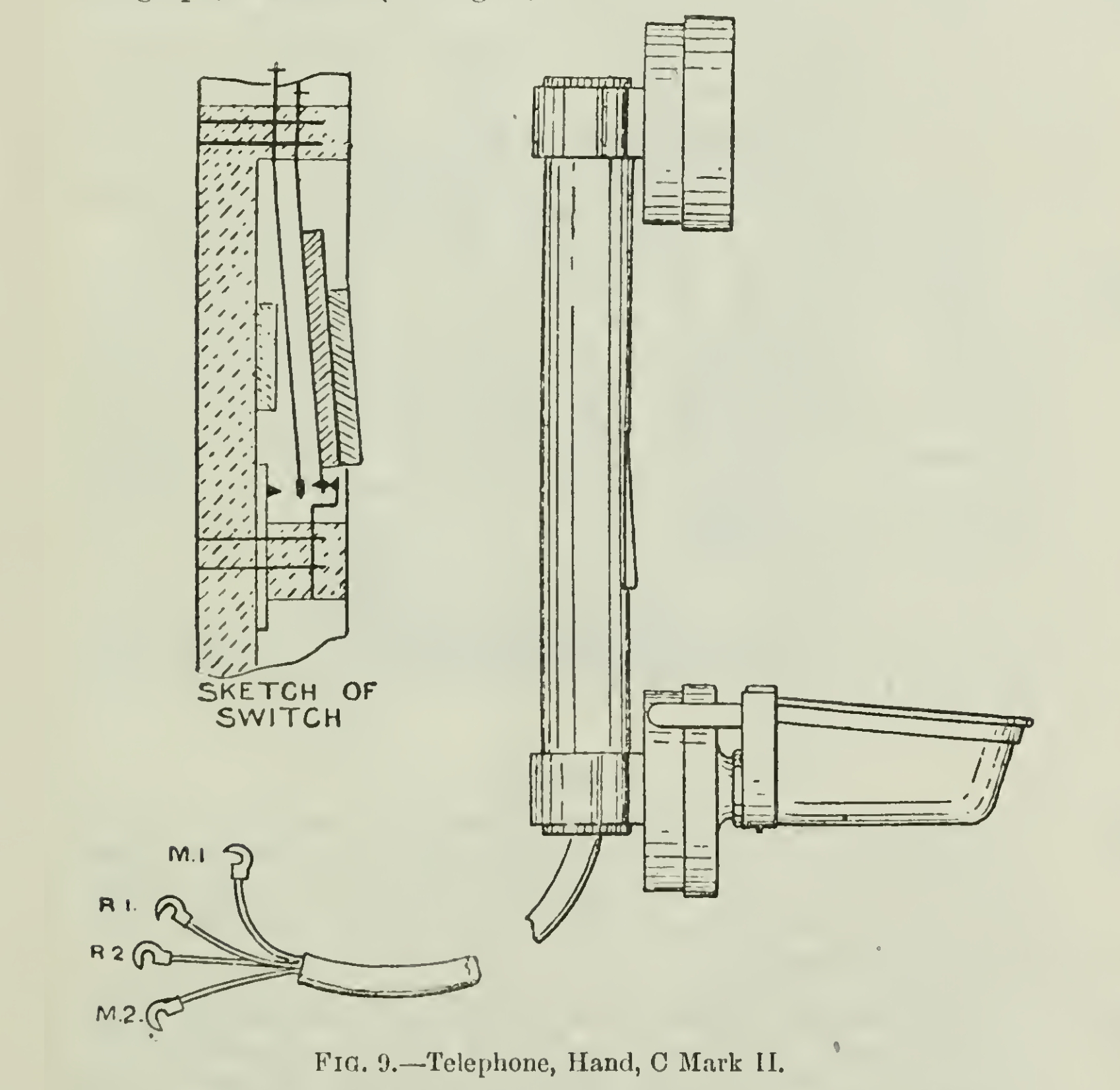
The C Mk II was originally fitted with the Telephone, Hand, C Mark II [1], featuring a leather ear cushion and a folding leather hood over the mouthpiece. Later examples, including mine and all the few I have found pictured online [31][32][33], are fitted with the Telephone, Hand, C Mark III [1][2], featuring a fibre earpiece and a folding metal deflector over the mouthpiece.
Two other examples pictured online [32][33] show a later modification, with the line binding posts relocated to the outside of the wooden case and holes drilled into the back, possibly to improve battery ventilation and/or make the ringer more audible.
Telephone Set Portable, C Mark II: [1]
This instrument has been specially designed to obviate the difficulties experienced with Mark I.
The case has a lid at each end : one, fixed with a simple hook, gives access to the hand telephone, generator handle, and is for the use of the operator;
the other, fixed with screws, gives the lineman a convenient means of testing the internal arrangements.
The weight is about 20 lbs., and the box is fairly waterproof whether open or shut.
Its dimensions are 11 inches high by 10 inches deep by 5 inches wide.
Hand telephone C, Mark II, and C telephone ear cushion forms part of the set, and two "Cells, electric, dry P" are used with it.
The C II Portable Telephone Set: [2]
This set was introduced as an improvement on the C Mk. I, and is now the standard magneto-ringing telephone set in the service.
The generator, magneto bell, and secondary speaking circuit are all connected in parallel, but to ensure that any incoming ringing current shall all
pass through the bell, the generator and speaking circuits are normally disconnected.
The generator is disconnected by an automatic cut-out device, the speaking circuit at the pressel switch of the hand telephone, which is of the C Mk. III type.
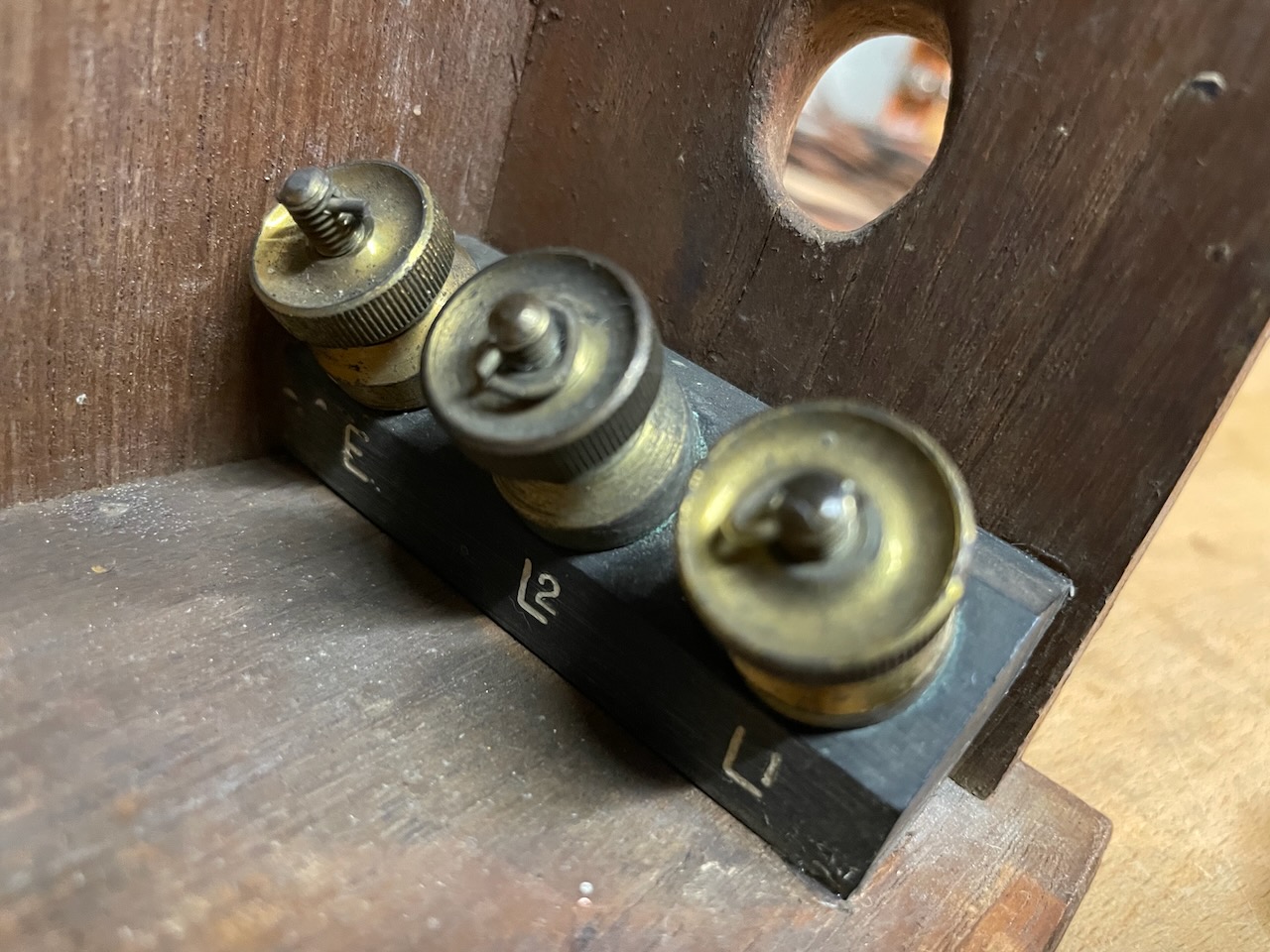
The set is protected from lightning by a bobbin discharger and a serrated plate discharger in each line. There are three terminals, L1 and L2, which are the terminals of the telephone set, and E which goes to the earth plate of the lightning discharger only.
Hence when working with a metallic circuit the two lines go to L1 and L2, whilst E is connected to earth.
If an earth return is used, L1 goes to line, whilst L2 and E are strapped together and connected to earth.
The box opens at the two ends.
The front, which is held by a hook only, gives access to the line terminals, the hand telephone, the lightning dischargers, and the generator handle.
The back, held by screws, admits of the removal of the battery and a tray, which latter carries the generator, bell and induction coil.
Lightning Dischargers: [1]
The "discharger, lightning, bobbin, Mark I" is used with most of the service field pattern instruments, and consists of a metal reel on which are wound a few turns of silk-covered wire.
This wire forms a portion of the line circuit.
The bobbin is connected to earth by being screwed on to an earthed plate, forming part of the set with which it is used.
A lightning discharge will break through the insulation to earth, and may even fuze the wire and thus put the line to earth and disconnect the instrument.
This discharger is very efficient, and also very compact, but has the disadvantage of usually putting a fault on the line when it acts.
It is, however, very easily replaced: a spare bobbin is always supplied, and also a reel of wire for rewinding.
The wire used is known as "Wire, electric, W3".
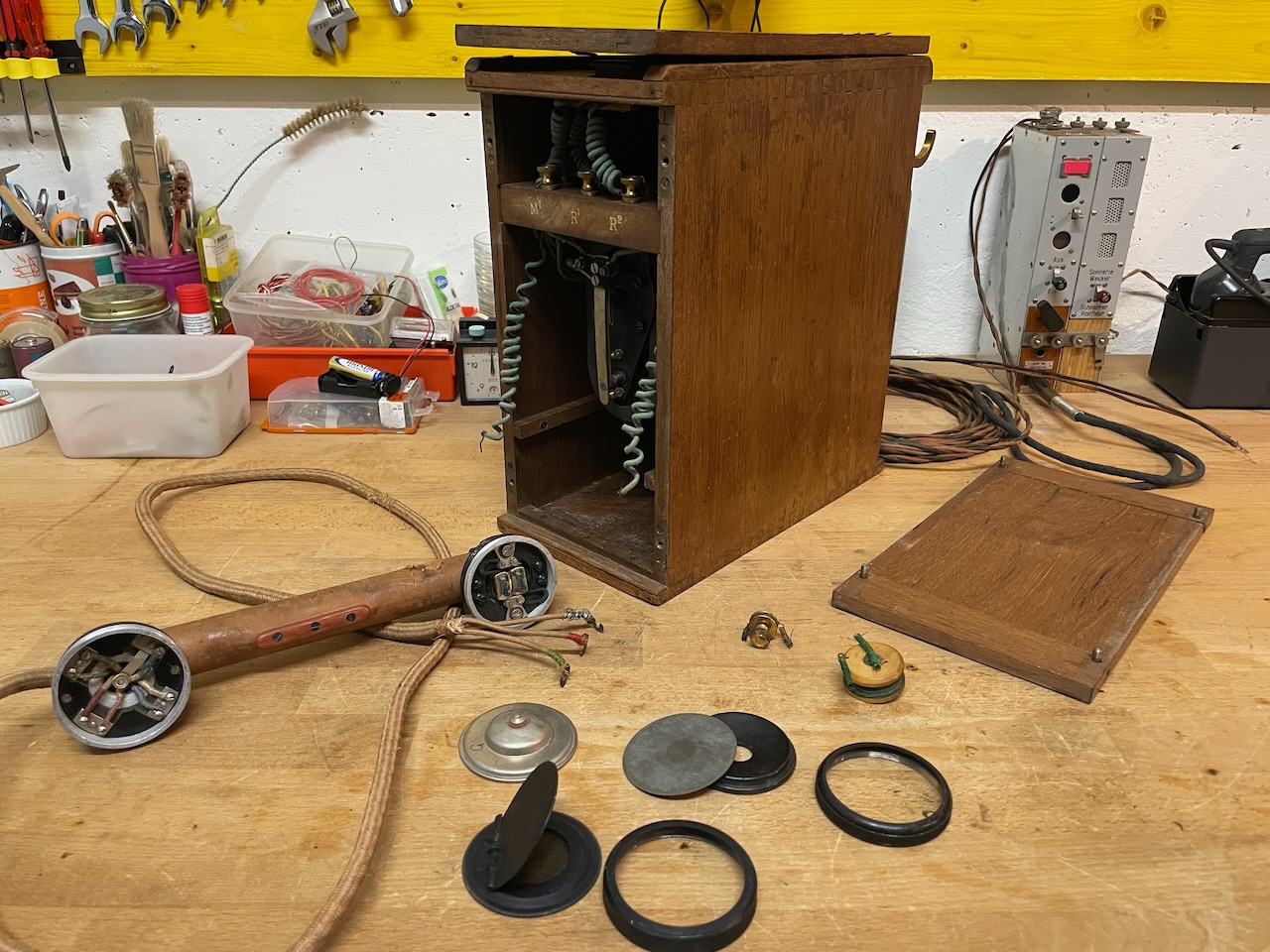
Disassembled.
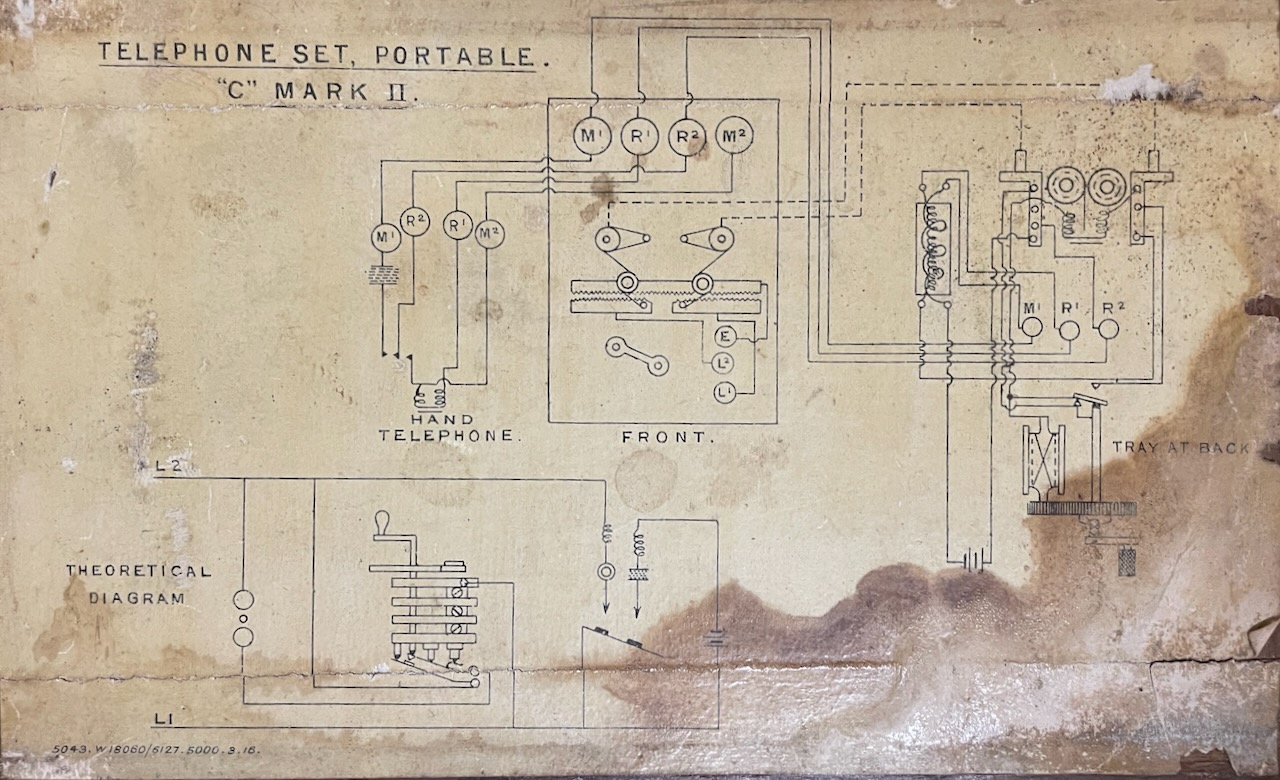
The diagram glued to the front lid inside.
Wiring and "theoretical" diagram.
Note that "M2" is connected between handset and instrument but not used on instrument circuit.
Detail of the "Theoretical Diagram".
Diagram number: 5043.W18060/6127.5000.3.16.
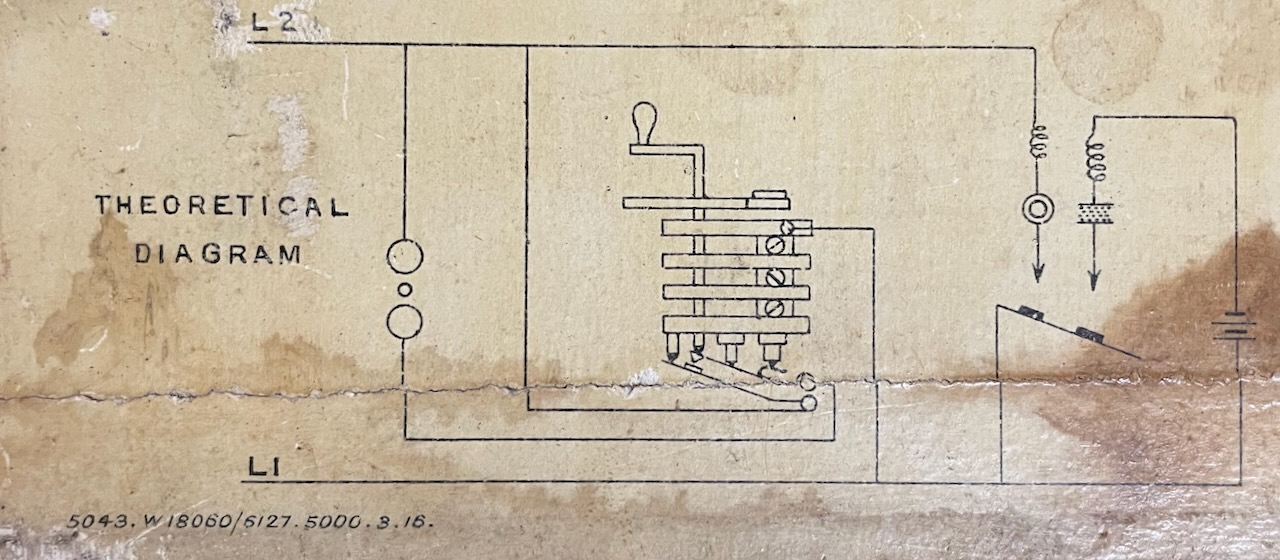
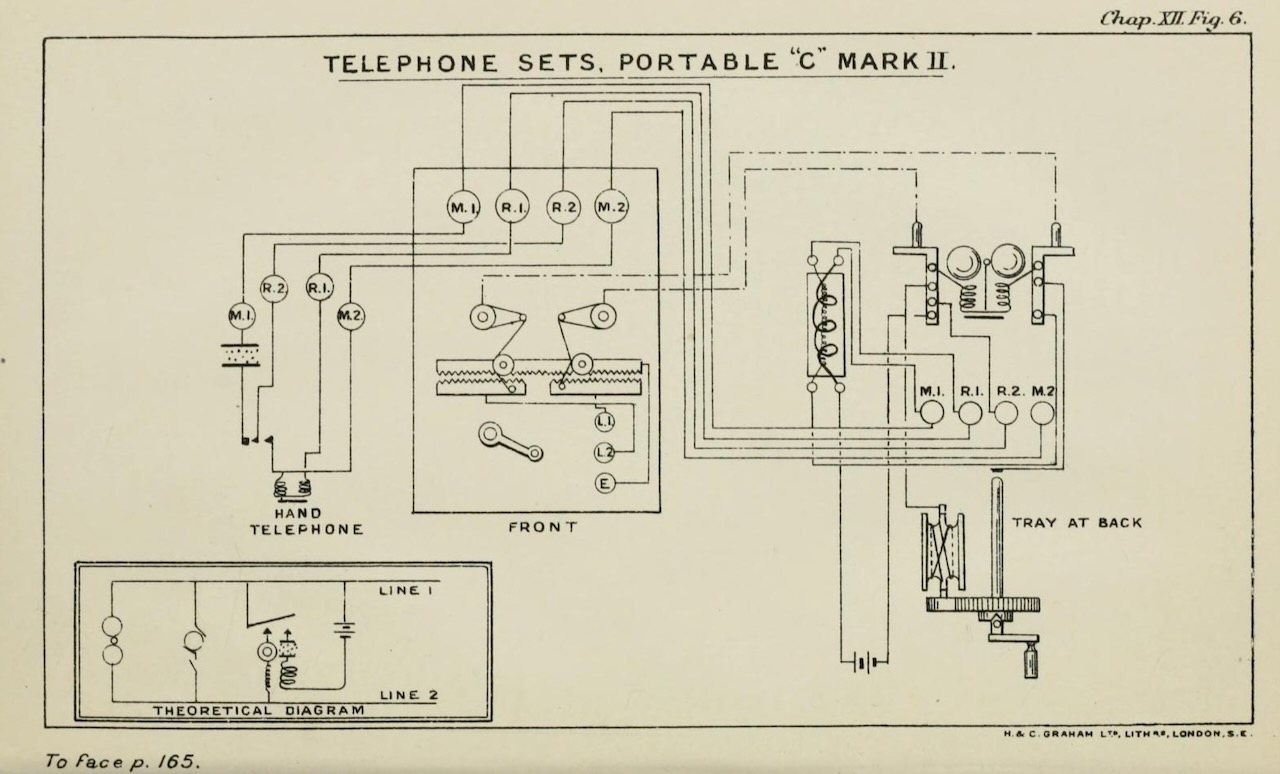
Diagram from "Instruction in Army Telegraphy and Telephony. Vol I., Instruments. 1914" [1].
On this diagram "M2" is drawn to have been wired also to the instrument back, but also not used.
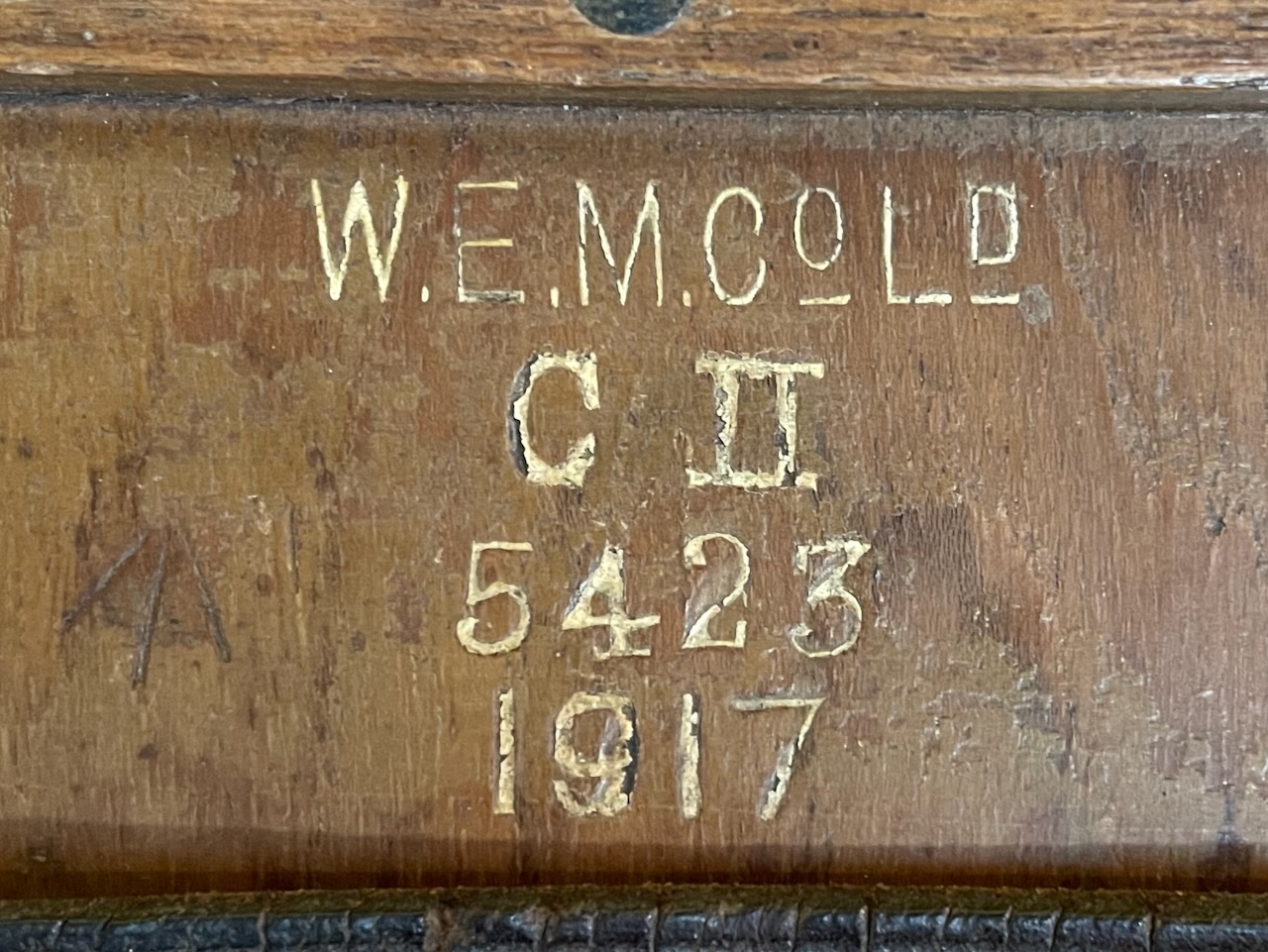
Embossed label on top of box.
W.E.M.Co.Ltd.: Walters Electrical Manufacturing Company,
"C II",
5423 (Serial or Inventory No.),
1917.
To the left also the broad arrow /|\.
There is another W.E.M.Co.Ltd. made C Mk II known with Serno. 5428 [32], only 5 pcs. "younger".
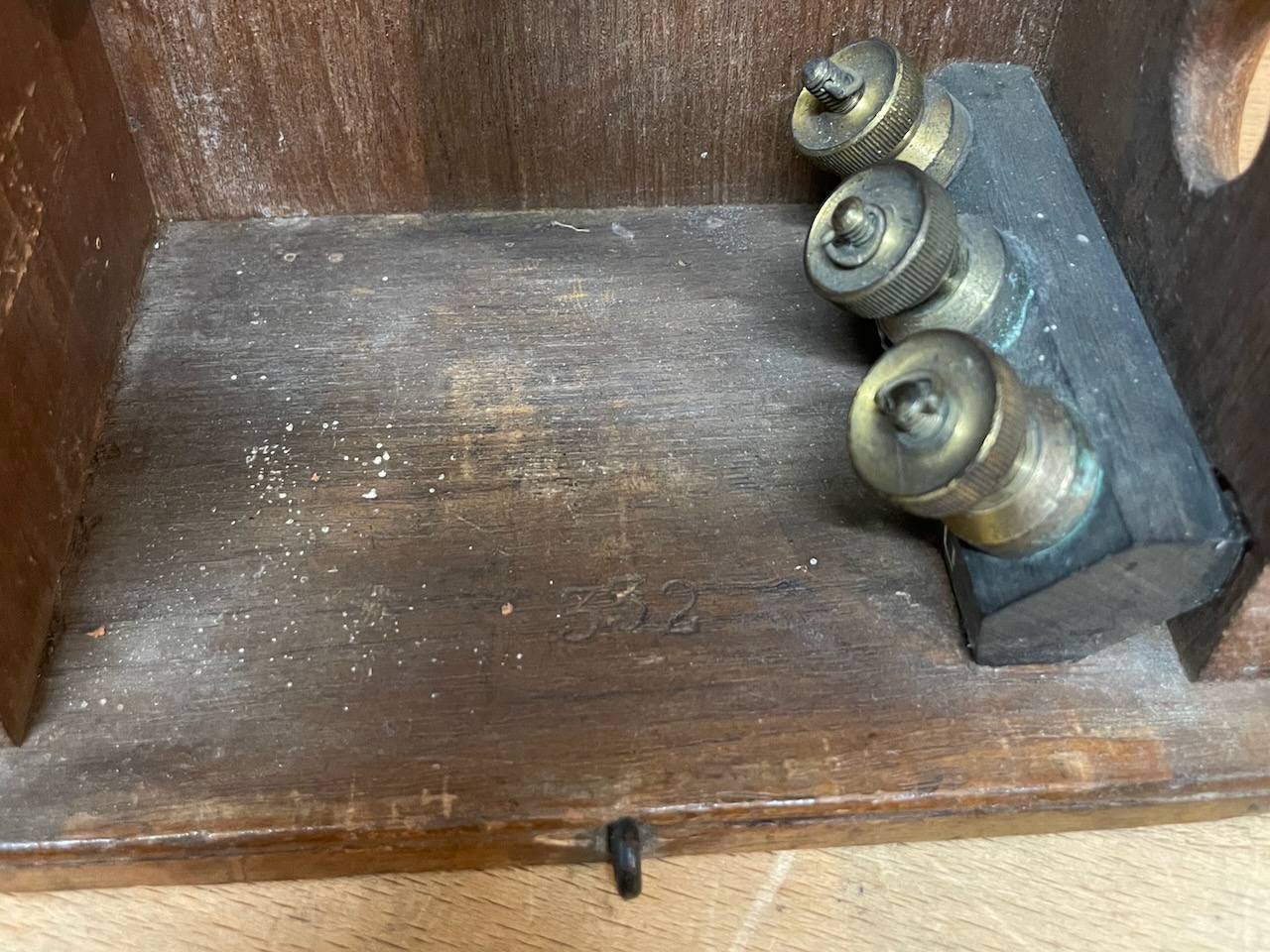
Front bottom inside embossed number: "332" probably a mfg number, the same is found on the removeable back lid.
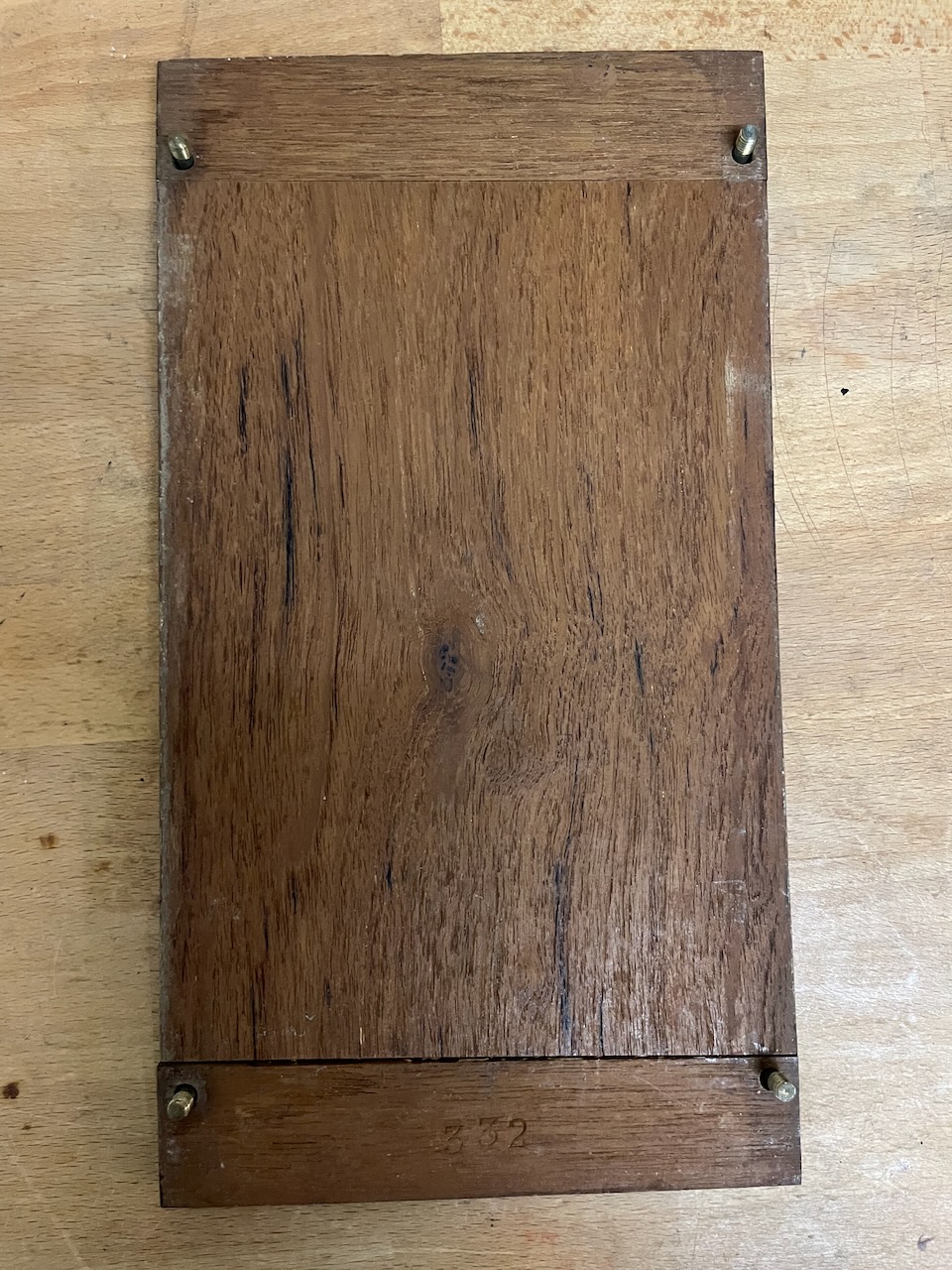
Removable back lid with captive screws.
Also numbered "332".
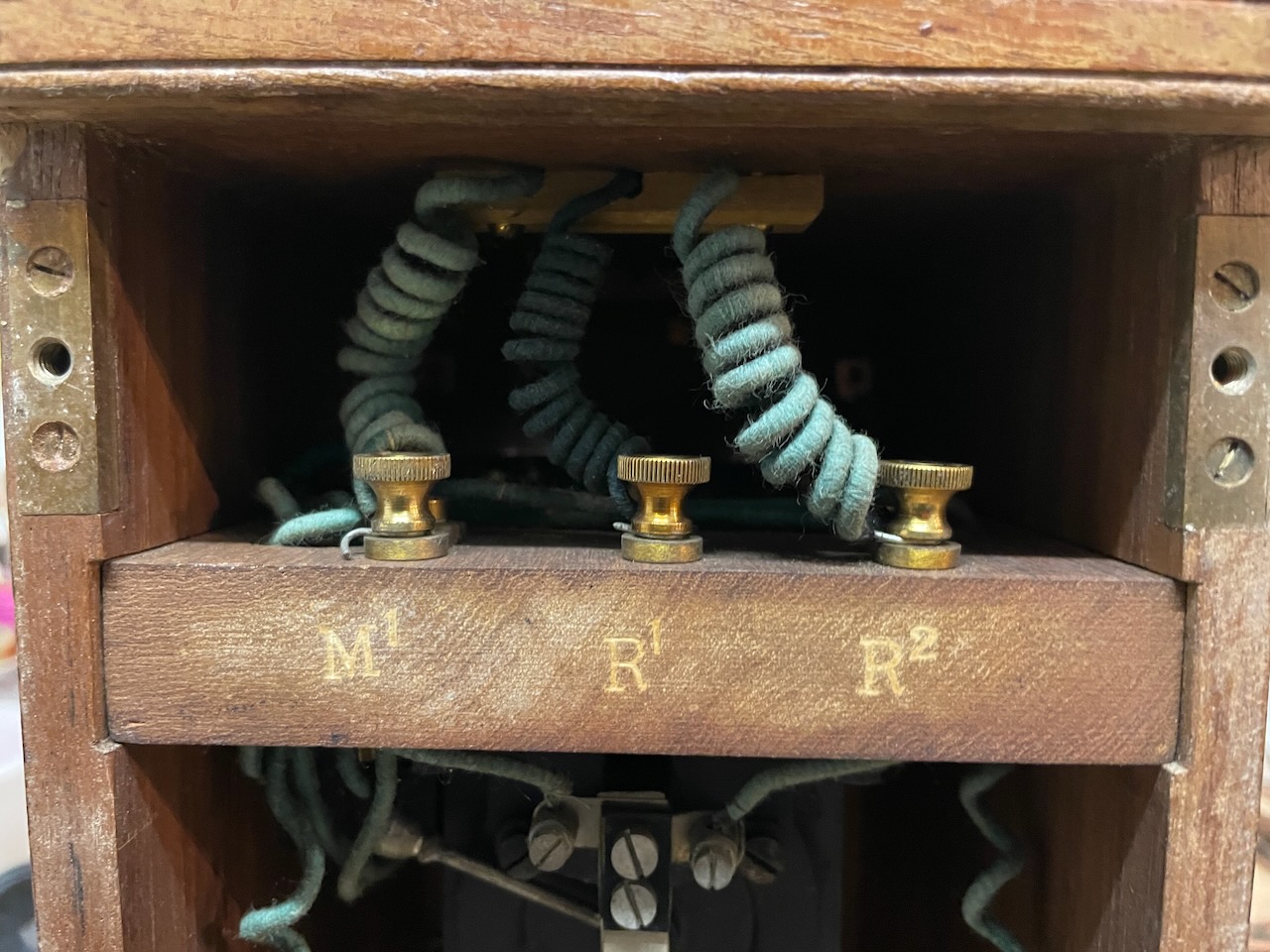
Handset posts, Magneto, battery compartment at the bottom.
The left and right leads are the battery leads.
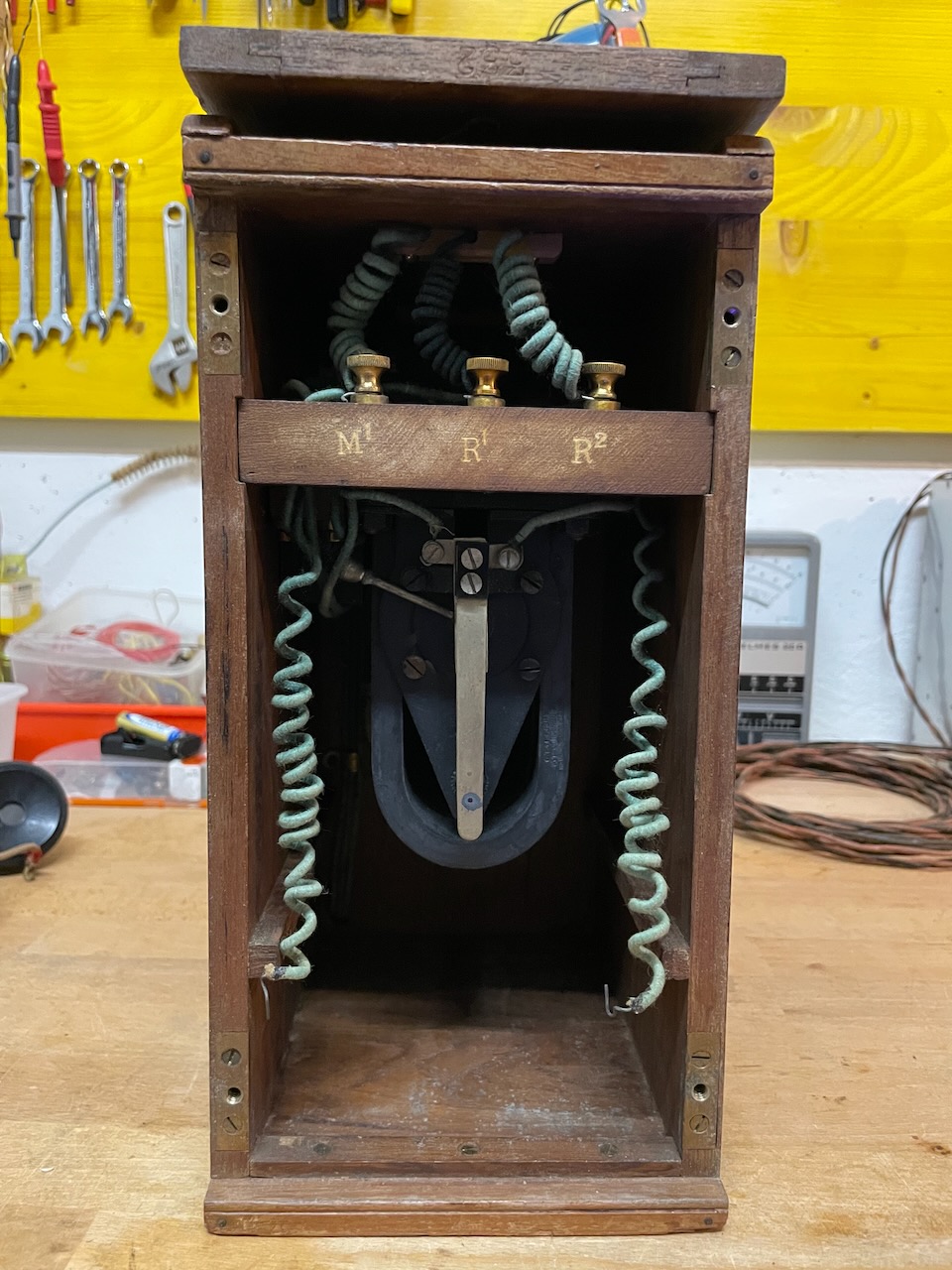
Handset connections "M1", "R1" and "R2" are accessible from the back.
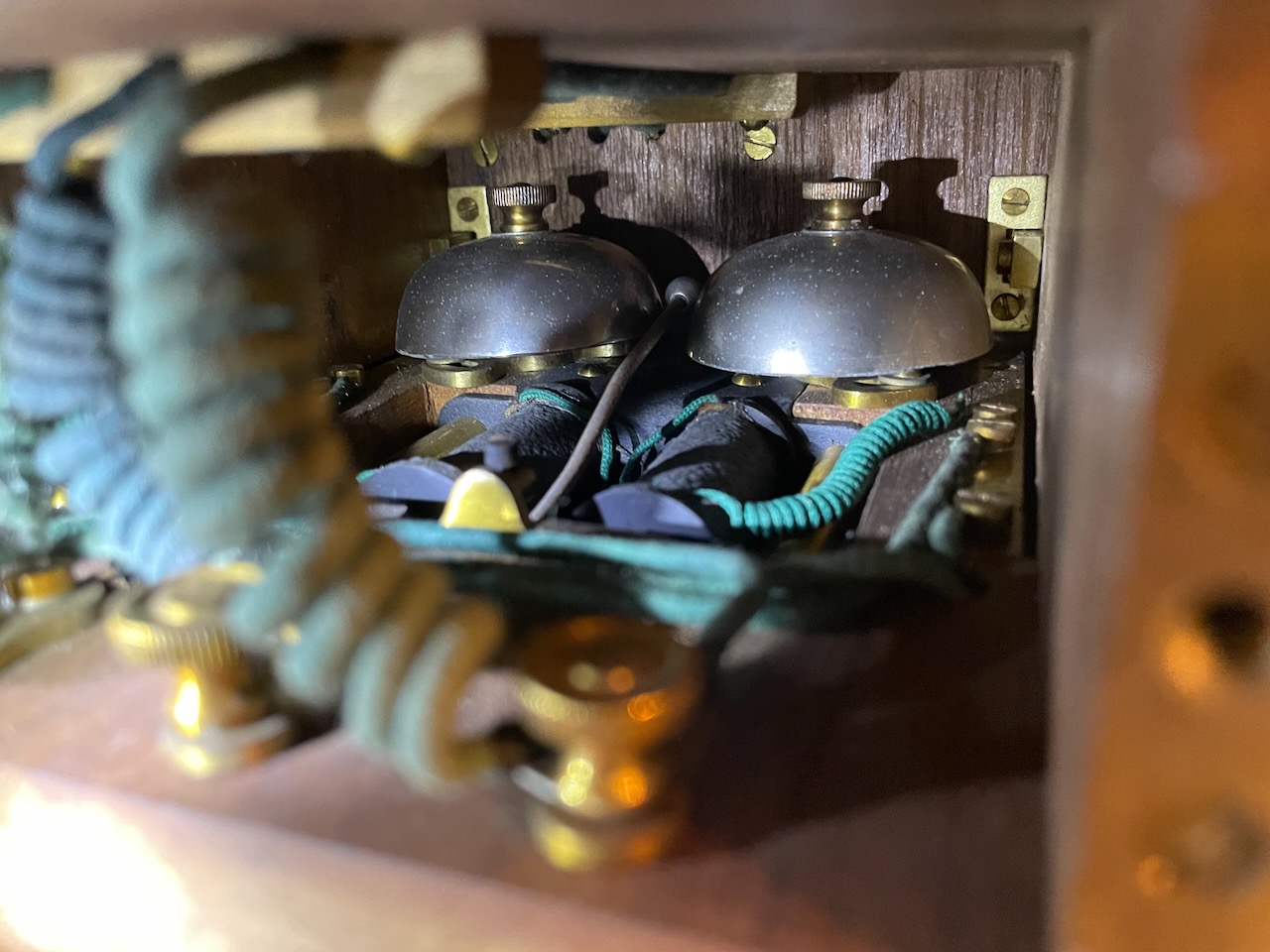
Polarised ringer.
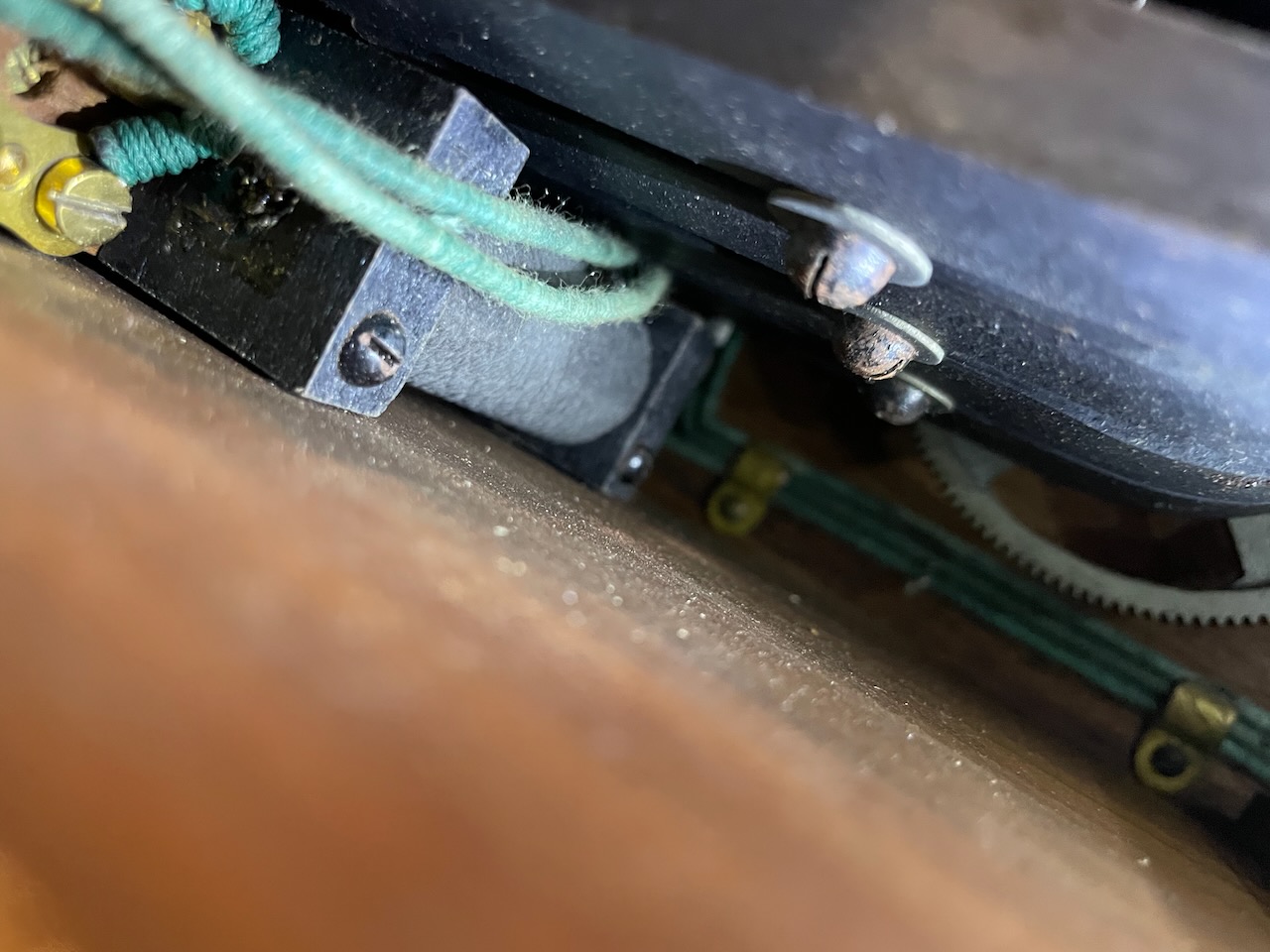
Induction coil, mounted on the upper left.
Four bar magneto with switching assembly mounted to back.
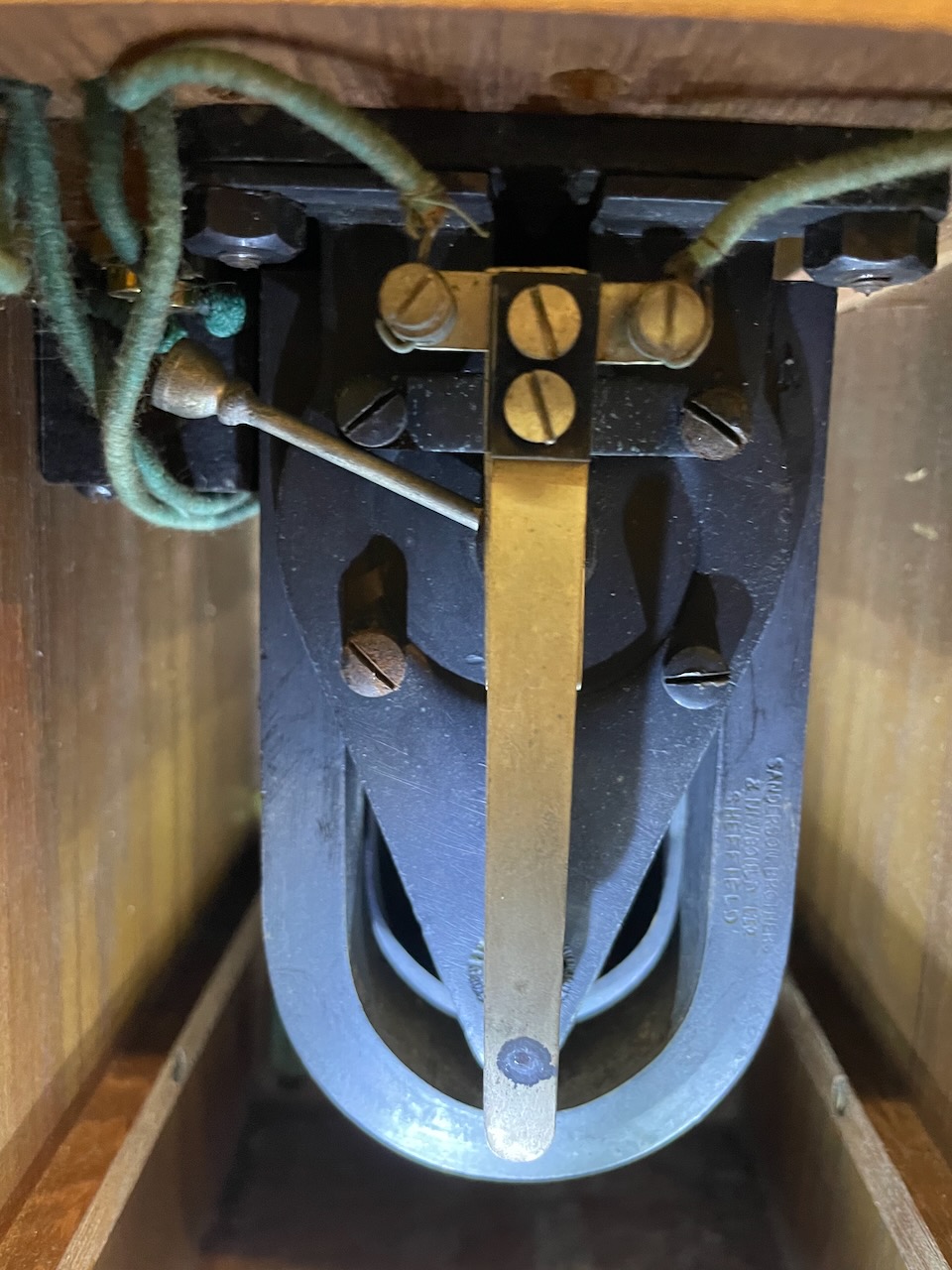
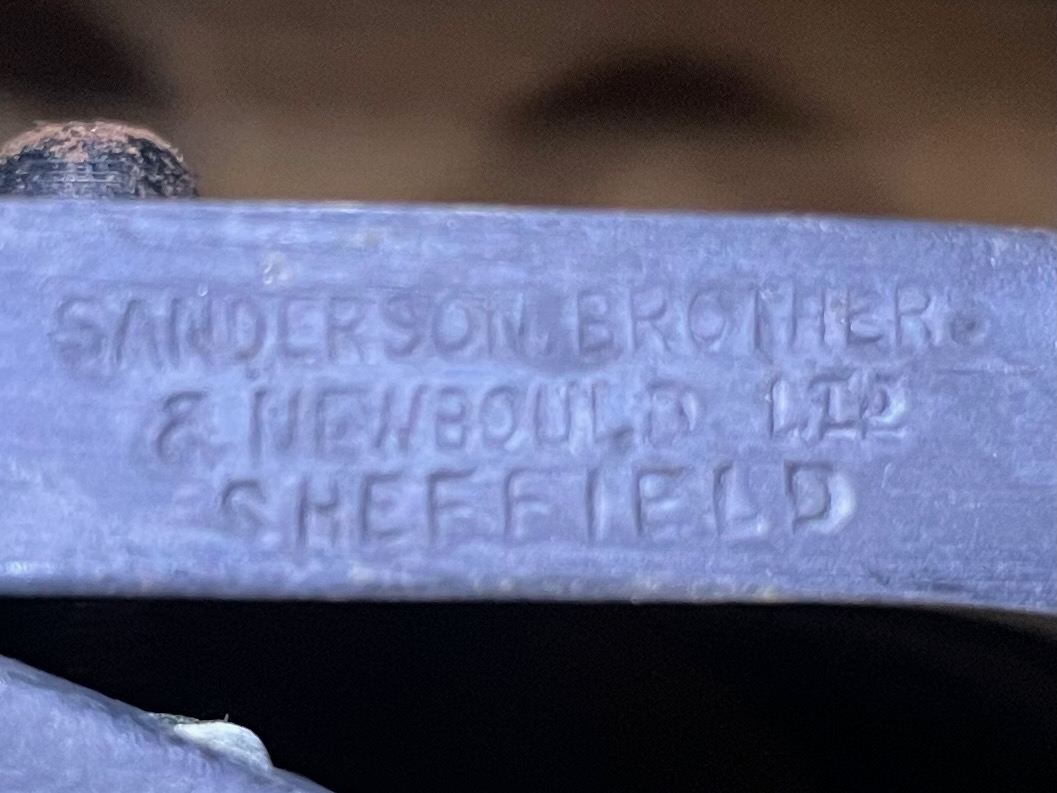
Magneto bars are made by Sanderson Brothers and Newbould, Sheffield.
Telephone, Hand, C Mark III.
Open handset.
The handset cord has only the three required conductors, "M1" blue, "R1" red, "R2" green, the not required "M2" white has been cut or broken off.
Telephone, Hand, C Mark III.
Assembled handset.
TX side has a metallic foldable protection and speech deflection lid.
Telephone, Hand, C Mark II.
The earlier handset type with folding leather cup as pictured in "Instruction in Army Telegraphy and Telephony. Vol I., Instruments. 1914" [1].
Neatly arranged.
Handset brackets slid out.
Front right the dismounted bobbin lightning discharger spare material.
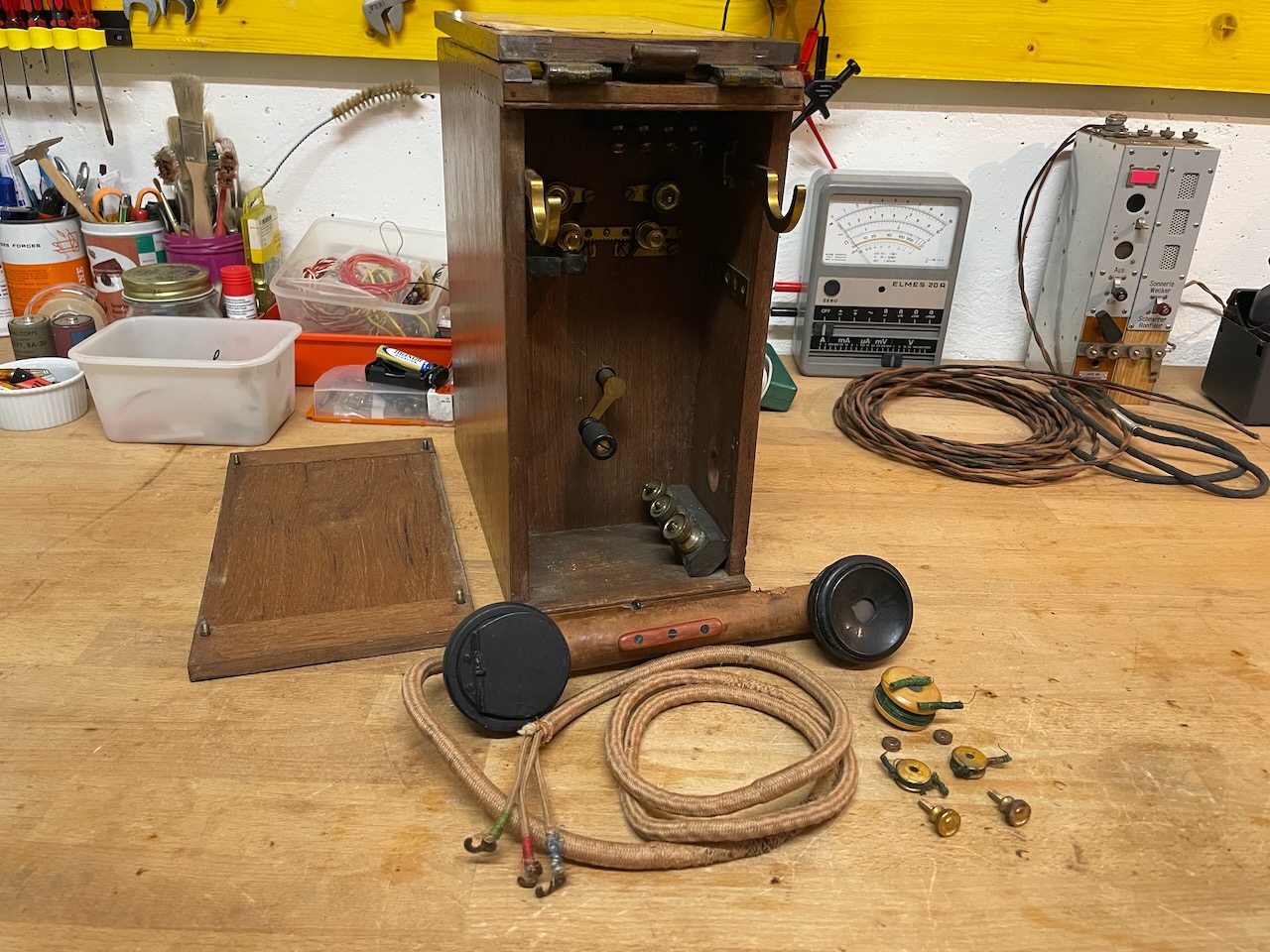
Top back the handset binding posts.
Below the earth plates with serrated and bobbin lightning protection.
On the left the handset bracket to store the handset.
The line and earth binding posts.
A hole in the side wall allows to keep the line connected even with closed front door.
Ready for use.
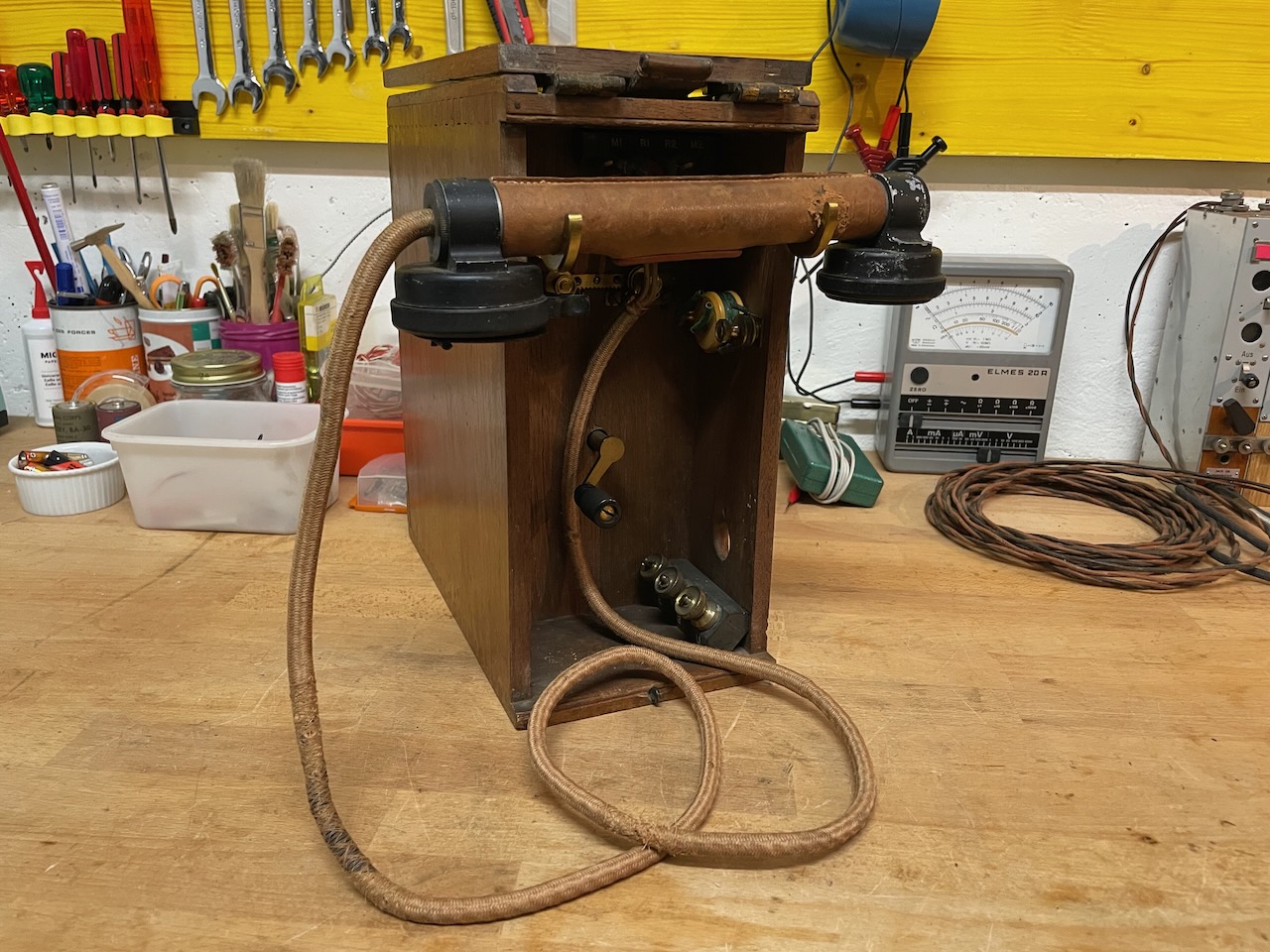
Handset stored.
Handset brackets slid back in.
Lightning arrestor spares mounted to the carrying plate on the right.
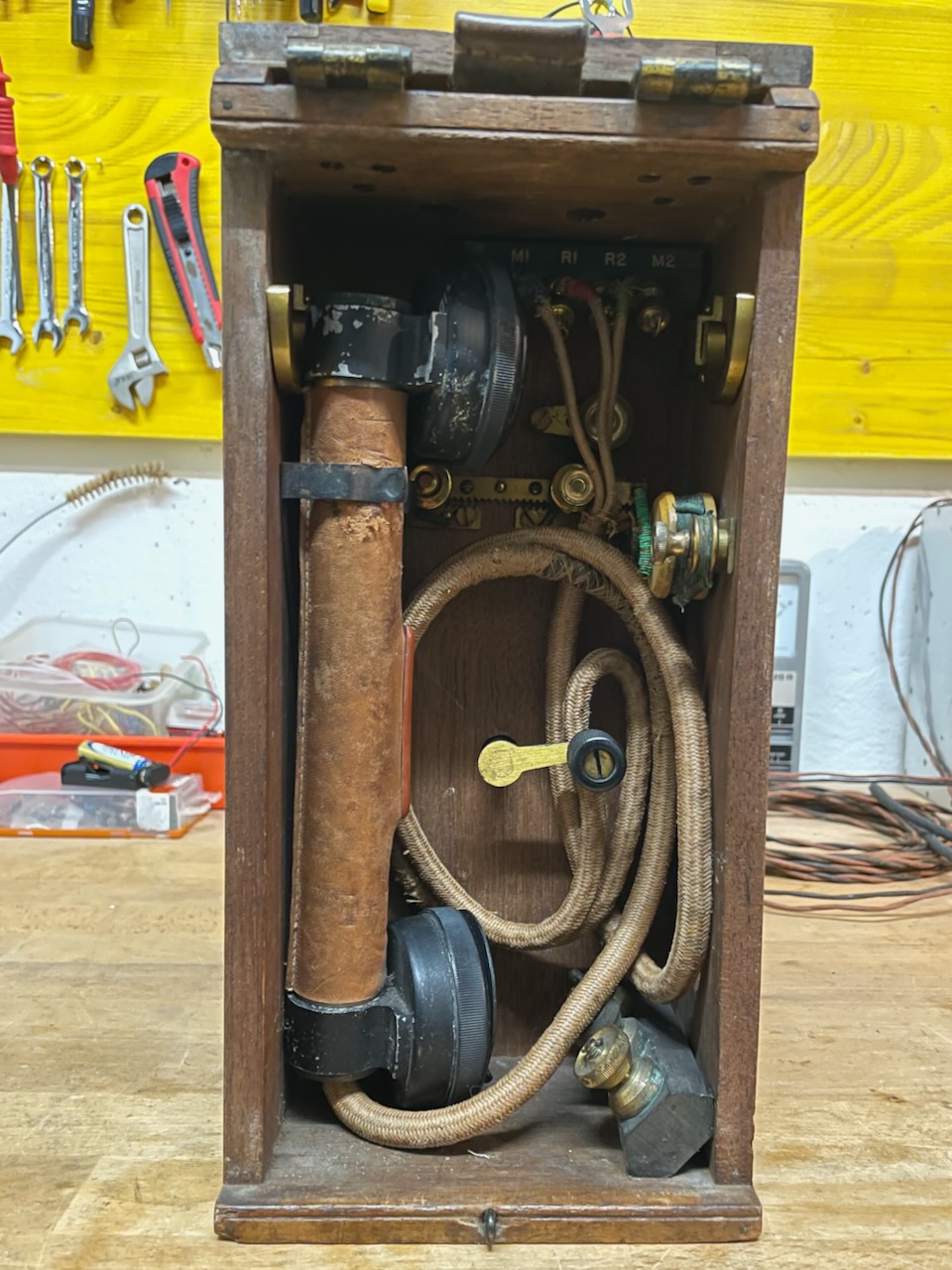
Ready for transport.
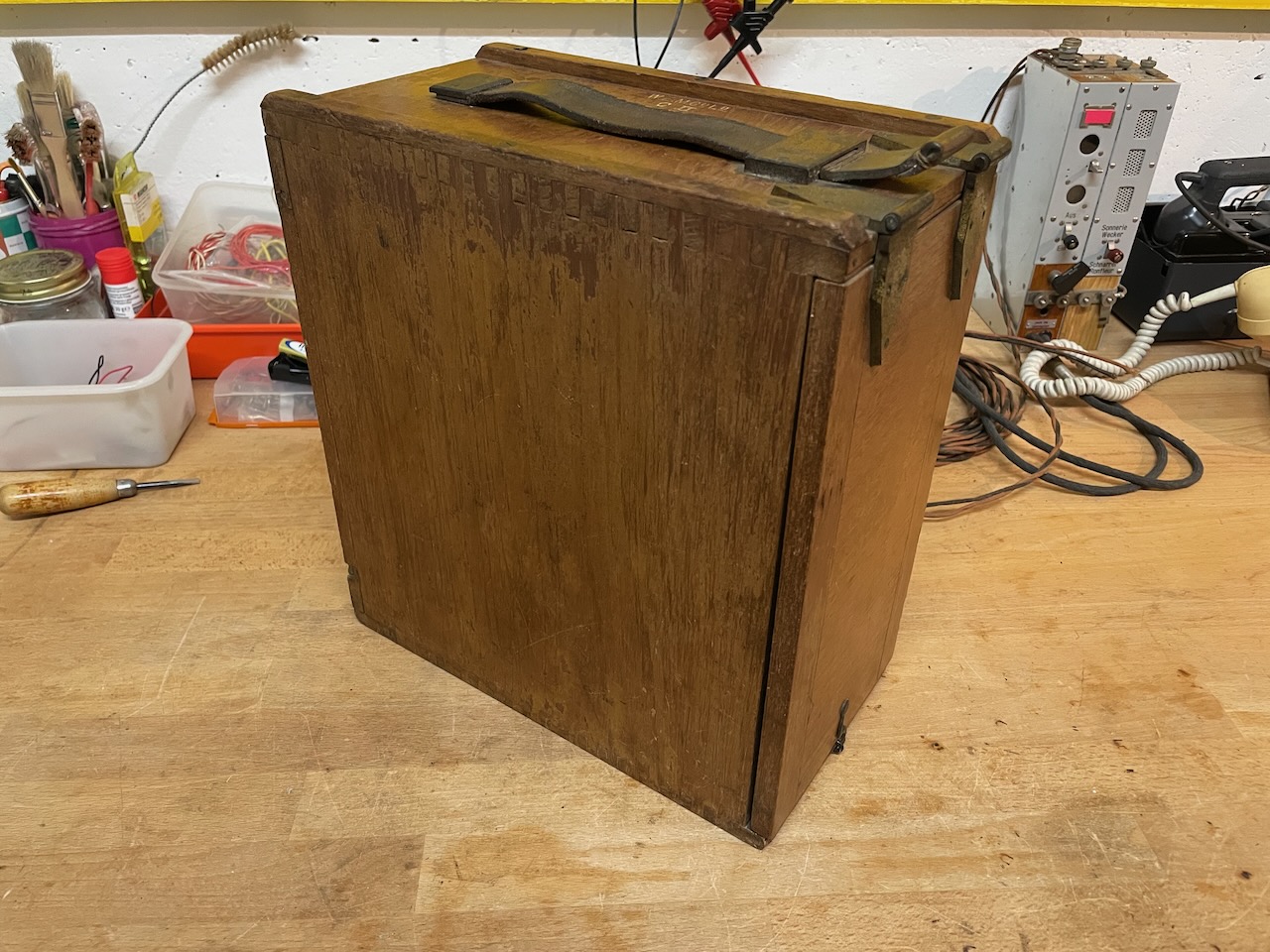
Ready for transport.
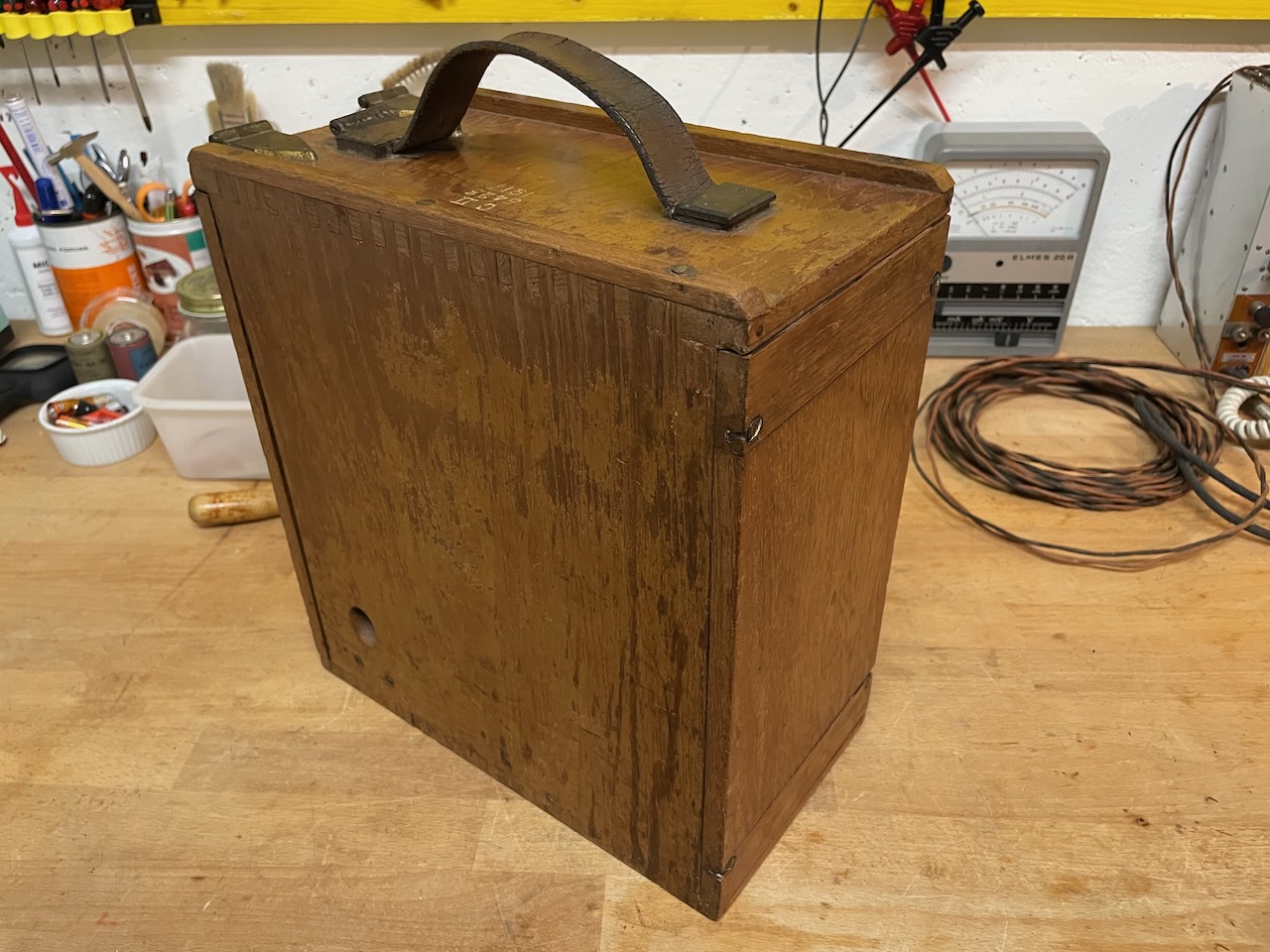
Creative Commons Attribution-ShareAlike 4.0 International License