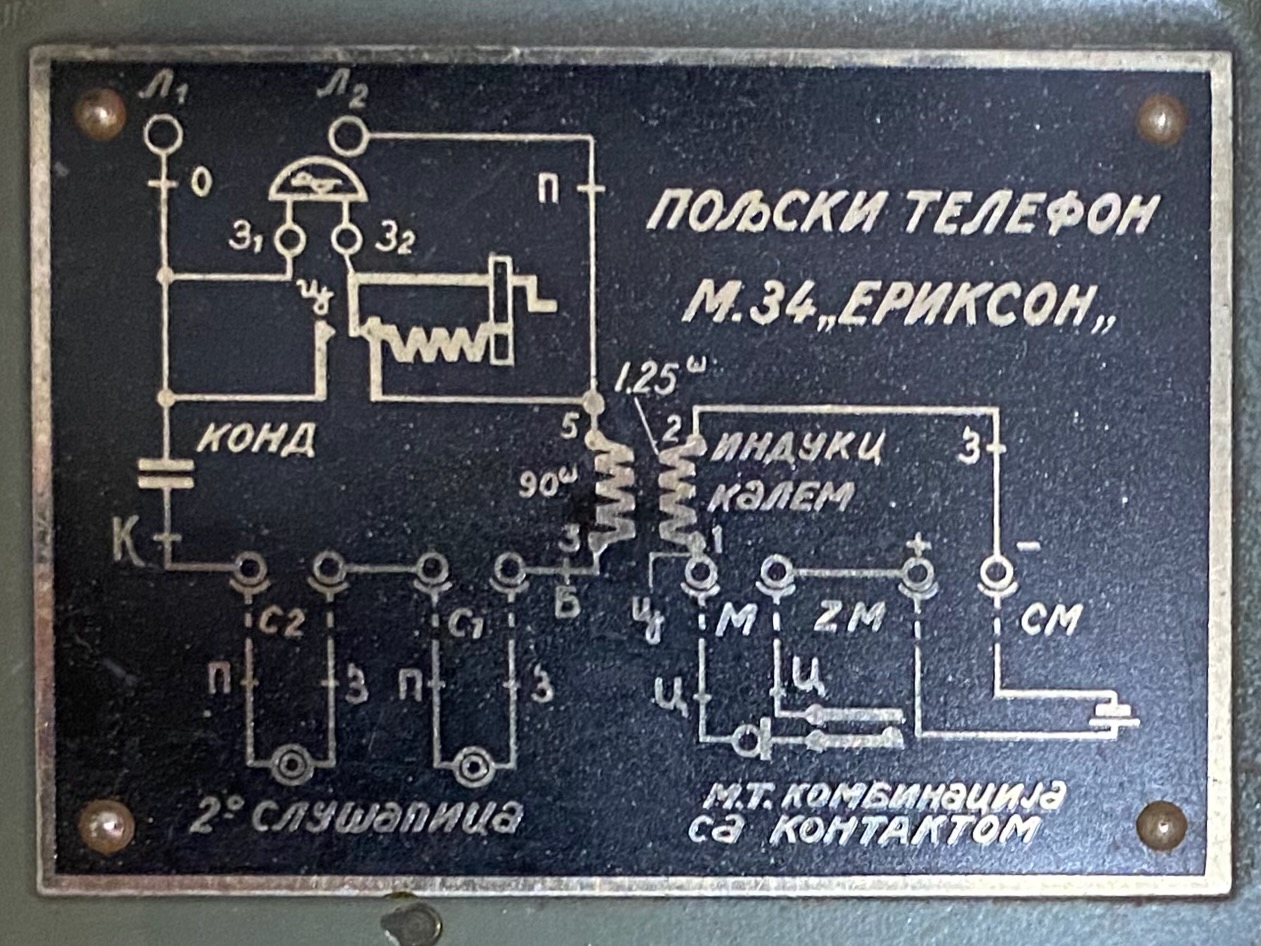
The coat of arms on the label and the Serbian Cyrillic script used on the diagram and the components point to the Kingdom of Yugoslavia. The instrument was made by French Ericsson: Société Française des Téléphones Ericsson (STE) [1]. I did not find any Yugoslavian sources from the time, but Yugoslavia went through some turmoils in 1934, there were probably other things to take care of than field telephone documentation.
The same device exists with french labels as "Poste Portatif B.L., 1934". (Here another one, and here what seems to be a later one with anti-sidetone coil). Probably used as linemen instrument in some private industry environment. Not in use in the french army, the standard french instrument then was the T.M. 32.
"New Field Telephone Instruments" (Ericsson Review 1935) [1]:
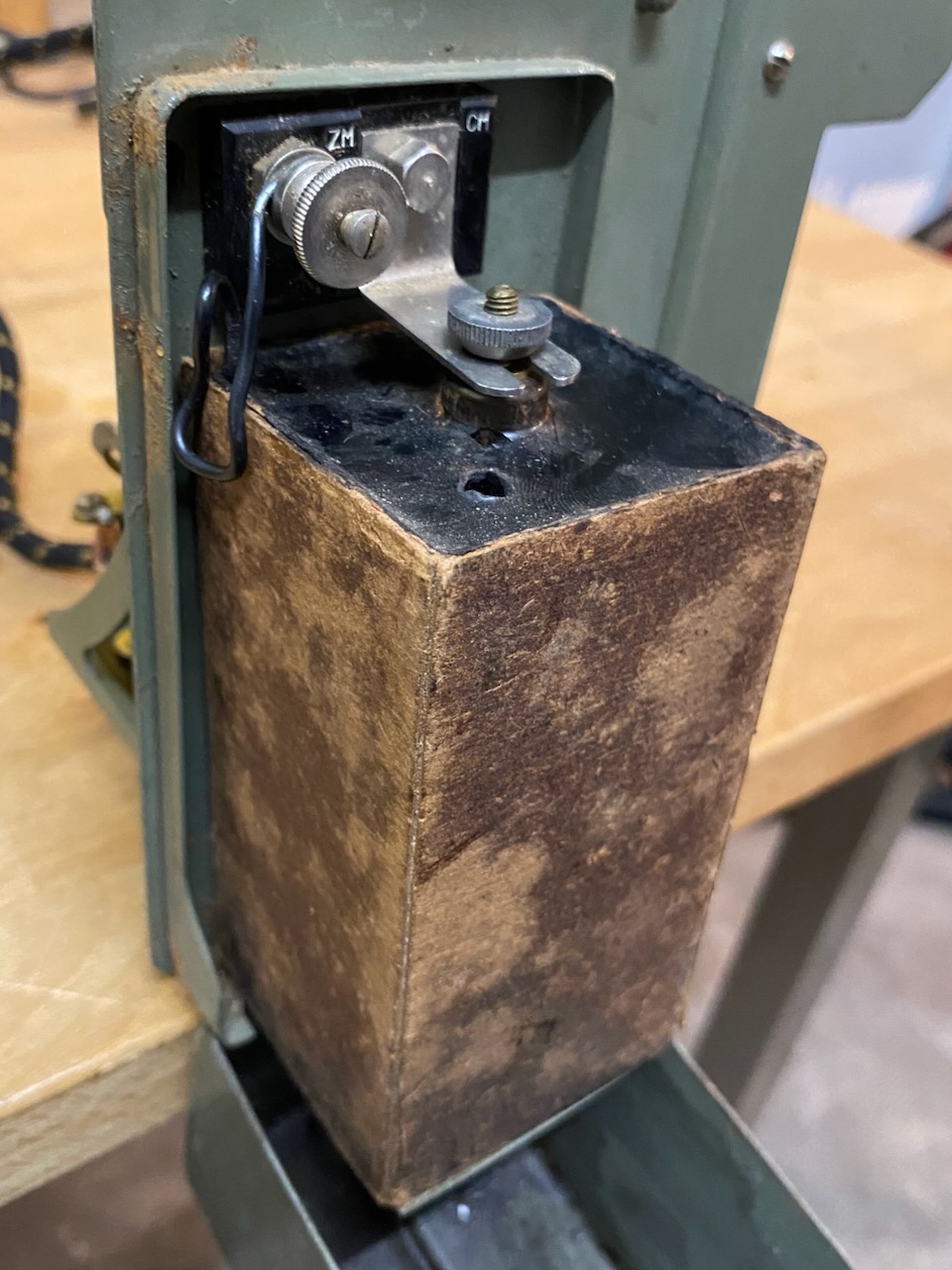
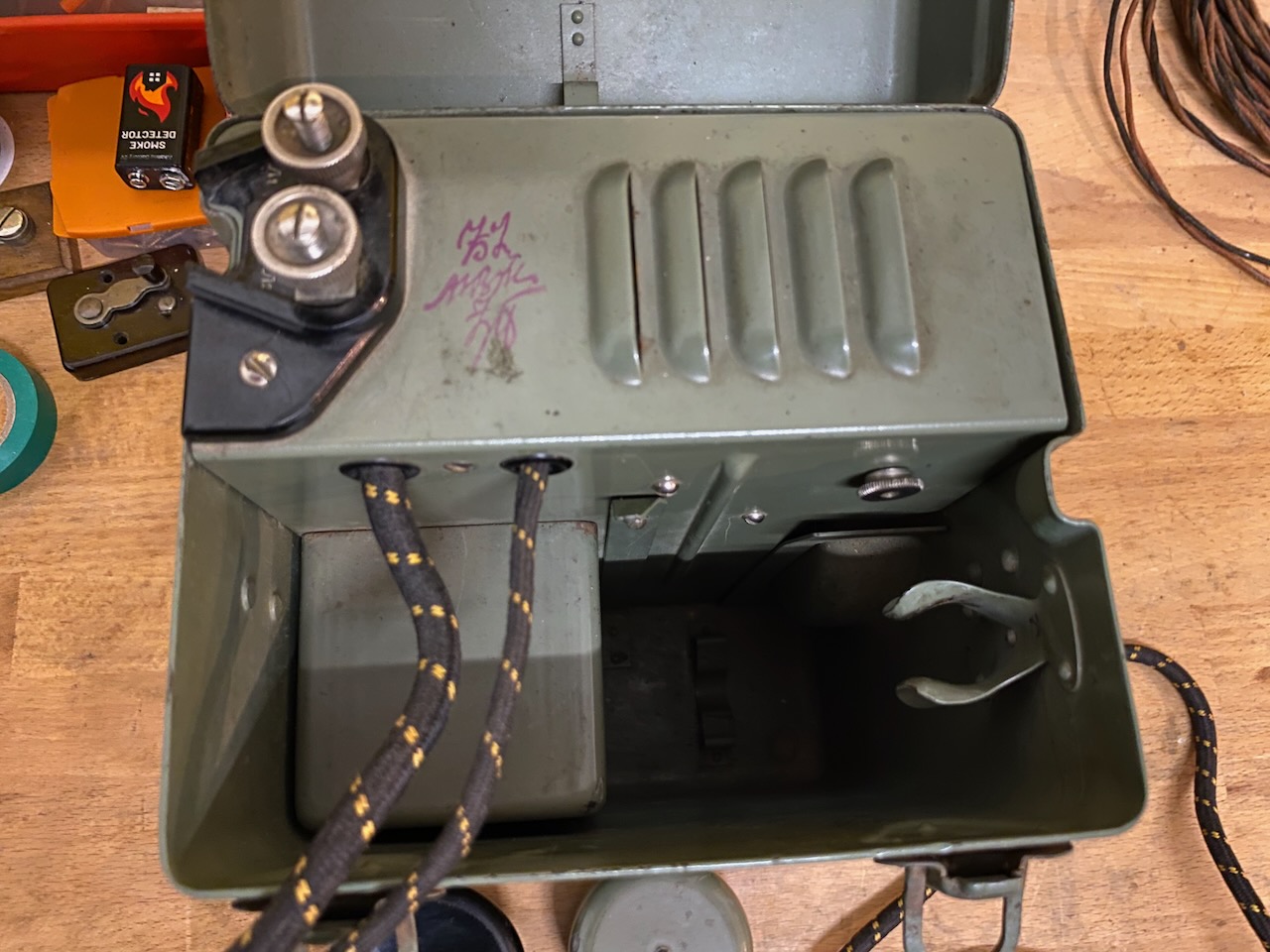
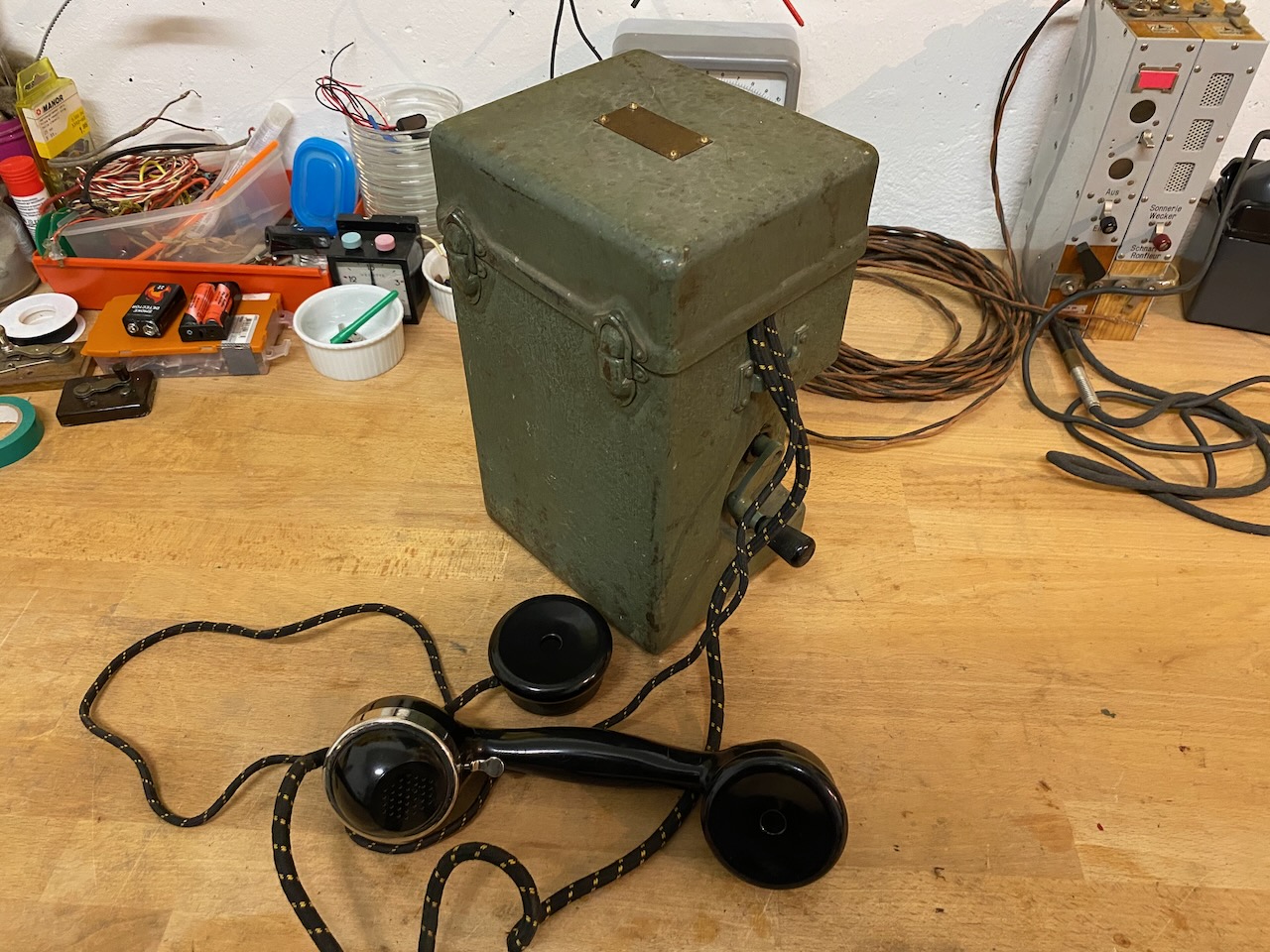
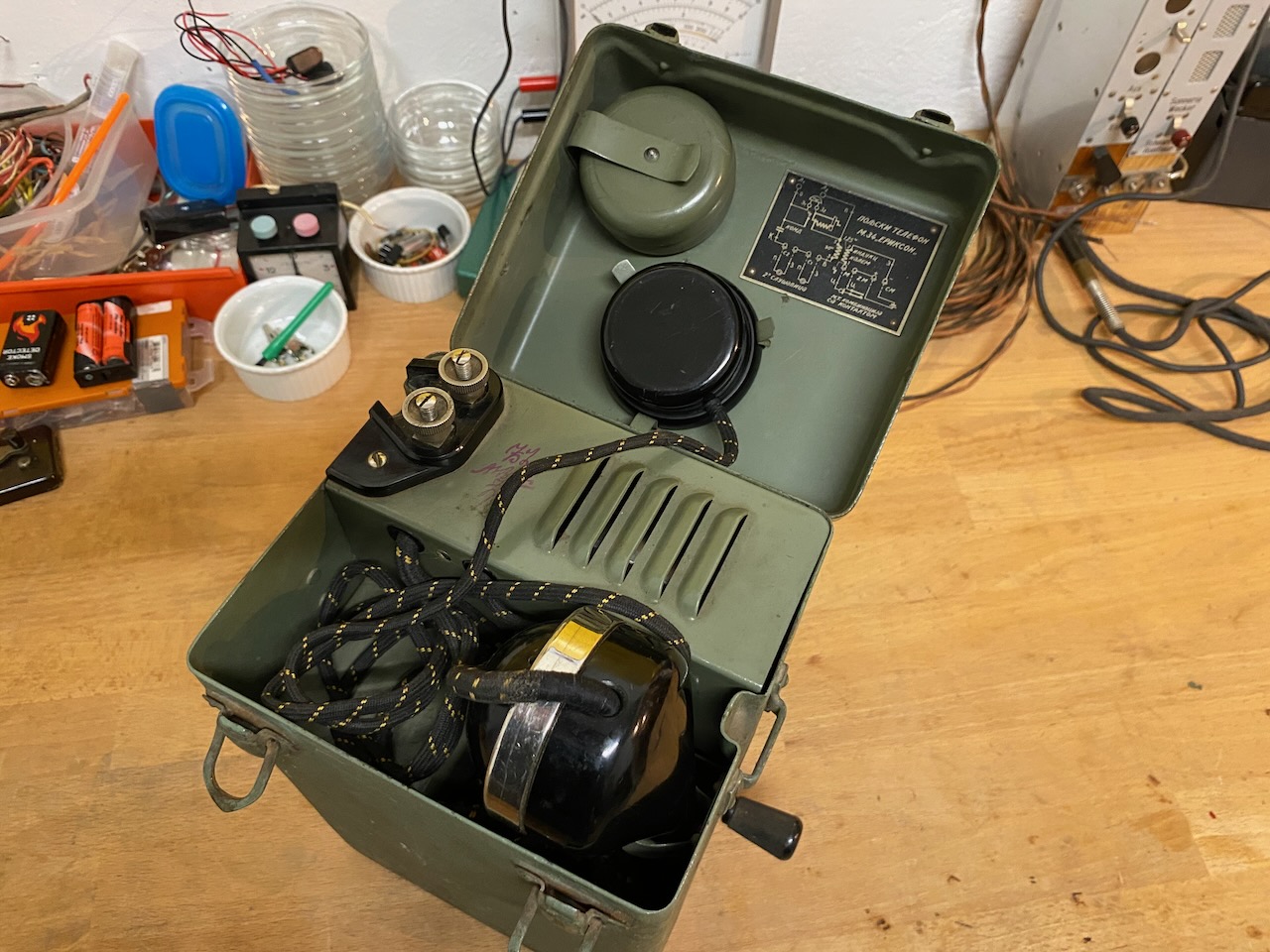
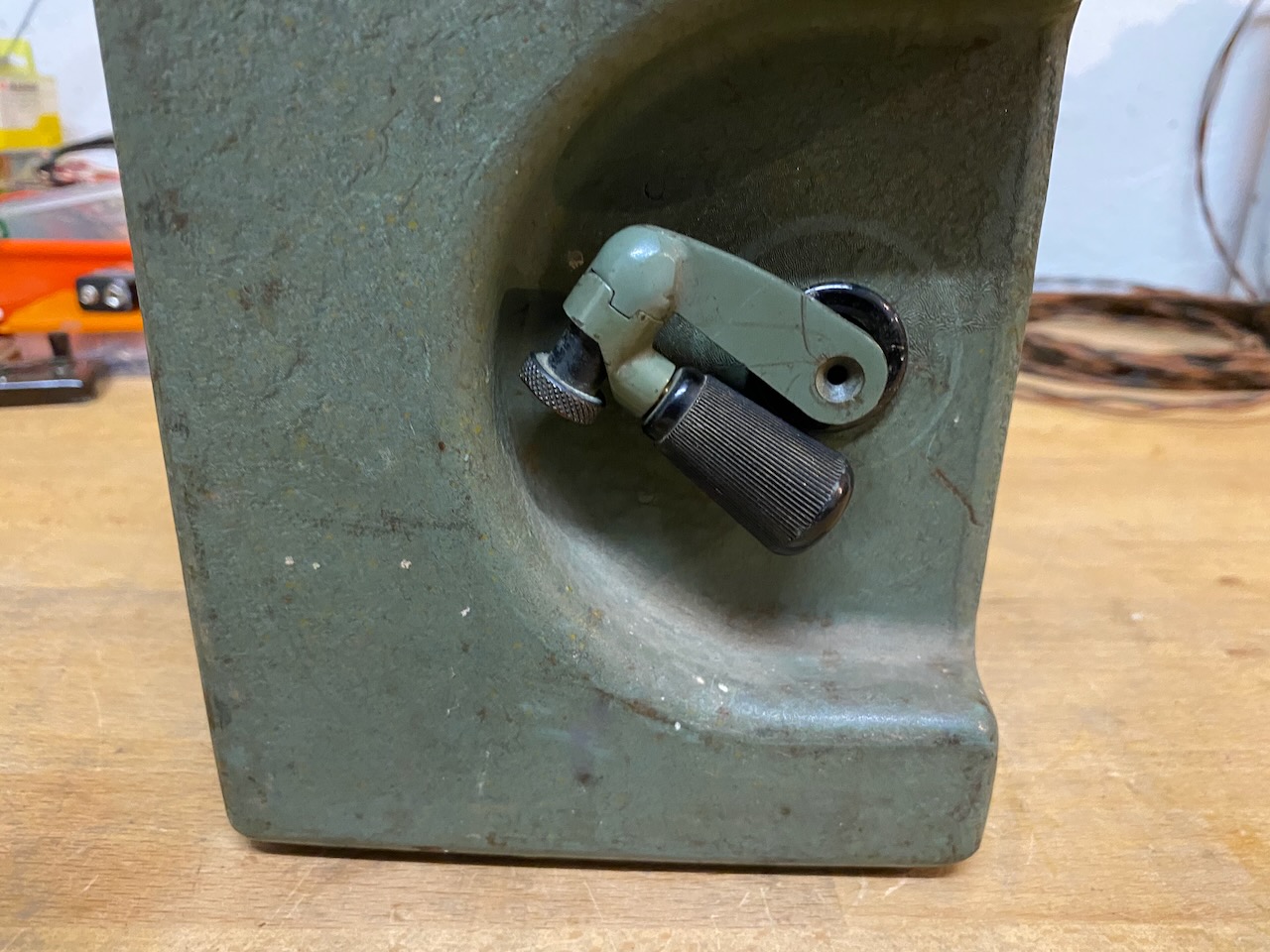
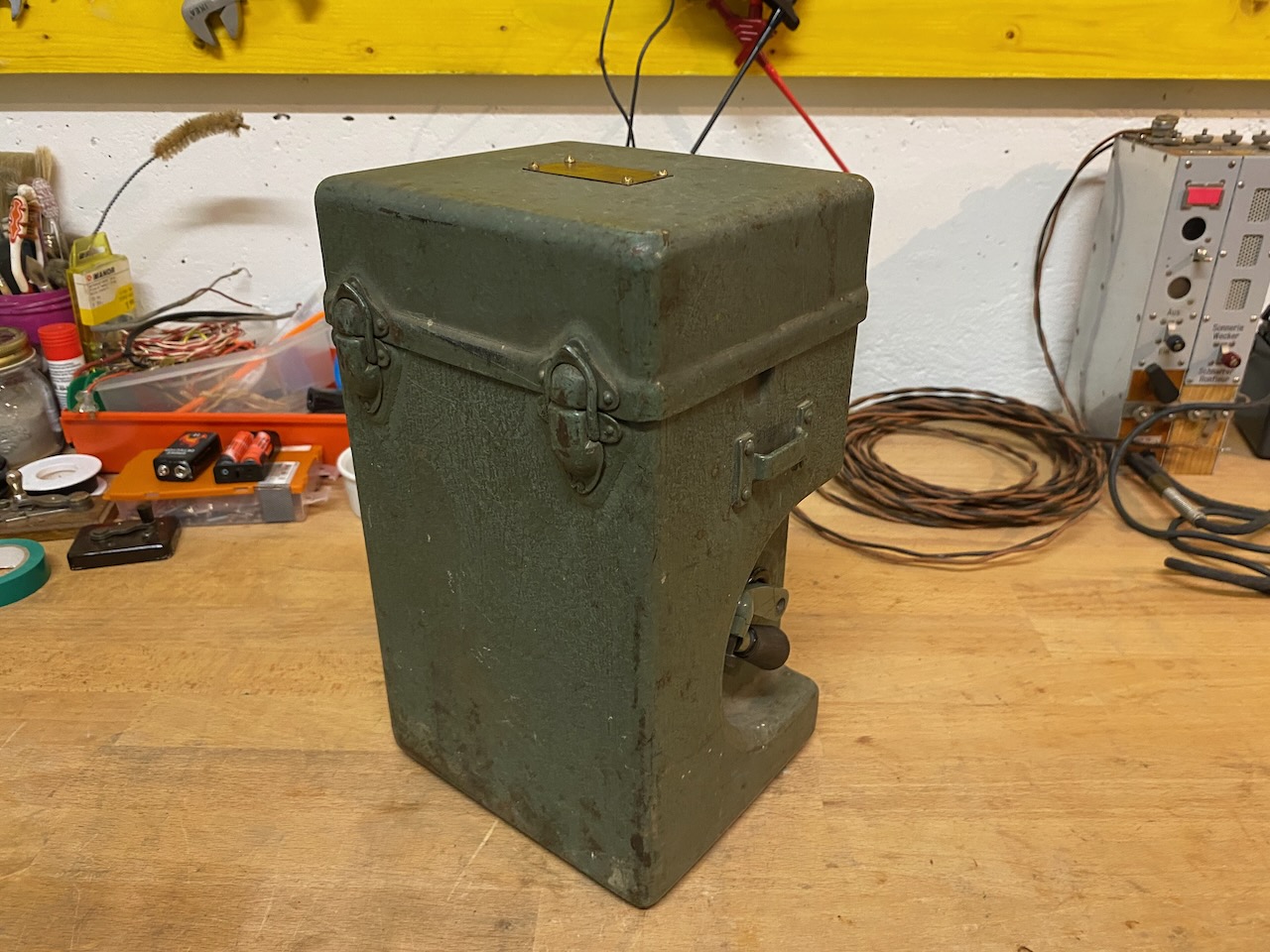
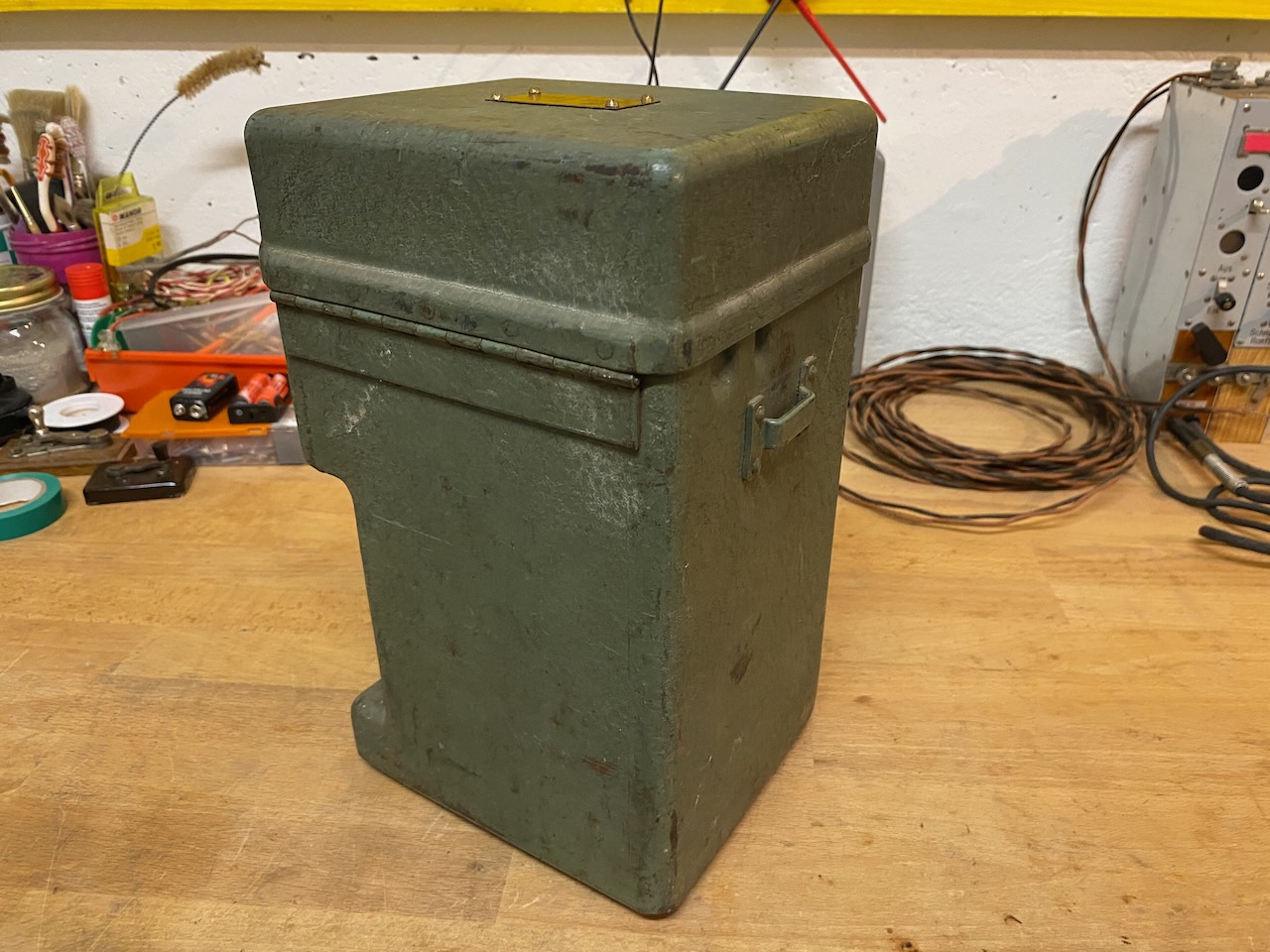
The field telephone instrument constructed by Societe des Telephones Ericsson, Colombes, is a portable LB instrument fitted in a case of parkerised sheet steel, painted with three coats of enamel. The upper part of the case forms a lid which is closed by two snap locks. The instrument is carrieed by an adjustable strap. The height of the instrument is 260mm, width 160mm and depth 140mm. Weight with all fittings is about 6kg. All parts of the instrument are mounted on an inset of sheet steel which is held firm by a snap lock. The generator crank which is placed at the right hand side of the instrument is jointed and goes into a recess in the case so as not to project during transport. For inspection of the instrument all that requires to be done is to twist out the generator crank, loosen the locking spring and draw the inset out upwards. All parts are then easily accessible. The case is provided with openings for taking the circuit wires and the cords to the speaking mechanism when the case is shut, thus permitting the instrument to be used in bad weather. A special place in the form of a box is divided up to take the battery. This place has a ventilation pipe to allow gas from the battery to escape easily. The battery is easy to connect by means of special screw terminals. The hand microtelephone, is made of bakelite and provided with key for closing the battery current. The handset is placed upright in the case and held in place by a pair of hooks. It is firmly attached to the instrument by means of a four-wire cord 1.2m in length. The extra receiver, which is of the same construction as the handset is placed inside the lid and held in place by a pair of spring hooks. The receiver is connected to the instrument by means of a two-wire cord of the same length as that for the handset. The magneto generator, which is the model of the French Post Office, has three magnets of steel with 10% cobalt. The bell is fitted on the upper part of the inset and protected against shocks and humidity by a grating which allows free passage for the sound. The bell has two coils with a total resistance of 1000 ohm and is provided with an aluminium gong 85 mm in diameter. The battery consists of a dry cel 55 x 55 x 125mm and has an EMF of 1,5V. Special screw terminals ensure easy connection of the battery. In addition the instrument has an induction coil with closed metal core of alloy sheet and a 2uF condenser. All the terminals are mounted on bakelite bases and all apertures for wires and cords are lined with bakelite. Inside the lid there is a box holding two spare microphone insets. This box is held in place by a spring catch.
Easy maintenance:
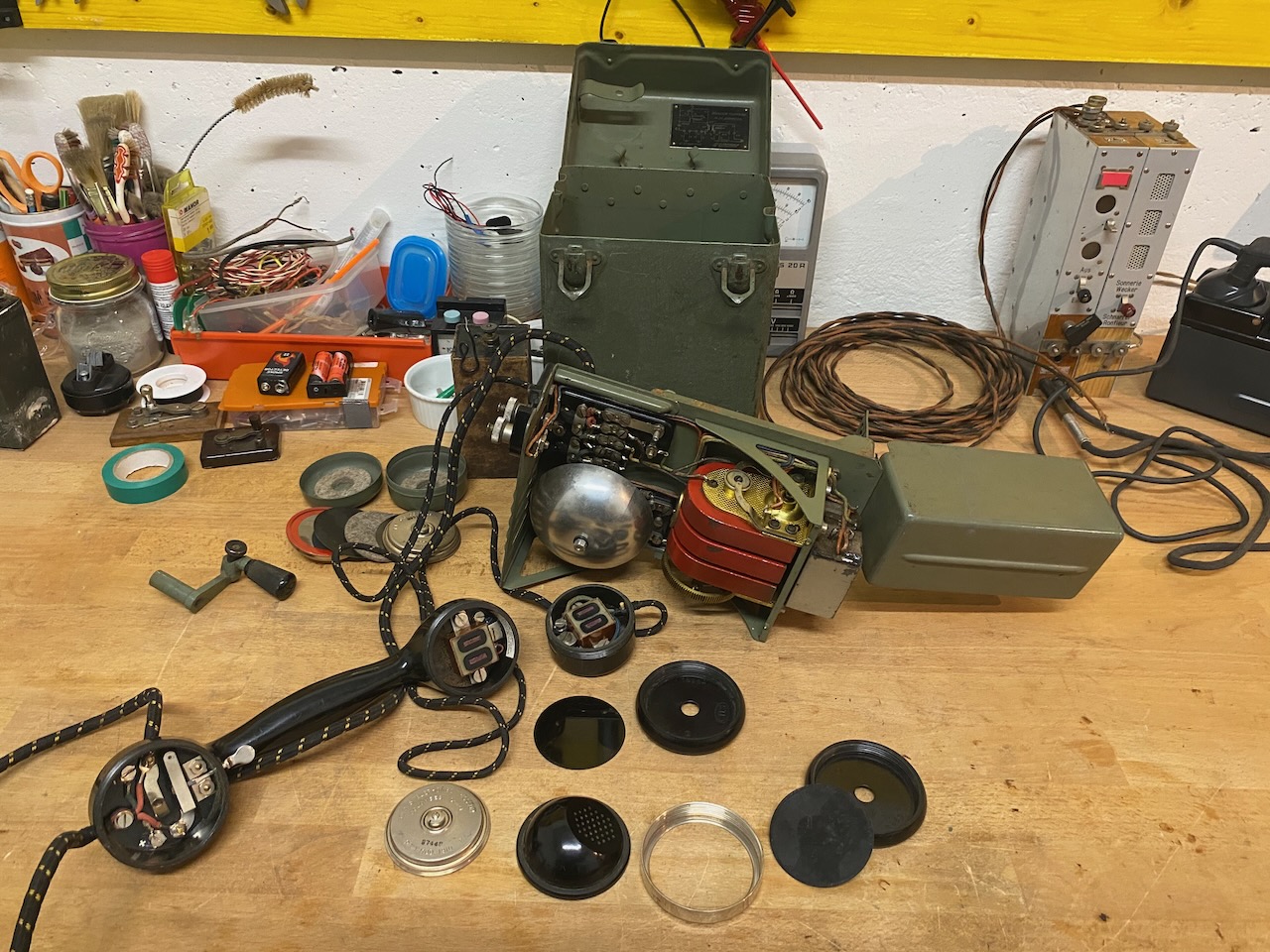
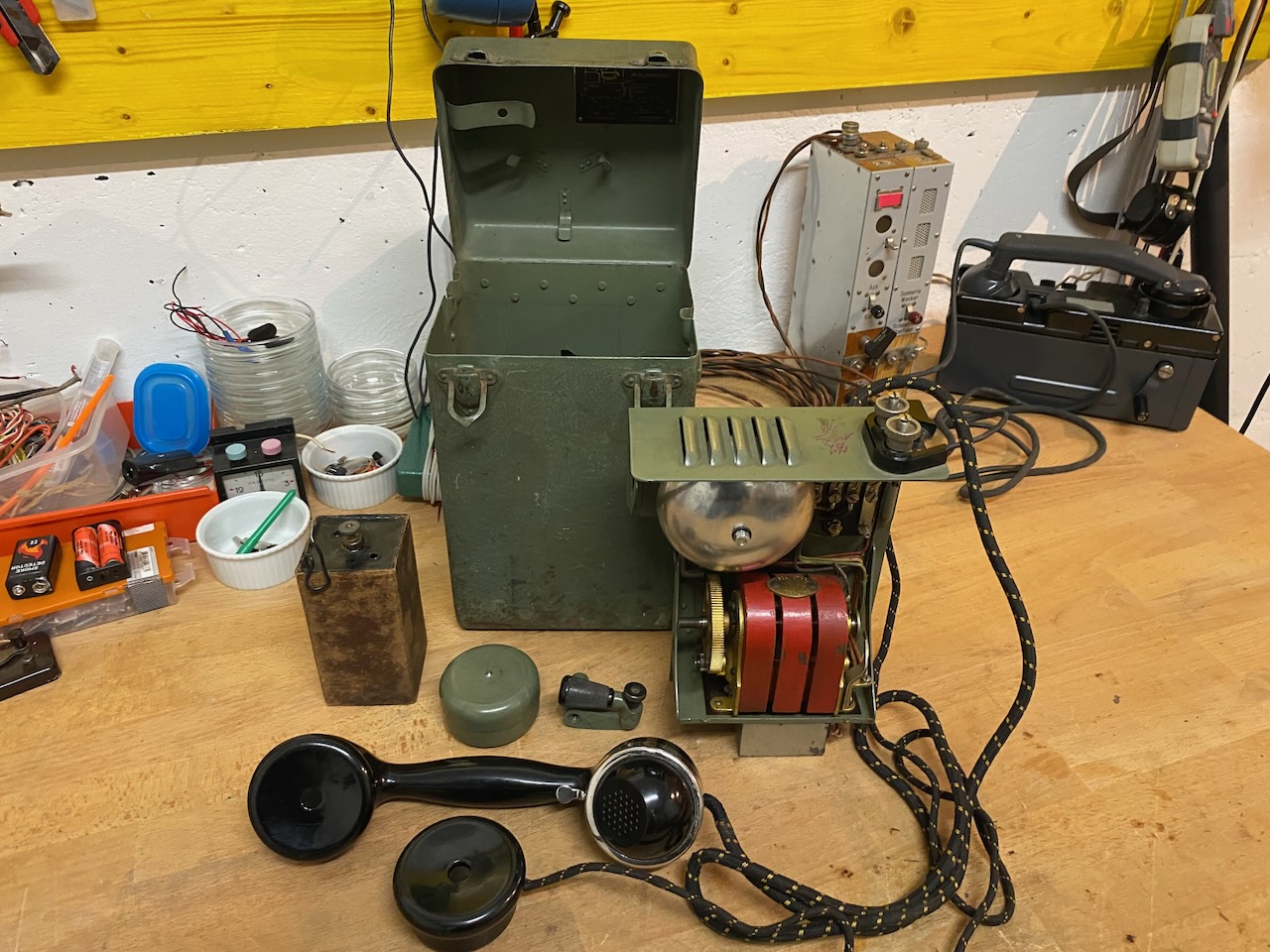
Disassembled.
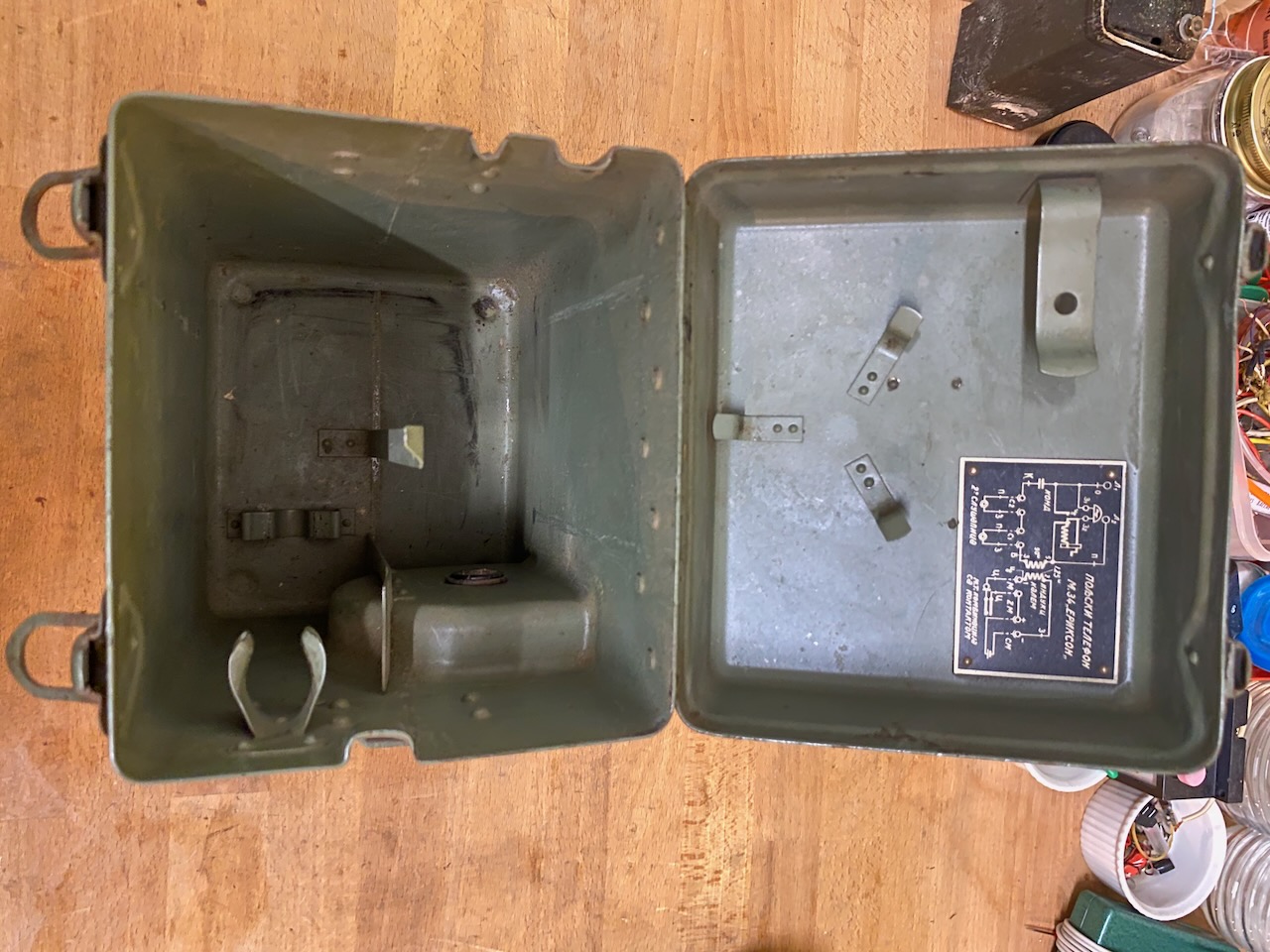
Diagram.
Serbian Cyrillic descriptions.
From top right clockwise:
Field Telephone M.34 "Ericsson".
Induction coil.
Microtelephone combination with contact.
2nd earphone.
Capacitor (Cond.).
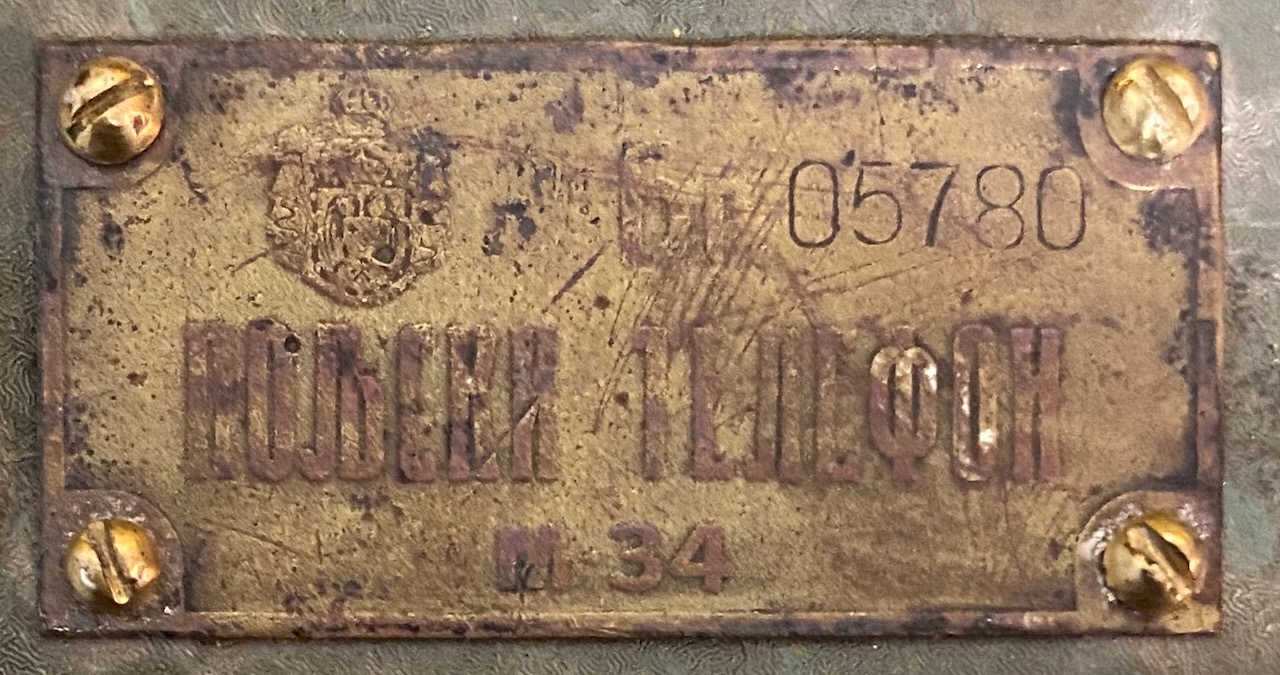
Top label.
Kingdom of Yugoslavia coat of arms.
Serial or inventory number (05780).
"Poljski Telefon" = Field Telephone.
M. 34.
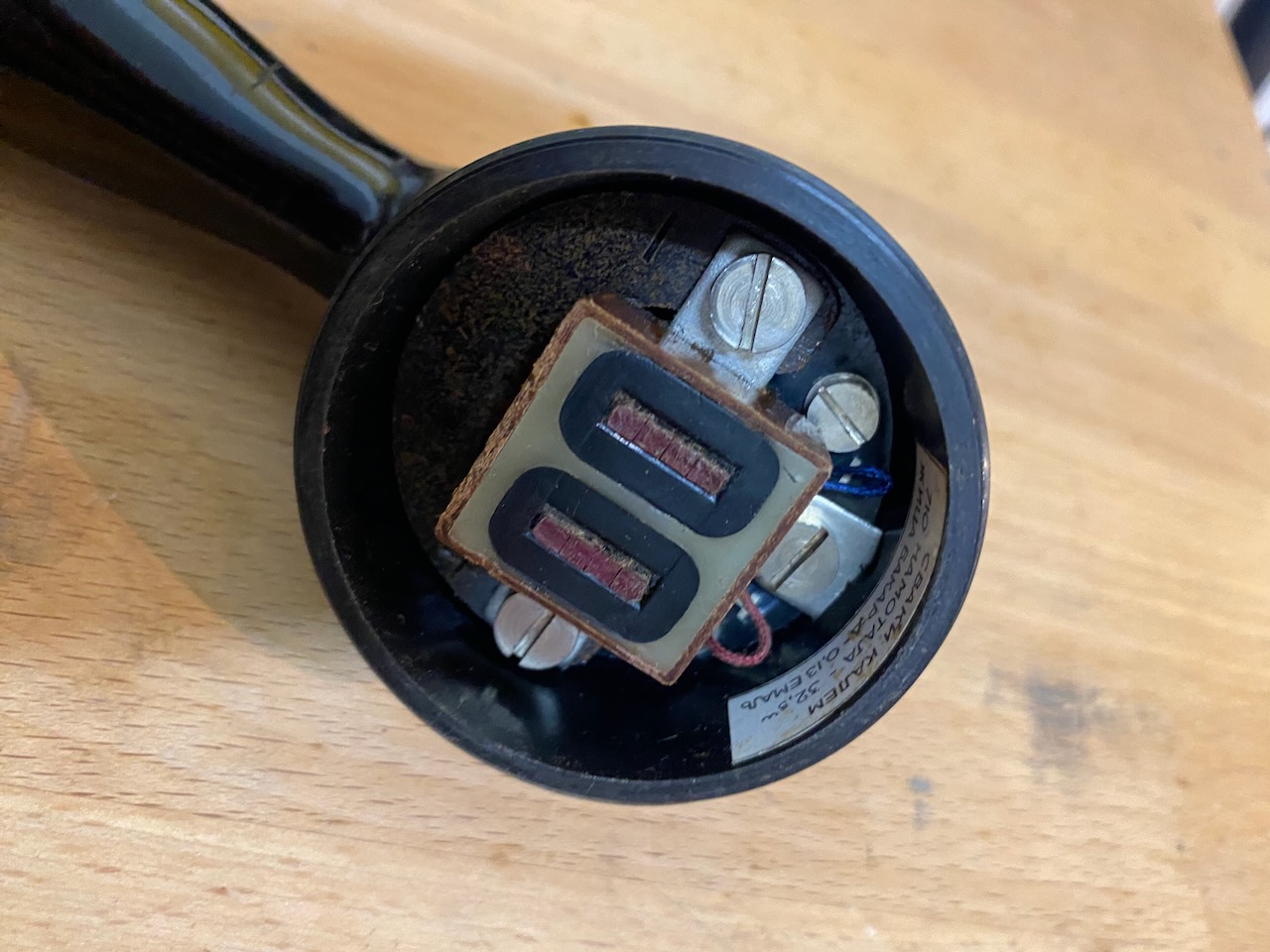
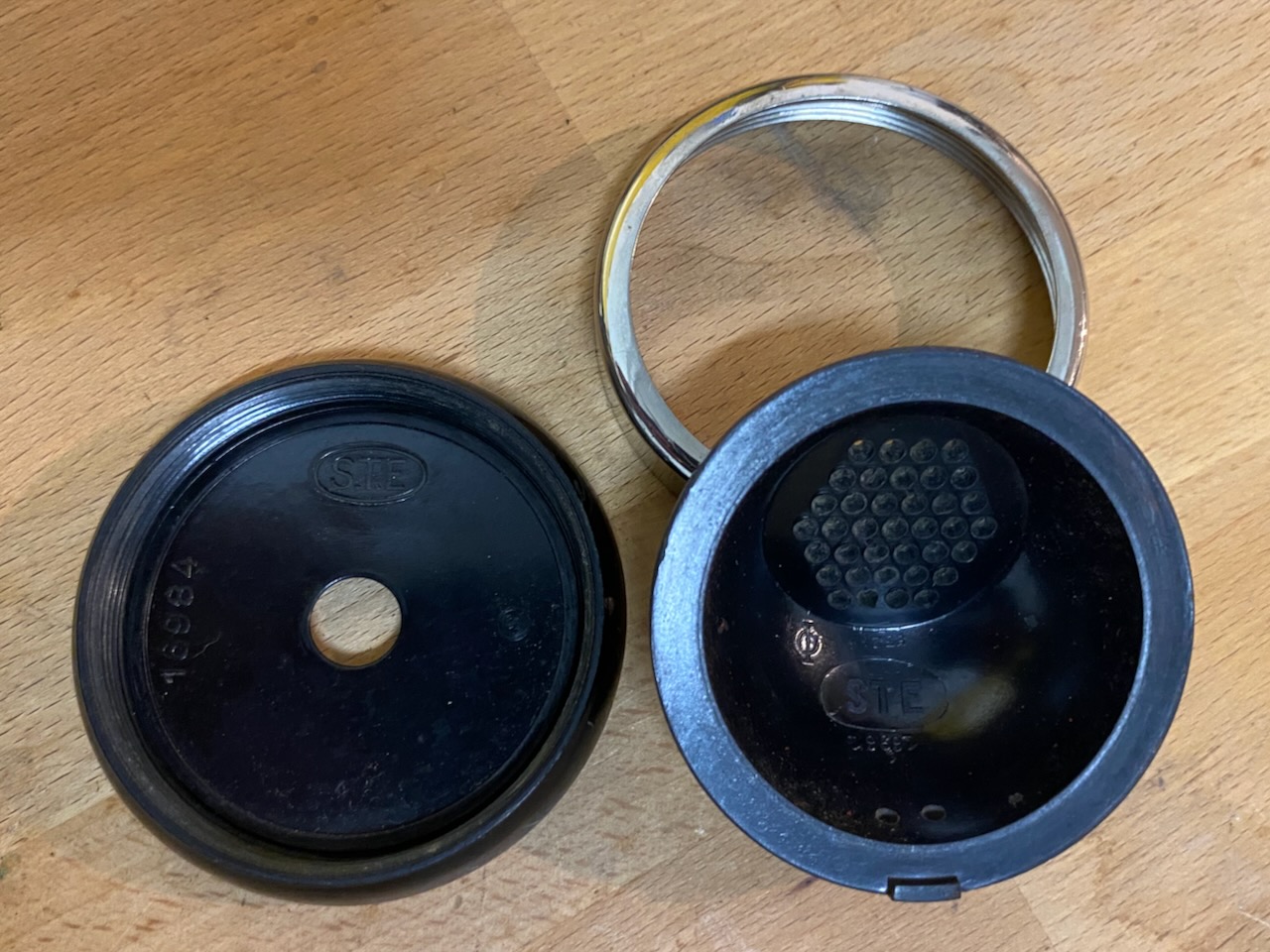
Disassembled handset.
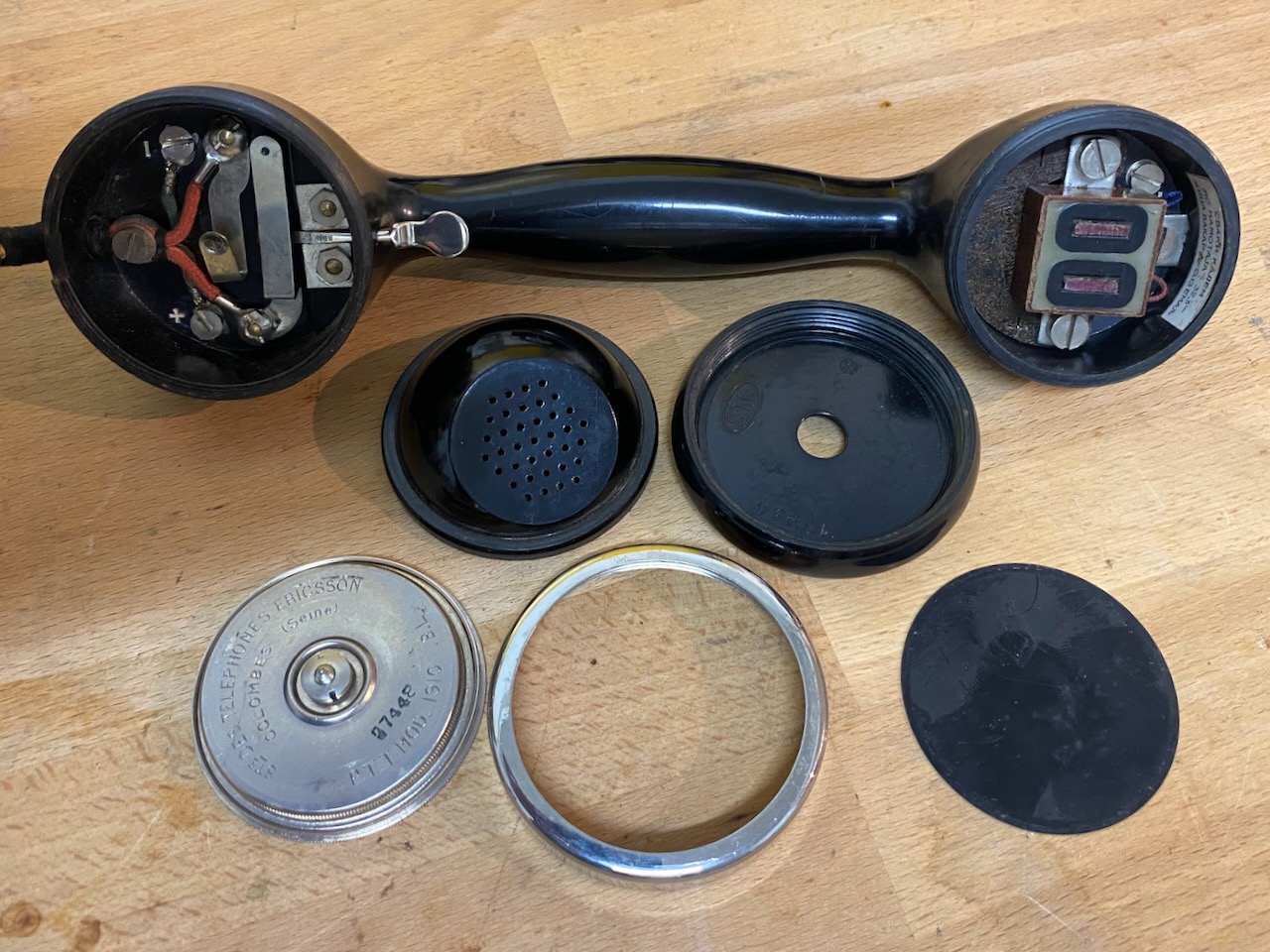
Transmitter side.
The PTT lever directly actuates a contact pressing it to the microphone capsule back.
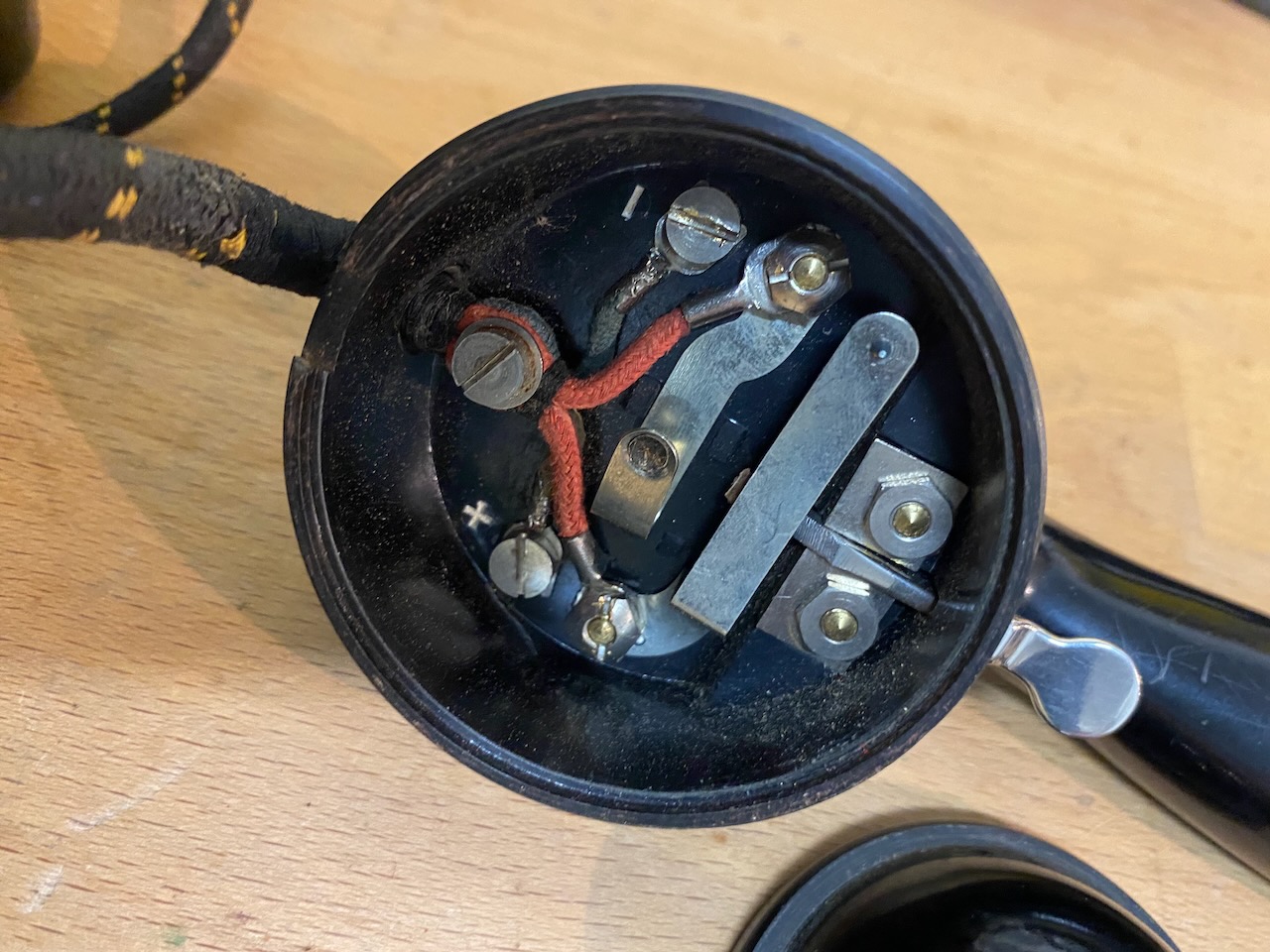
Receiver side.
The handset covers are marked STE (Société Française des Téléphones Ericsson).
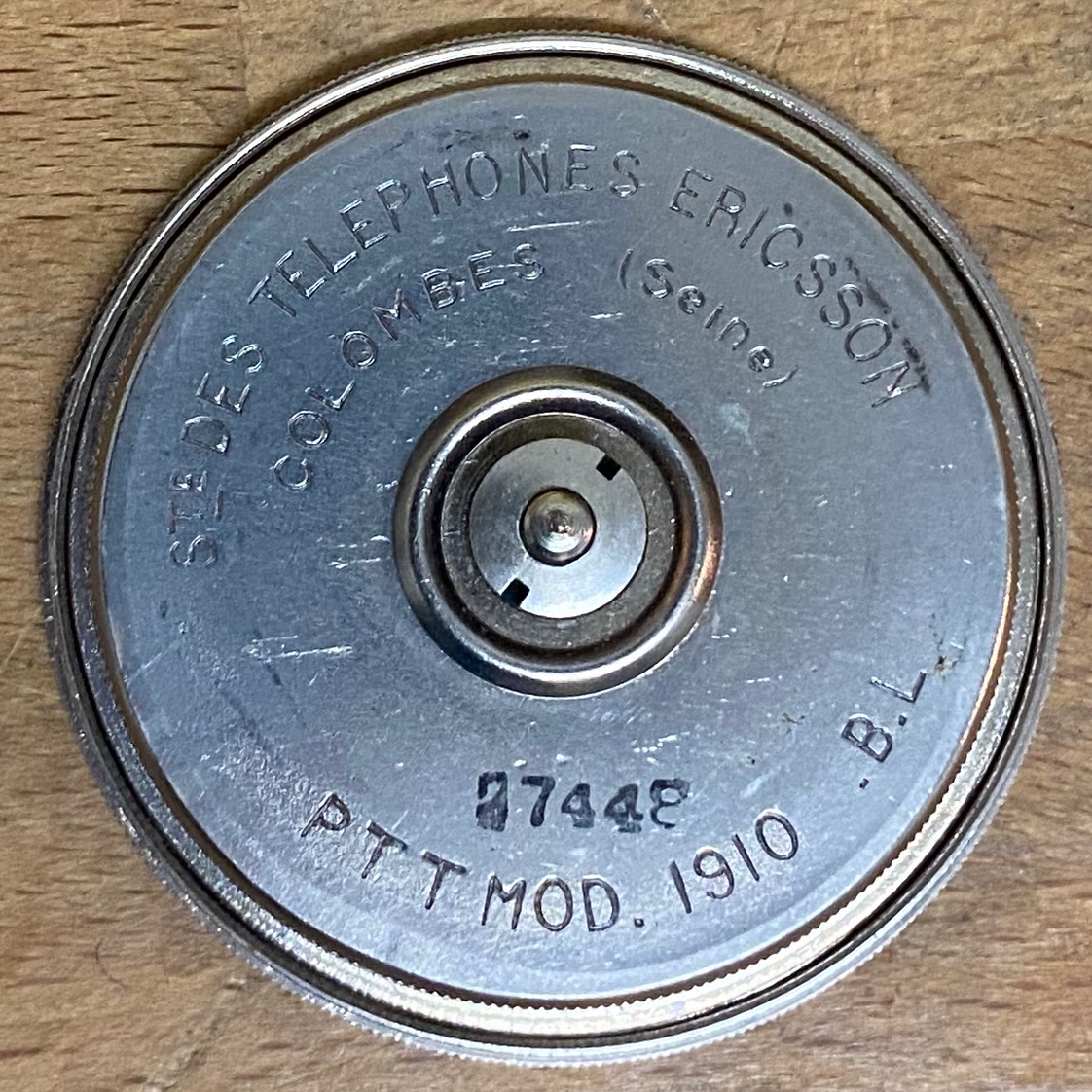
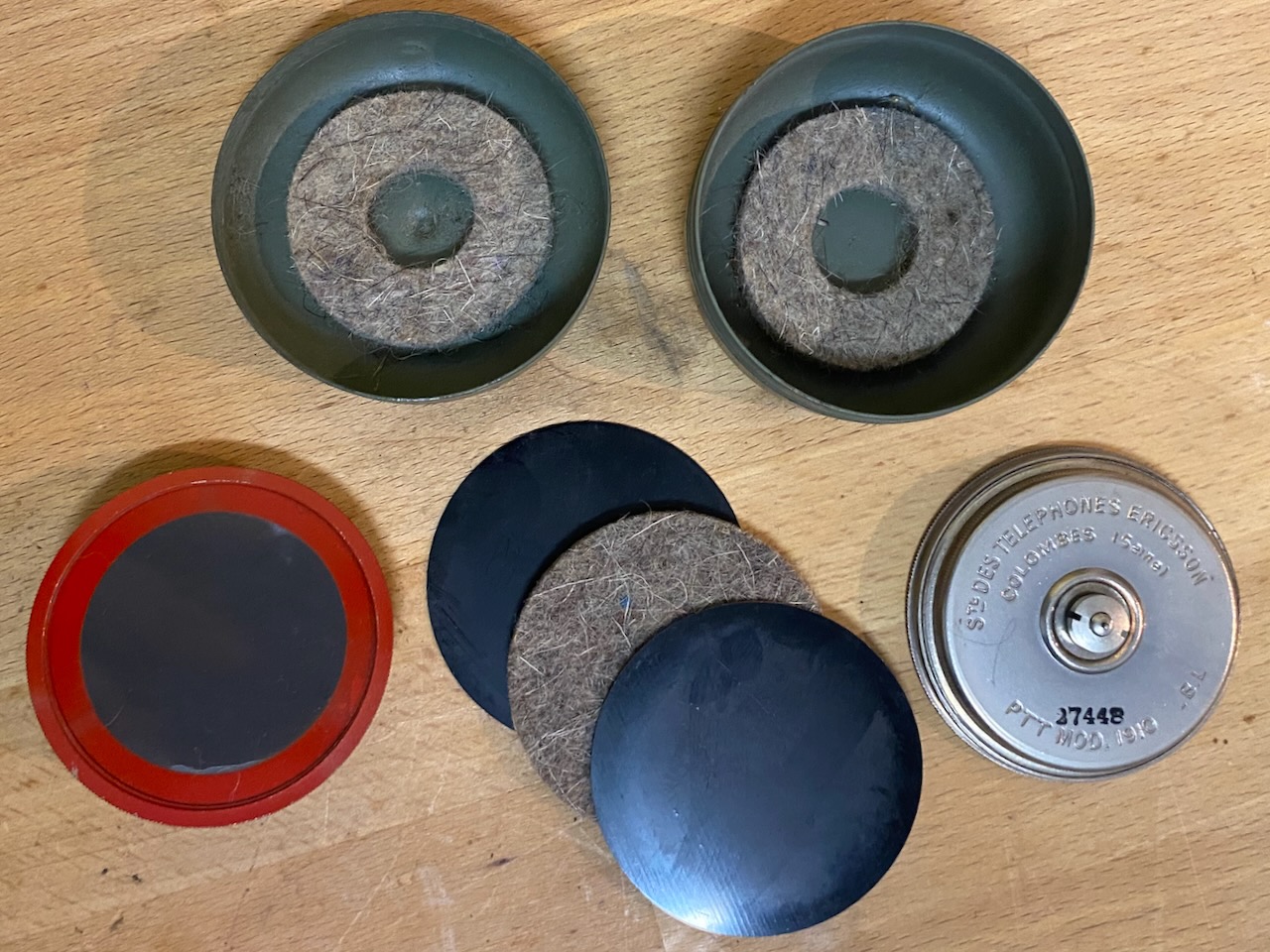
The microphone capsule is a french standard PTT Mod. 1910.
Handset spare part tin contains:
2 spare microphone capsules, 2 spare receiver diaphragms.
The headset.
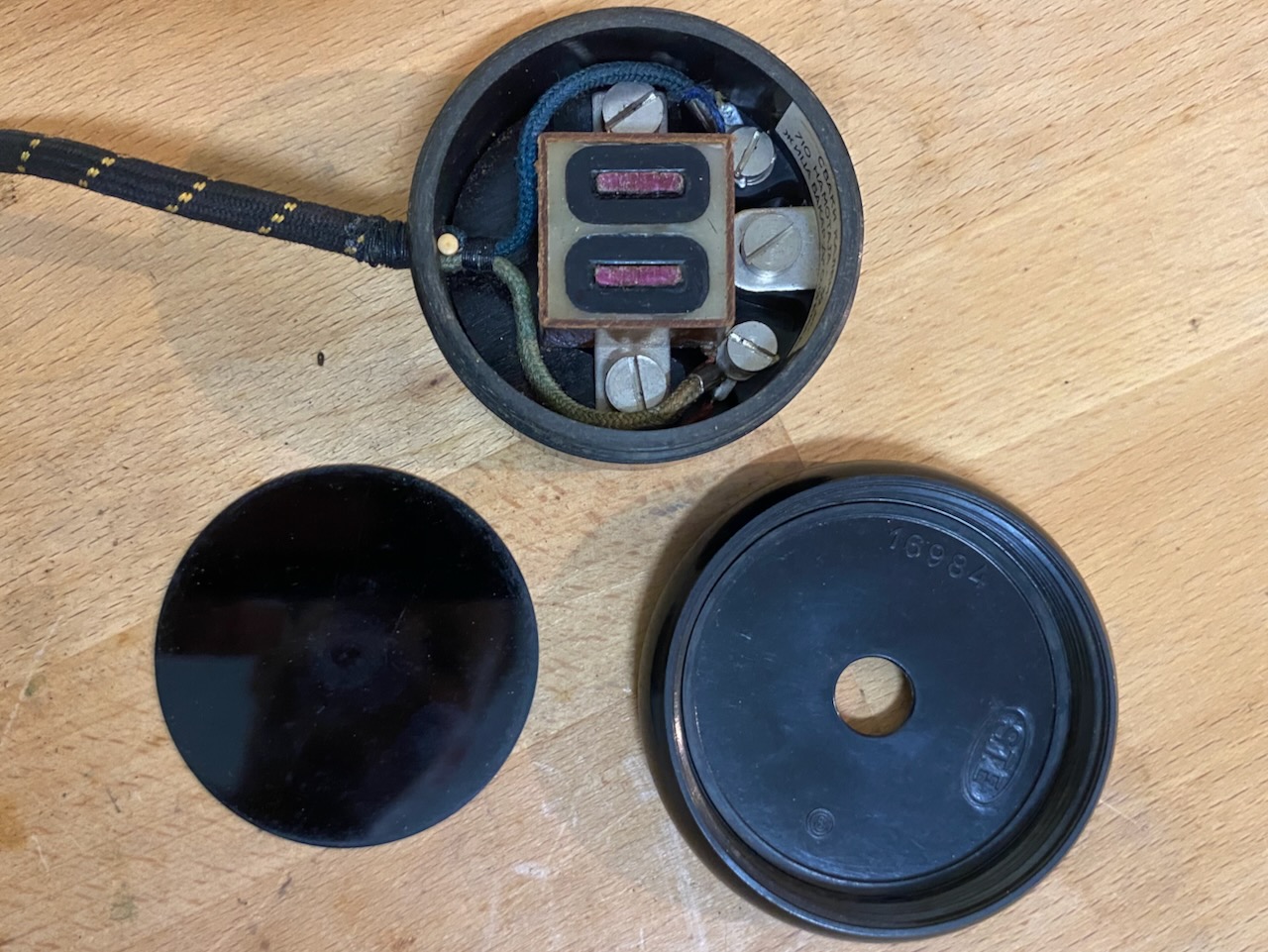
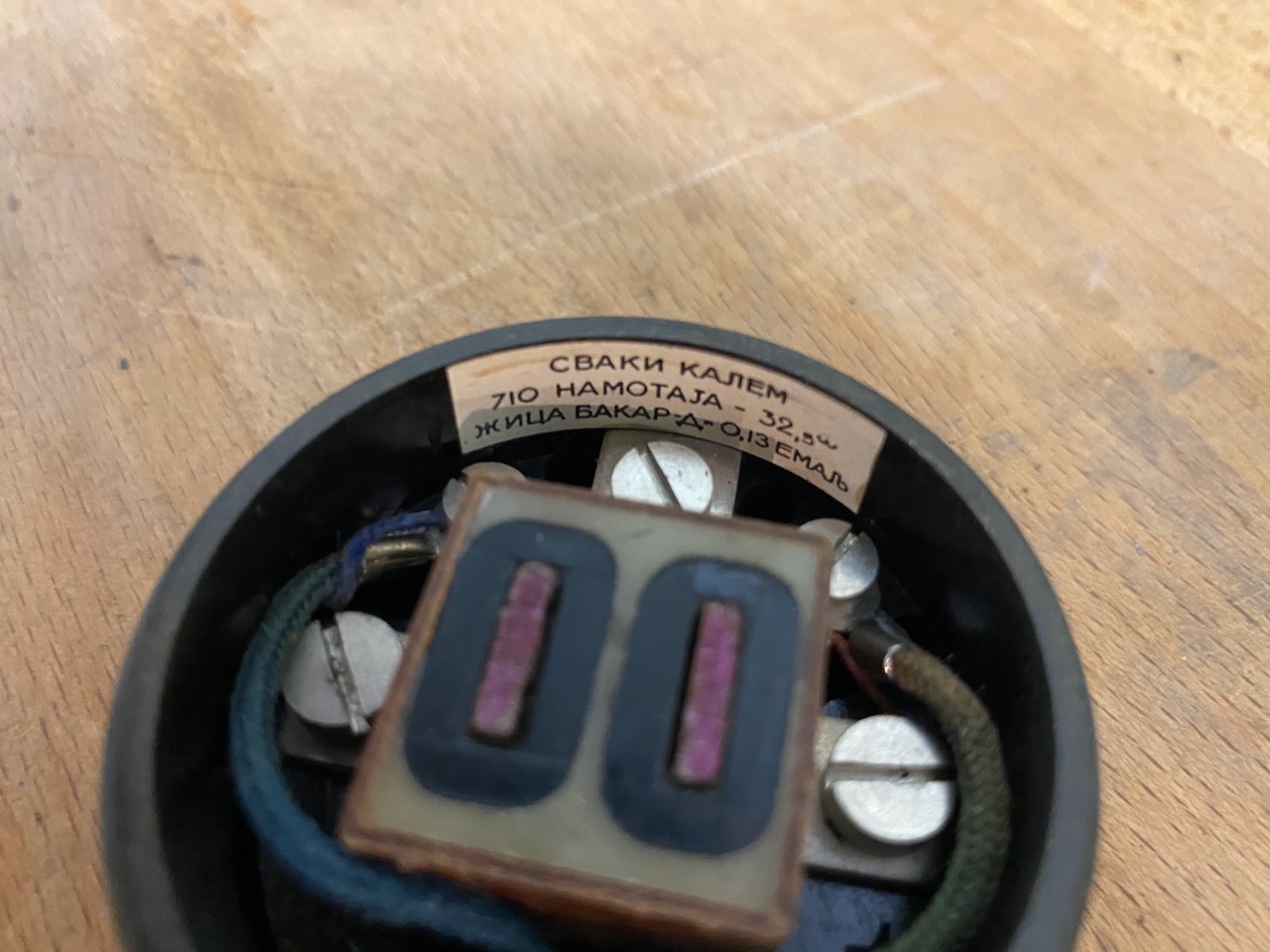
The same label inside handset and headset receiver.
Each coil has 710 windings, 32.5 Ohms, 0.13mm enamelled copper wire.
Components are mounted to the metallic chassis.
In the middle the magneto, below the magneto, here barely visible, the capacitor and the coil.
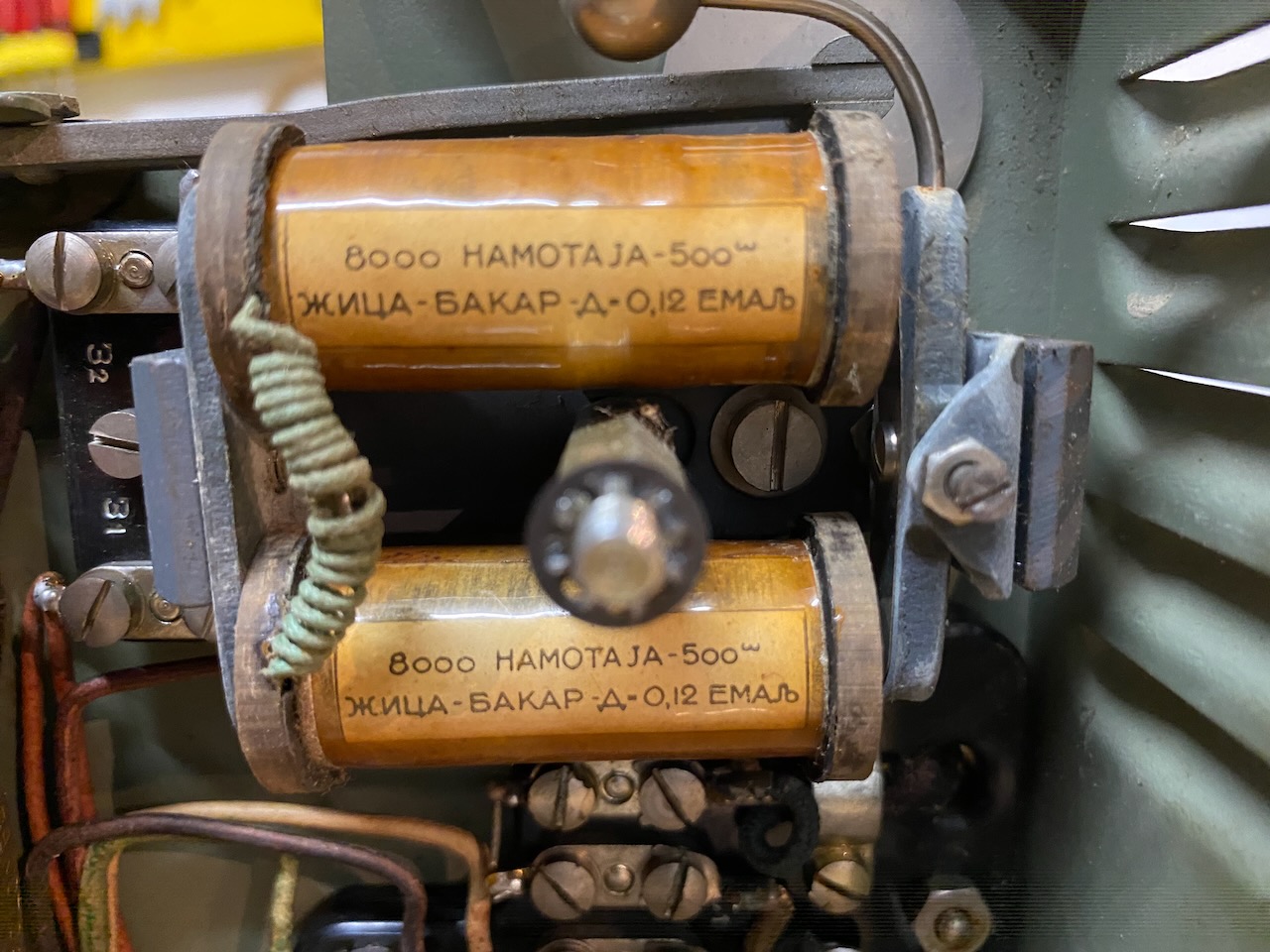
Above the magneto the polarised ringer, here with removed bell.
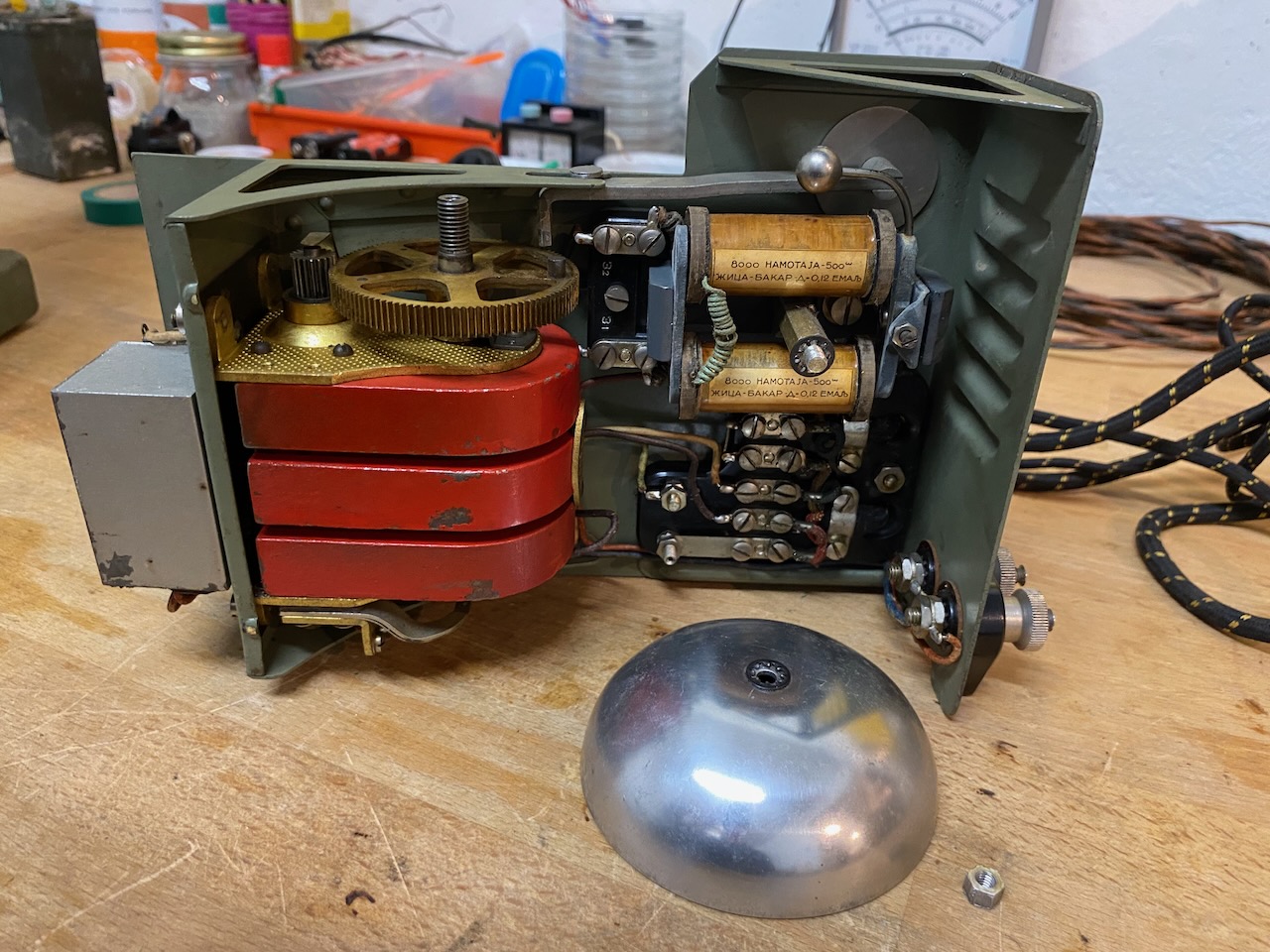
The ringer coils.
8000 windings, 500 Ohms, 0.12mm enamelled copper wire.
The back of the magneto with the short circuit contact.
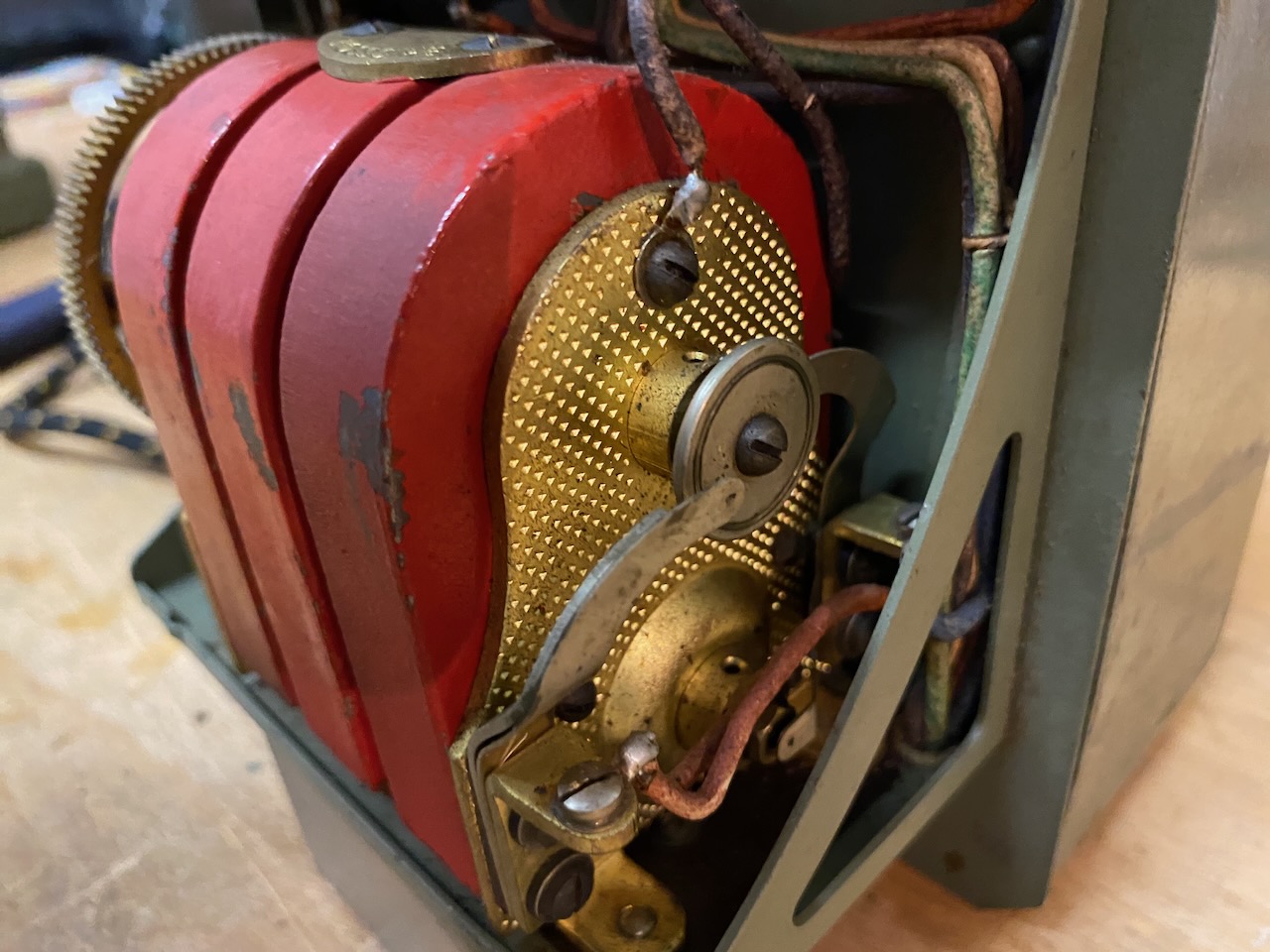
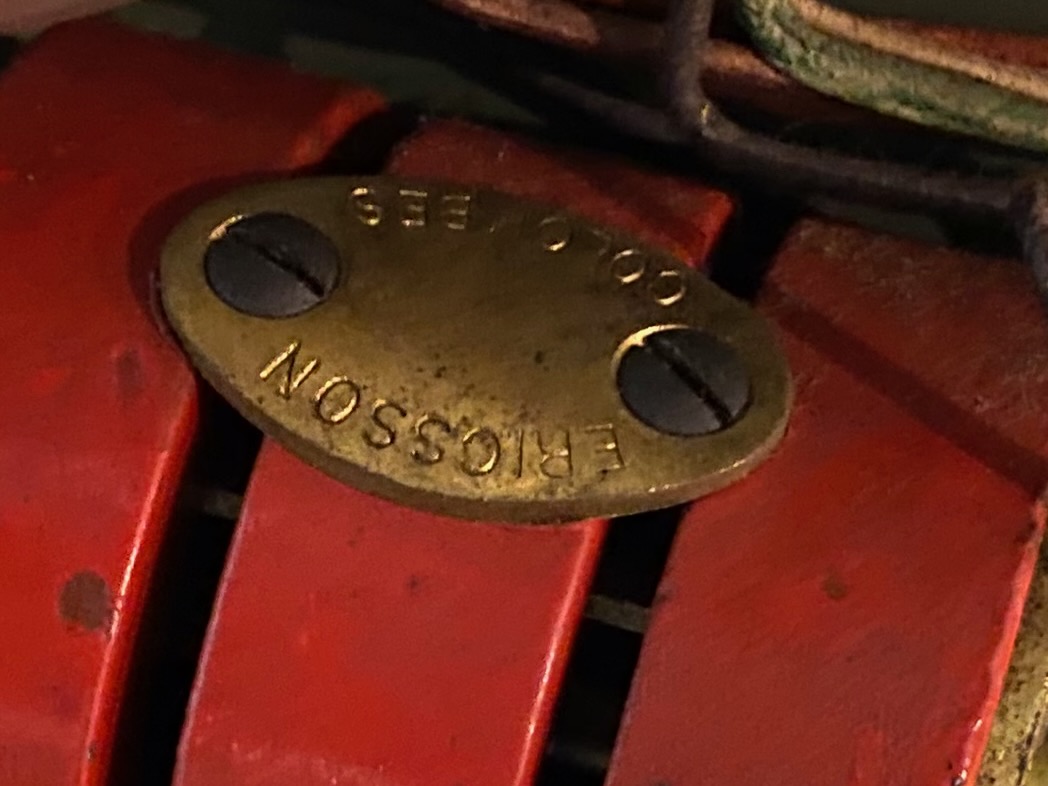
Ericsson made magneto.
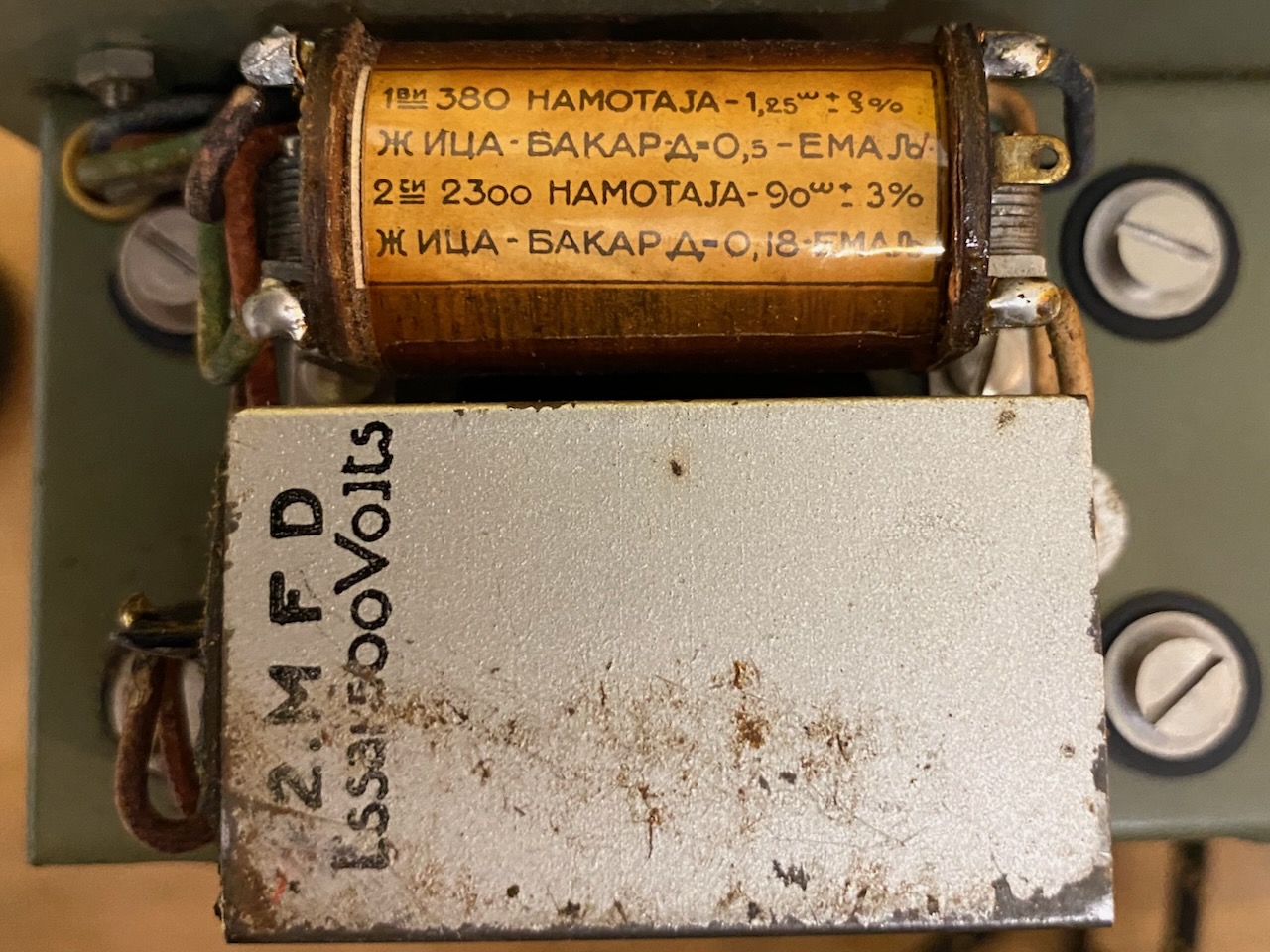
The 2 uF capacitor and the voice coil.
Primary: 380 windings, 1.25 Ohms, +-3%.
Secondary: 2300 windings, 90 Ohms, +-3%.
0.18mm enamelled copper wire.
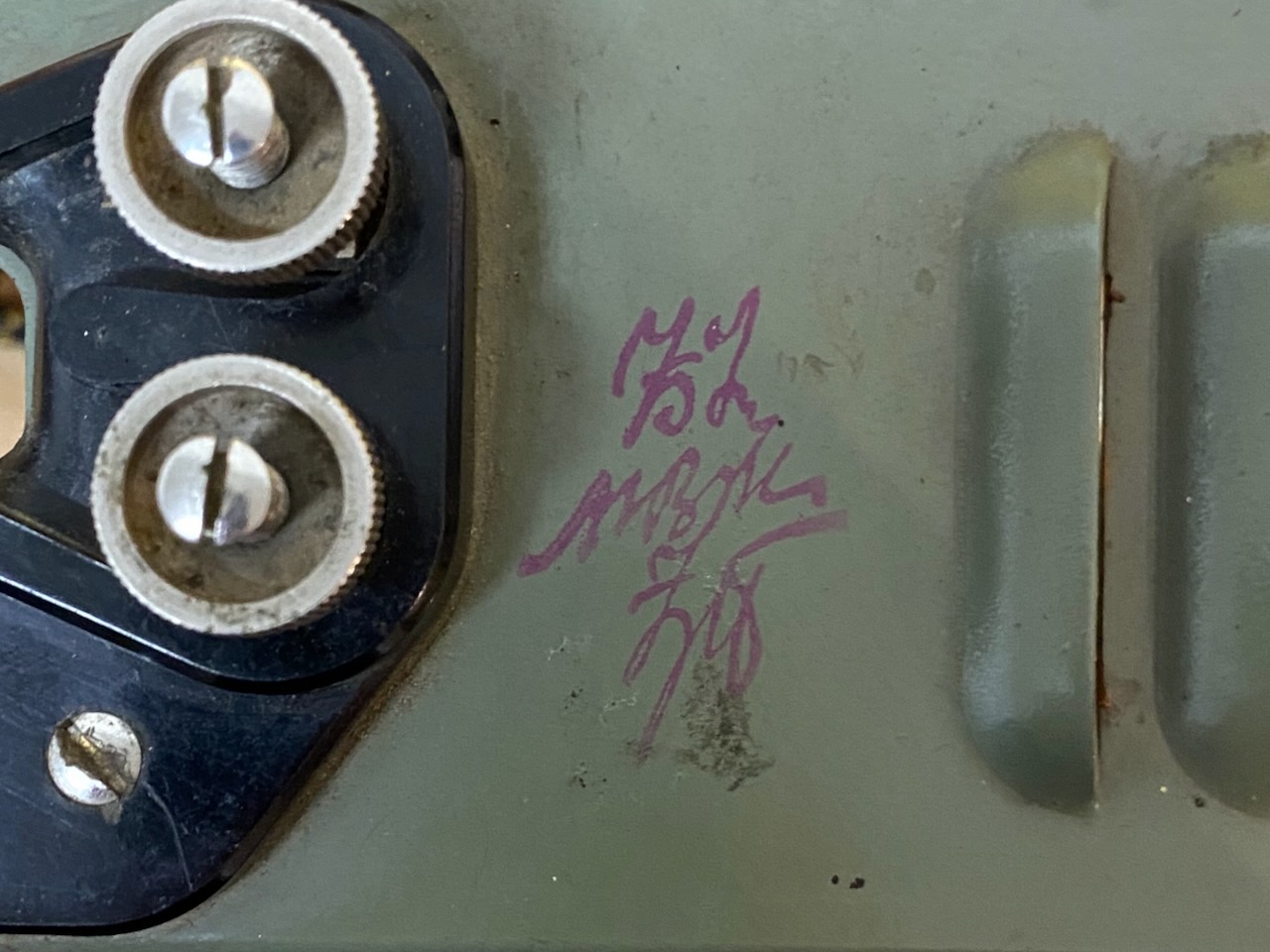
Some to me non legible manual script on the chassis top.
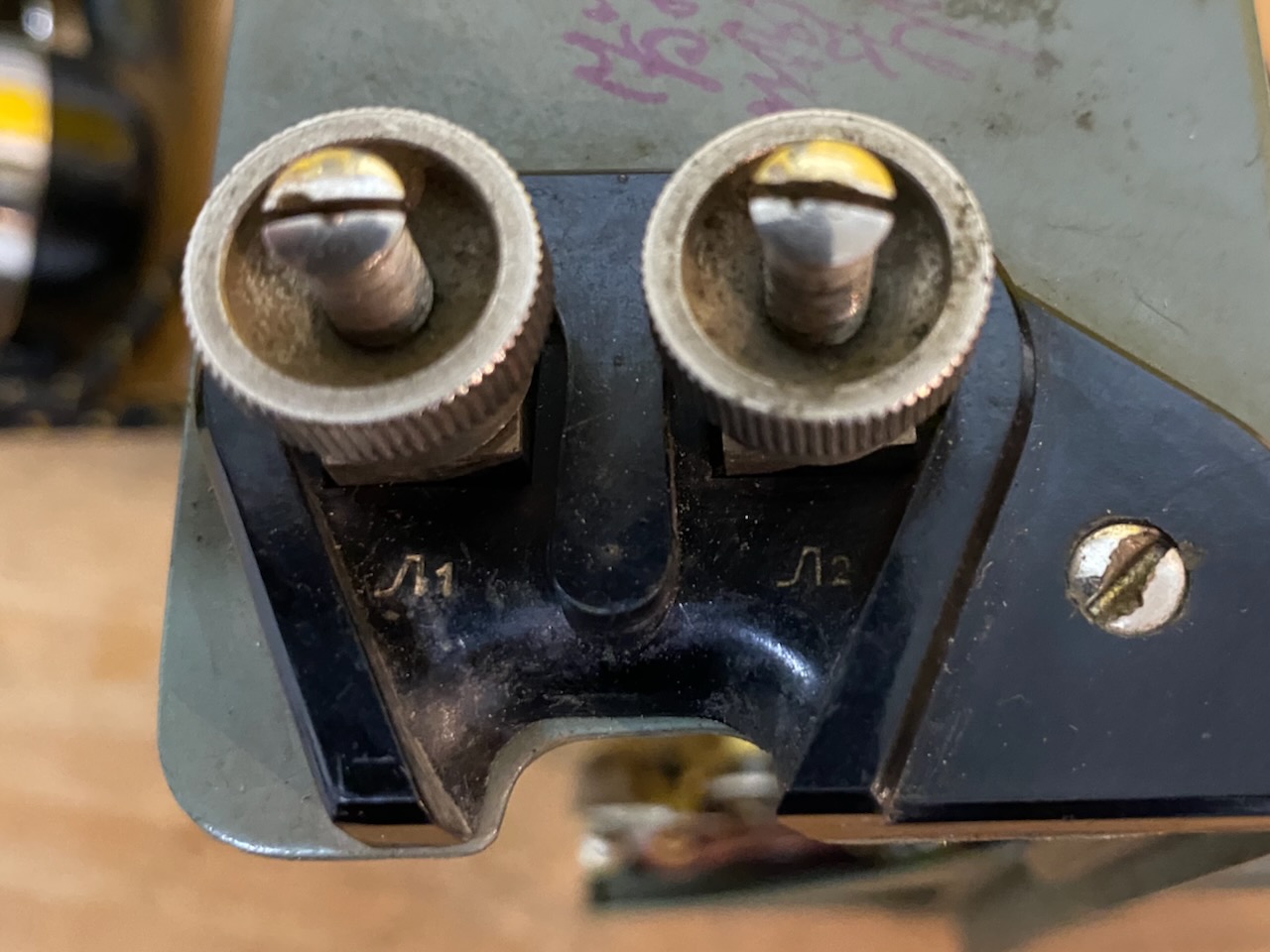
Line binding posts.
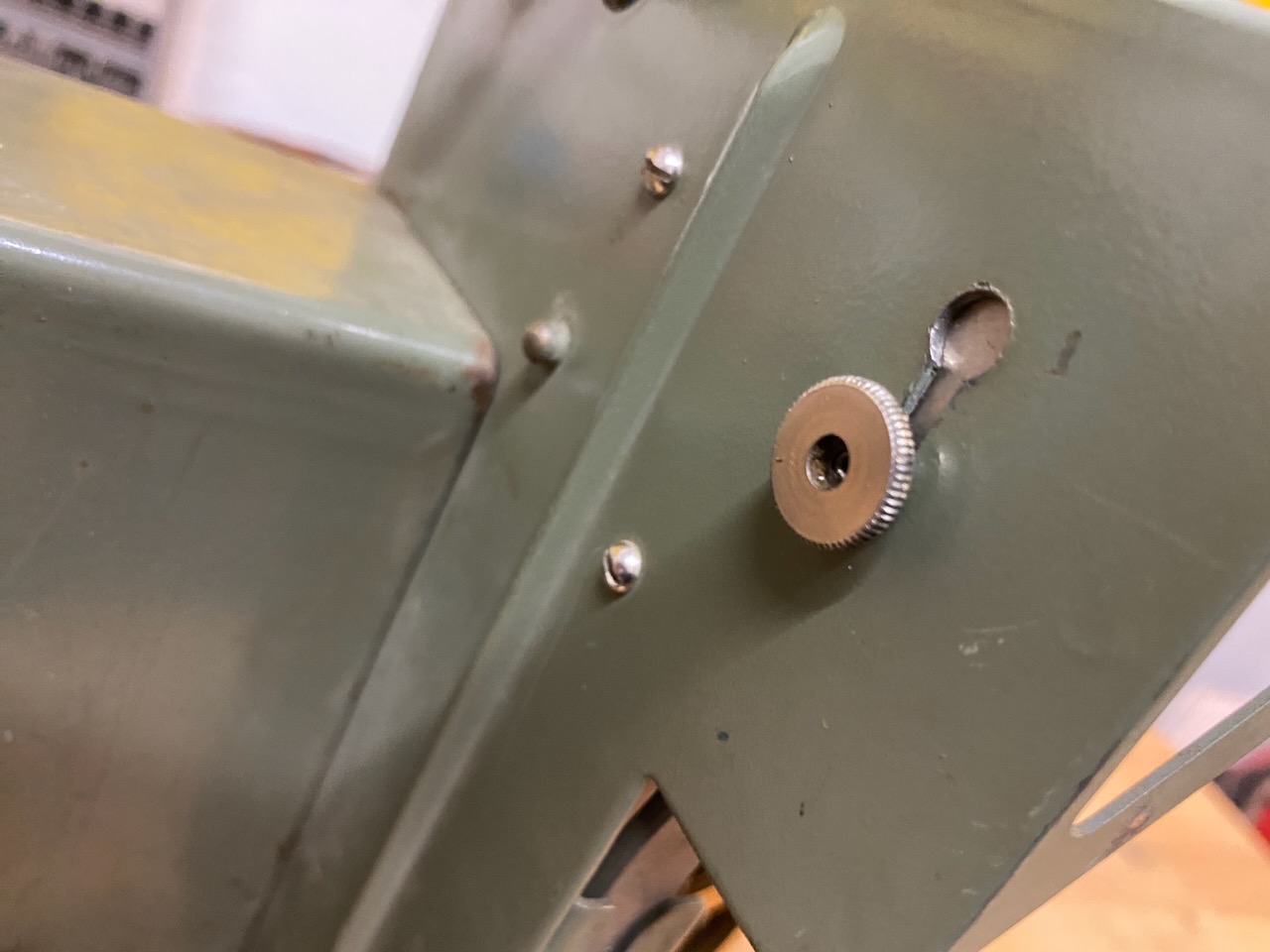
Magneto block mechanism.
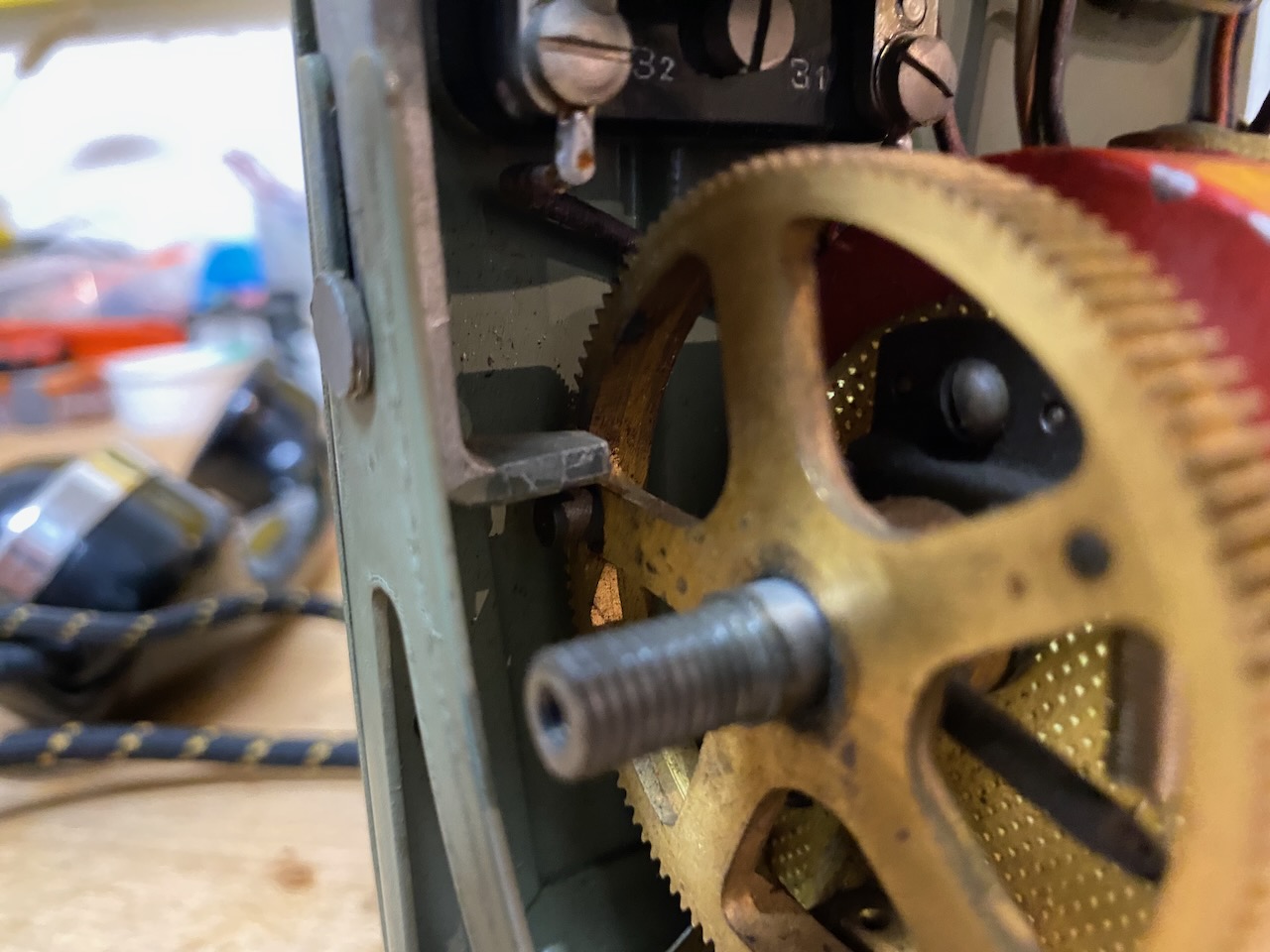
The knob can be pushed downwards to block the magneto to better be able to loosen and remove the crank lever.
An over-engineered feature, on any other field telephone this is achieved just by momentum (or in the worst case by blocking the magneto with a short circuit).
Shaft that blocks the magneto.
Neatly arranged parts.
Battery mounted.
Empty box.
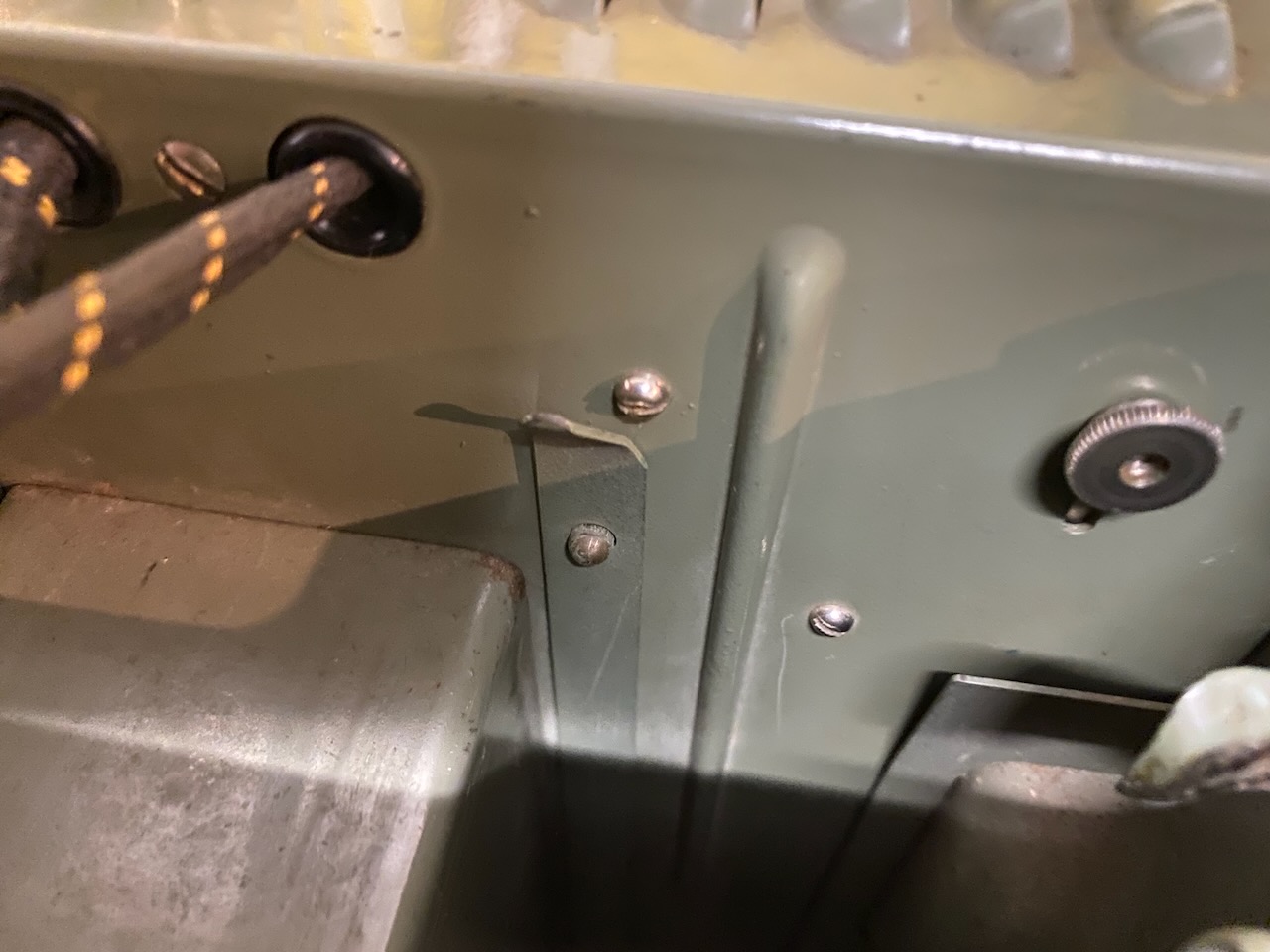
In the middle the latch which holds the chassis in the box.
Chassis inserted.
Ready to use.
All stored.
Crank folded out.
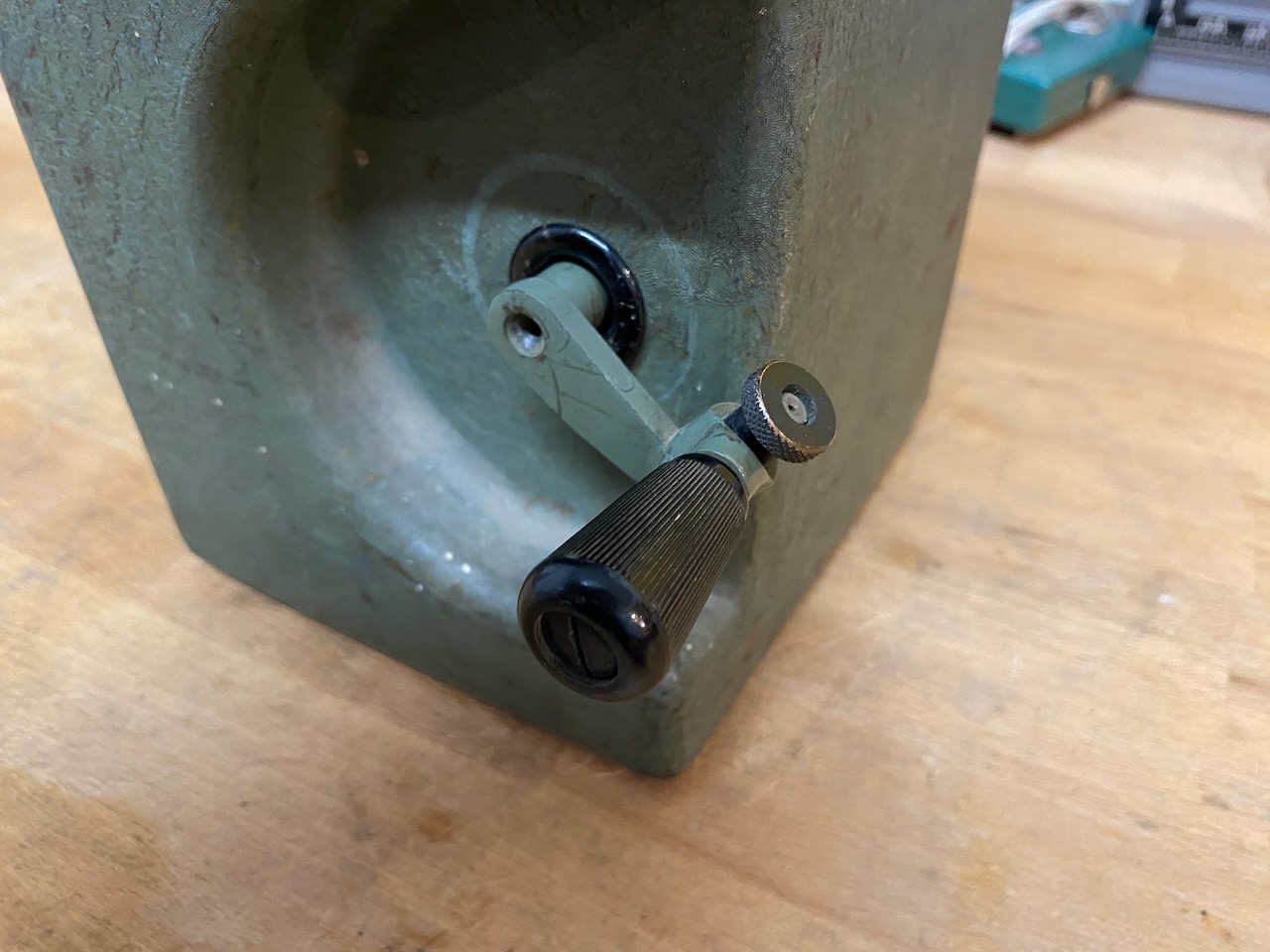
Crank folded in.
Ready for transport.
From the back.
Creative Commons Attribution-ShareAlike 4.0 International License
