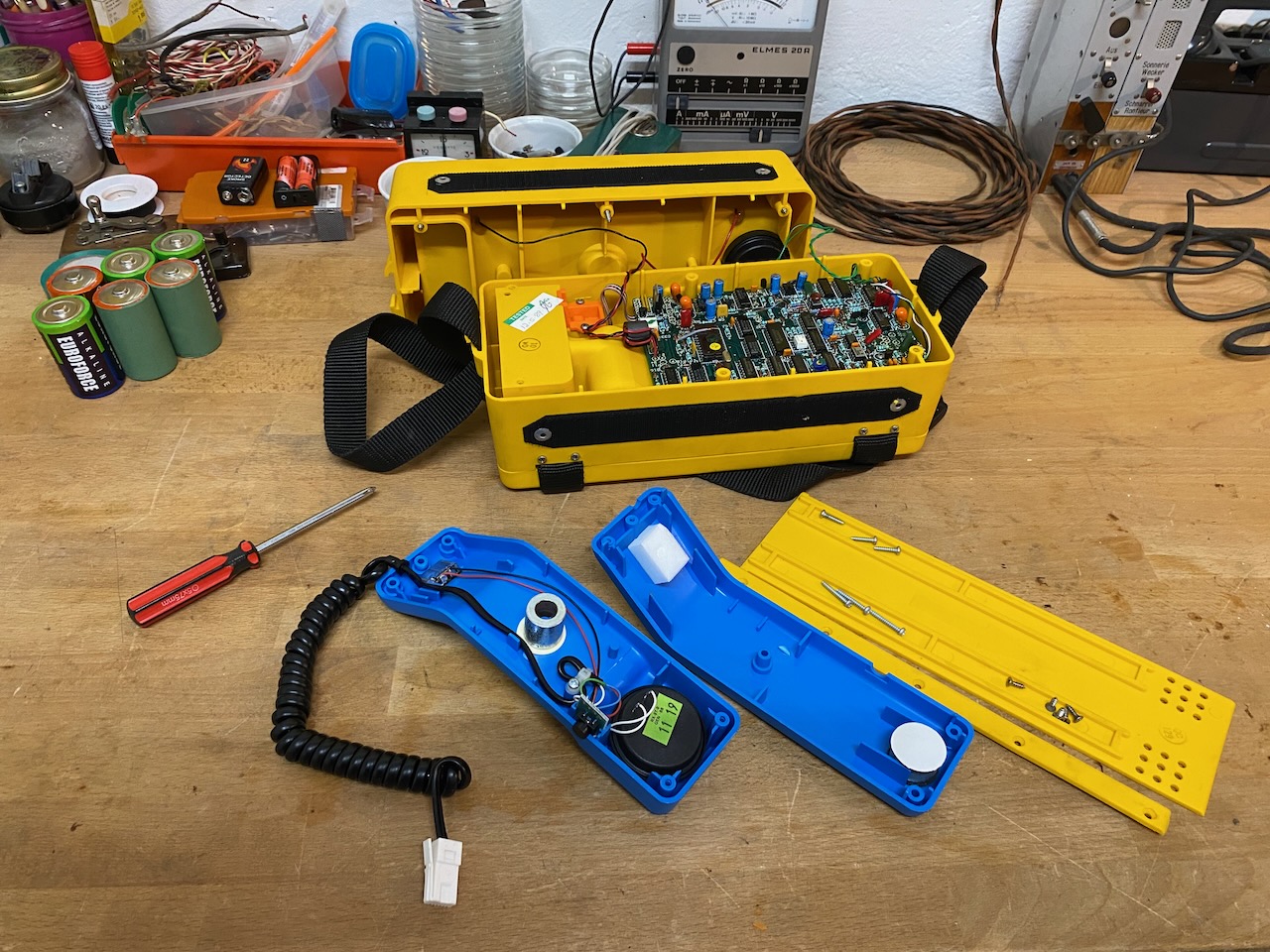
I'm looking for a second one of these, if anybody has one to sell please get in touch.
This set, featuring the typical yellow color of BT technician devices from the 1980s and using the same case as some “Telephone No. 286” units, is a lineman’s set designed for fiber-optic connections. It uses a 1300 nm transmitter with a power budget of 10 dB; on typical late-1980s single-mode fibers with an attenuation of 0.5 dB/km (@1300 nm), this allowed spans of up to 20 km. It operates bidirectionally over a single fibre. This set would typically have been used between fibre-splicing teams.
In 1989, this would have been an advanced—and likely expensive—instrument. During the 80ies fibre-optic communication had progressed from an emerging technology to the backbone of telecom networks. The first transatlantic fibre-optic cable, TAT-8, had just been completed in 1988 [2]. Single-mode tech typically operated at 1310 nm, but optics supporting the lower-loss 1550 nm window were already available. Improved InGaAsP lasers and PIN photodiodes were already supporting data rates above 1 Gbps. By the mid 1990ies DWDM technology took of and evolved since then to now support up to 160 lambdas per fibre, with up to terabit speeds per lambda.
The set was manufactured by Industrial Technology Inc., which was acquired by Texton in 2001, which is now part of Tempo. They also sold the device under their own brand as the FiberFone, and produced also versions with 1550 nm transmitters and power budgets of 40 dB, enabling ranges of up to 200 km [1].
"Simple Operation - If you can operate a telephone, you can use a FiberFone". [1]
:-)
Disassembled.
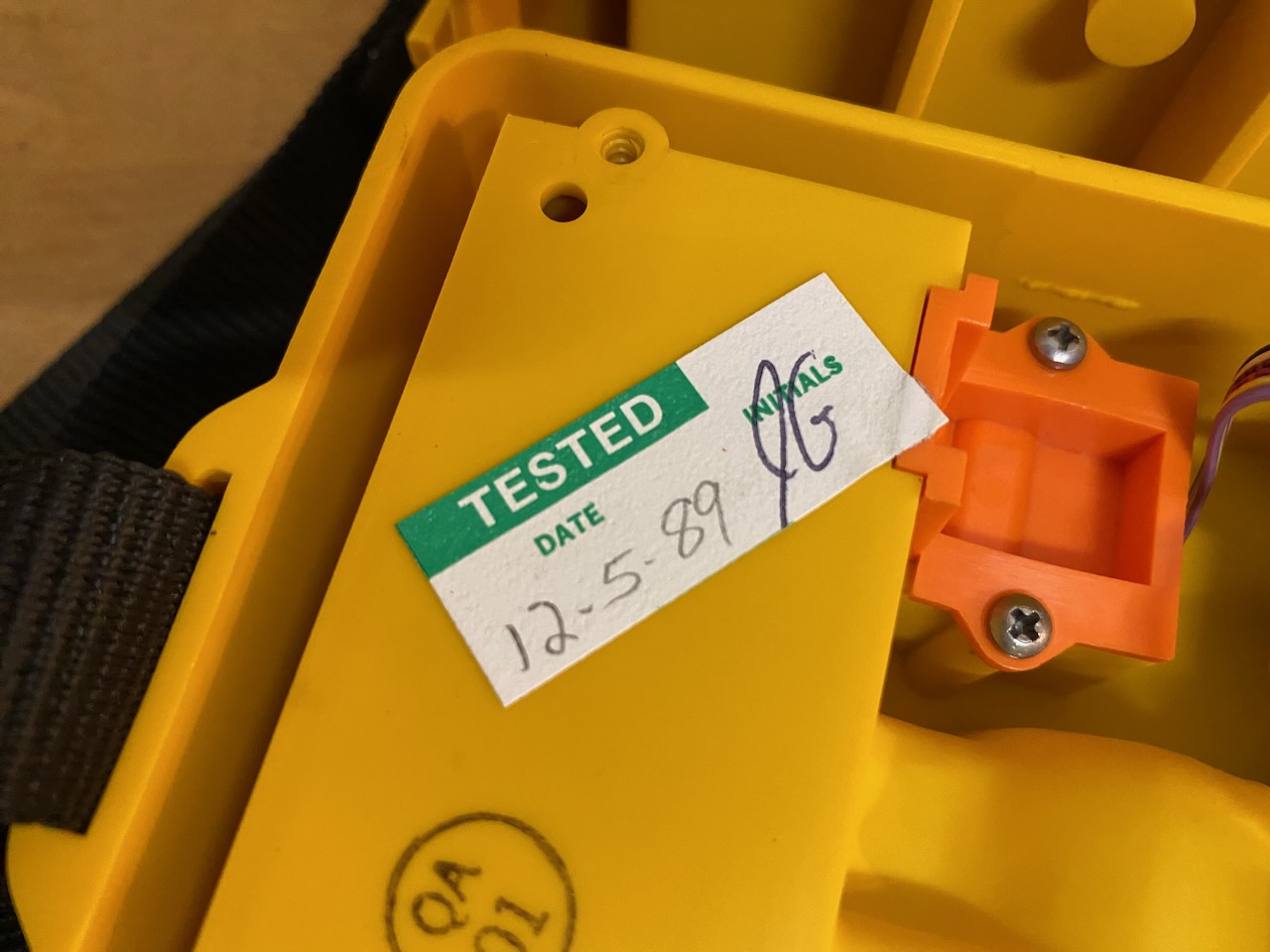
Made in 1989.
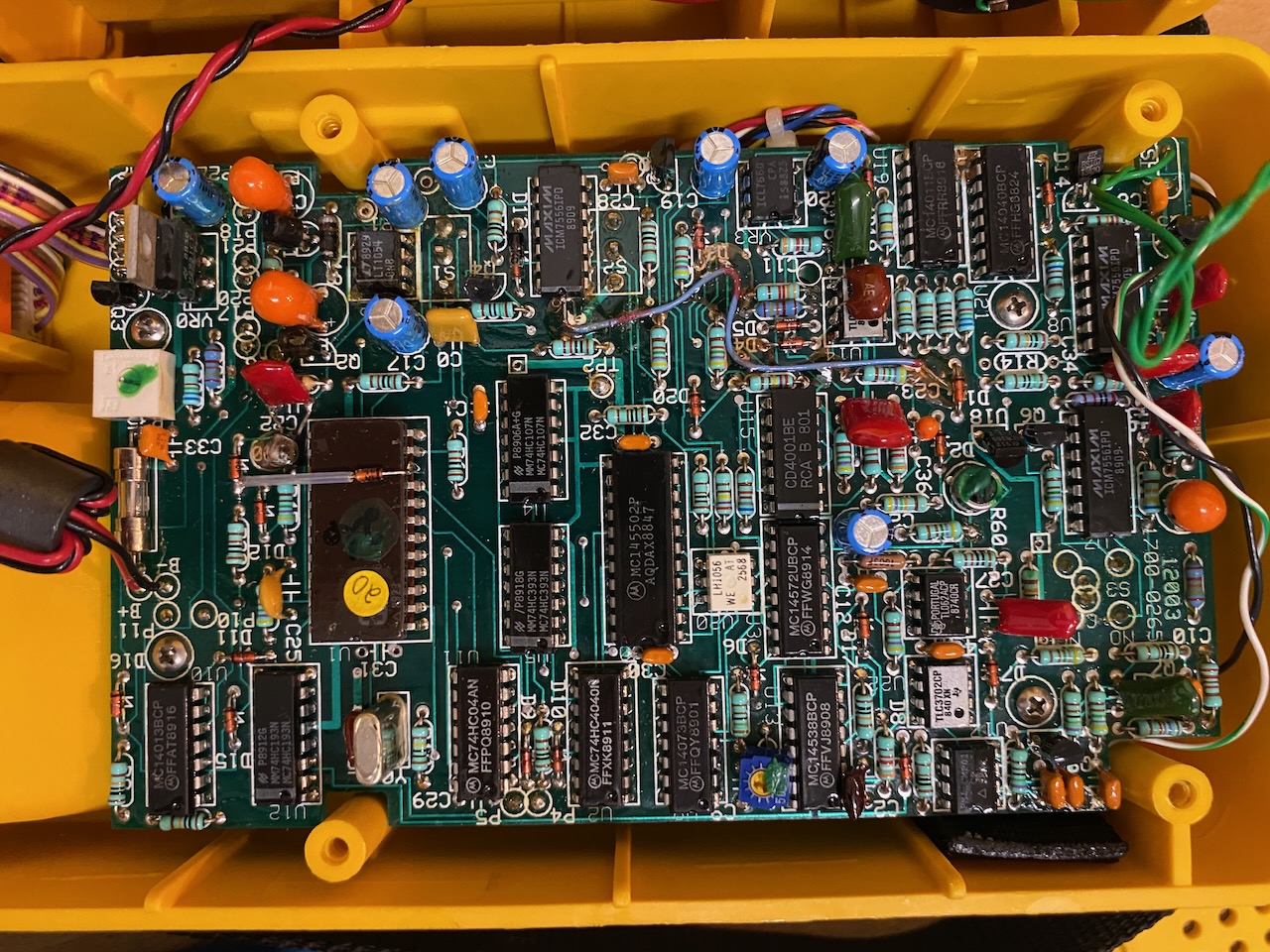
CMOS based setup, a bunch of logic gates and counters, the bigger IC on the left is a Manchester Encoder/Decoder (DIP24), and the one in the middle a PCM Mono Codec (DIP22).
The open instrument, only the batteries and the ringer loudspeaker are in the part which is mounted to the bottom.
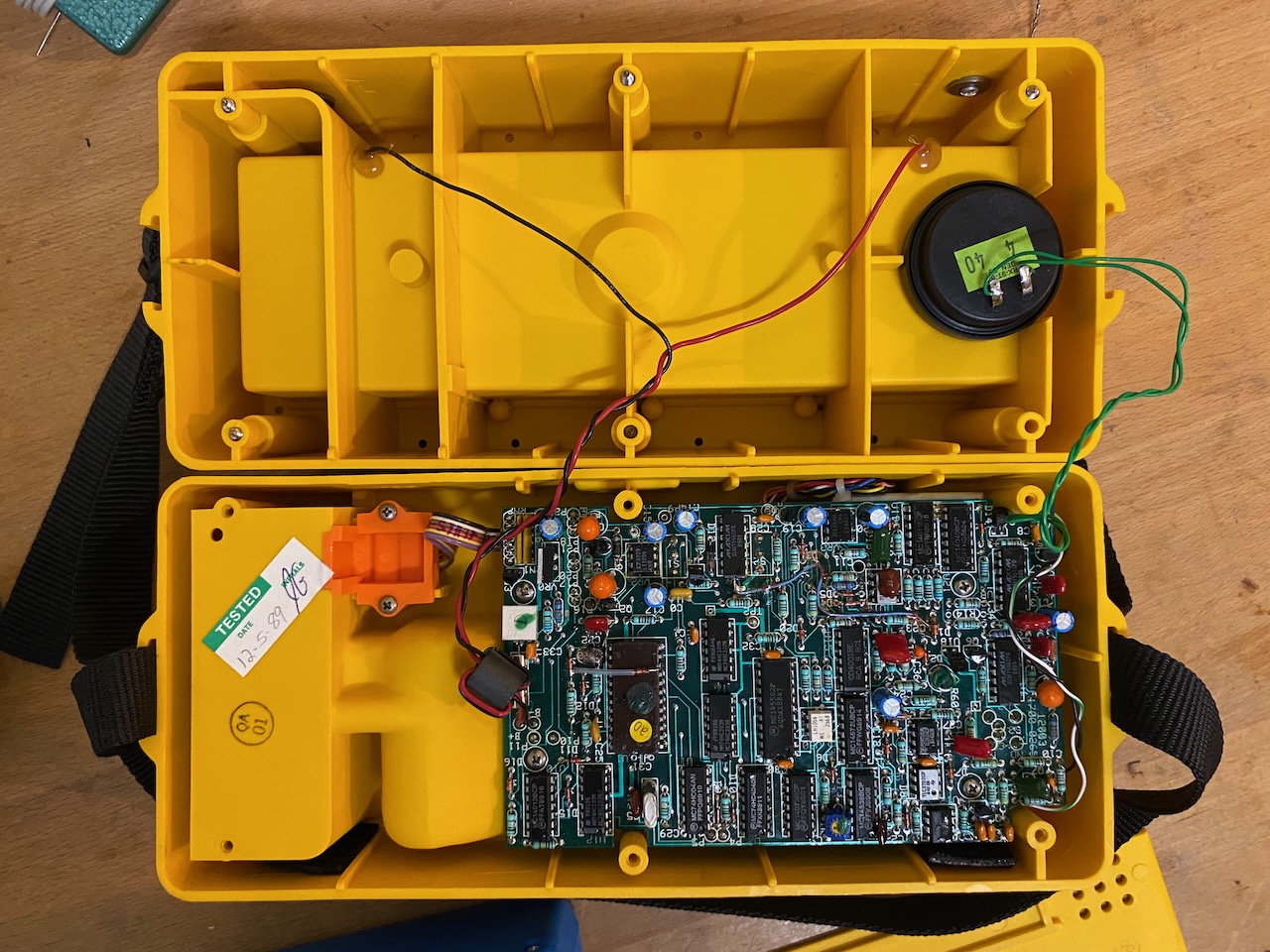
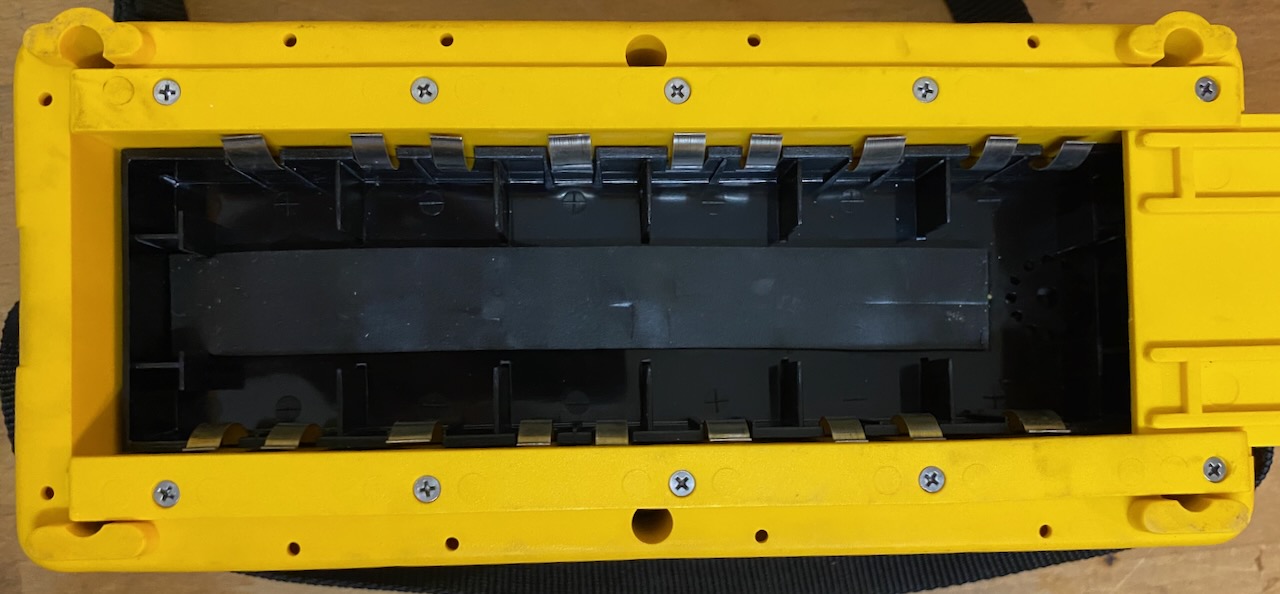
Empty battery compartment, takes 6 D-Cells.
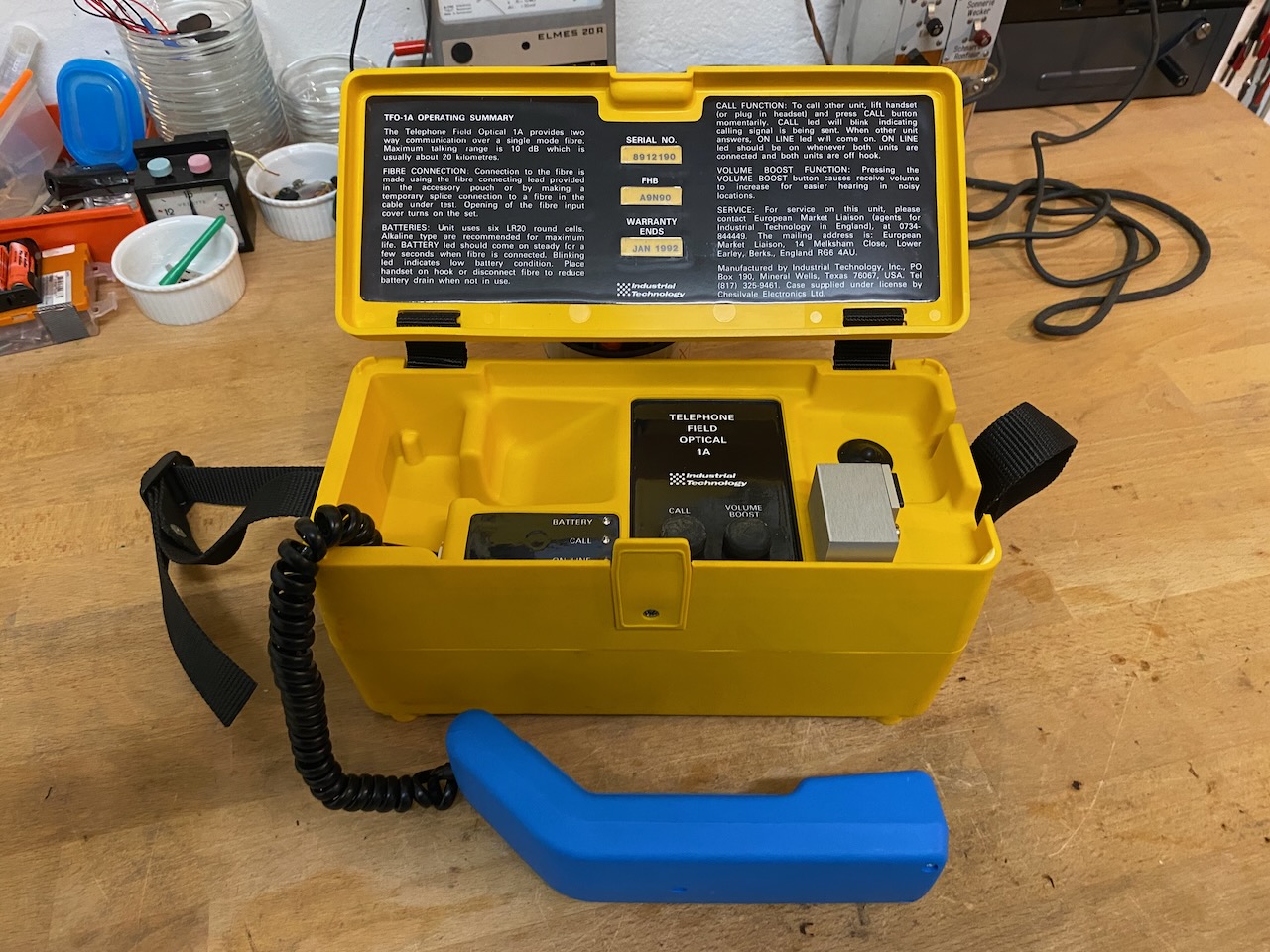
Ready to use.
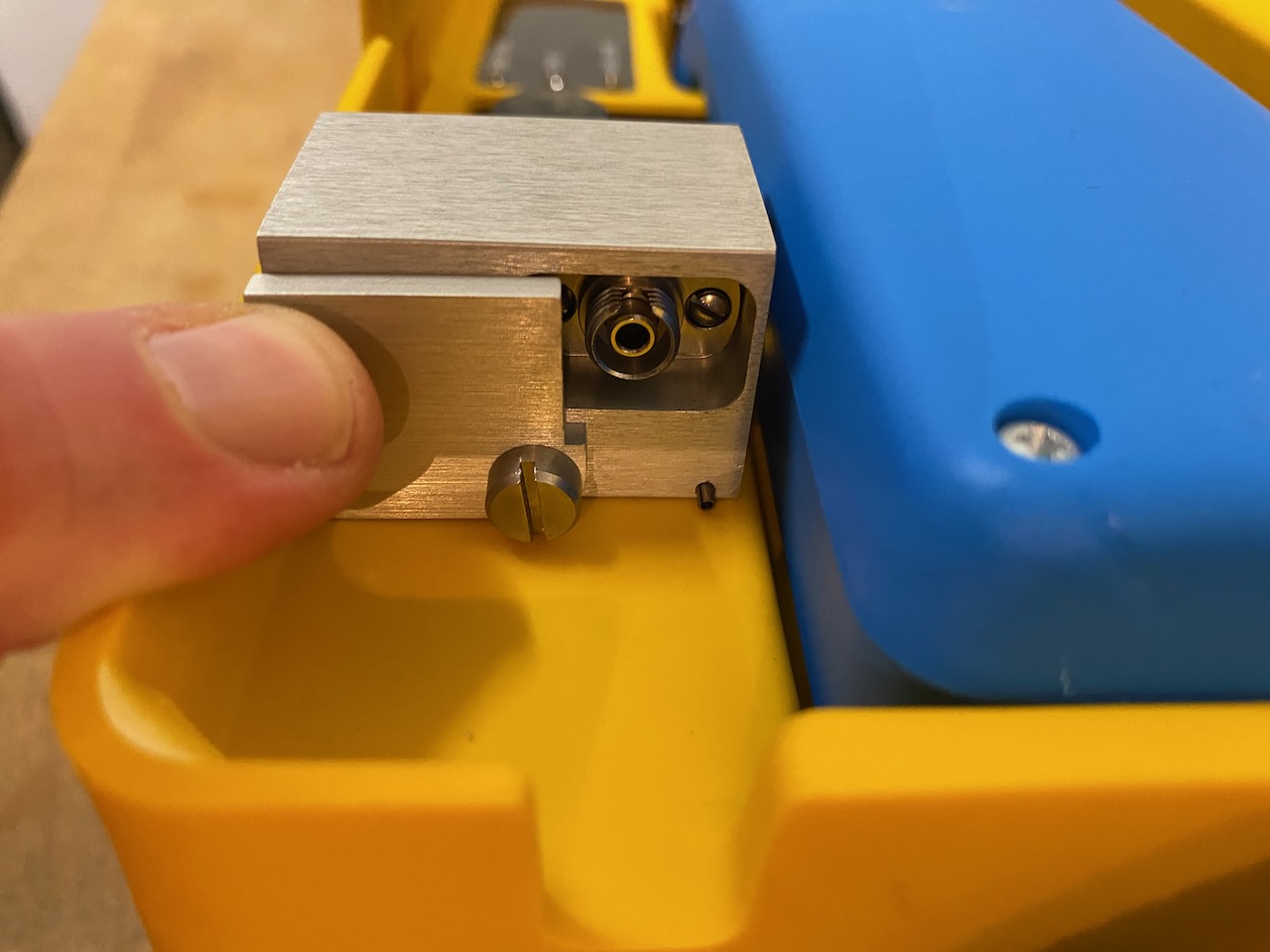
FC type connector.
The connector lid switches on the device when opened.
Handset stored.
There is a call and a volume boost button.
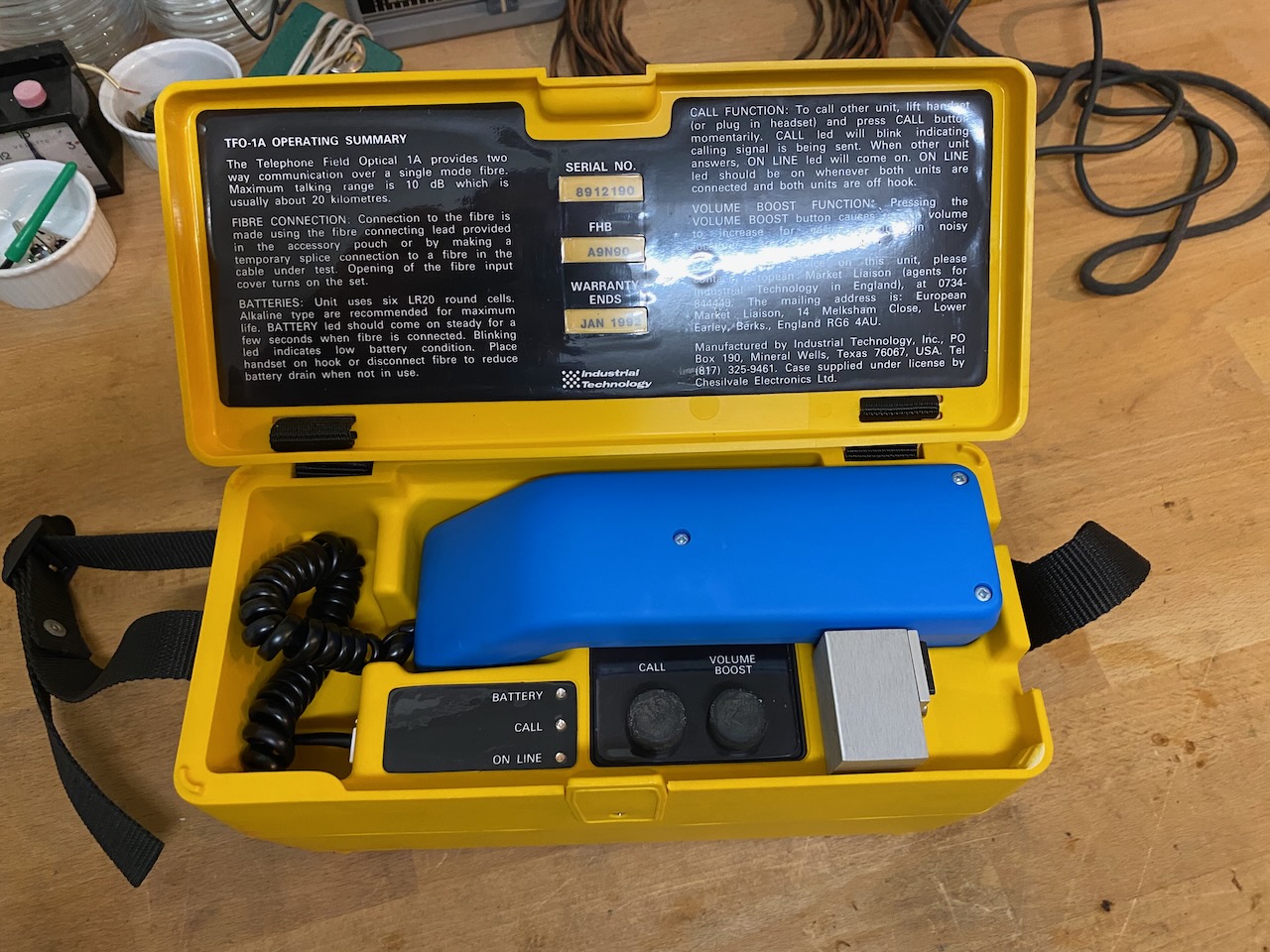
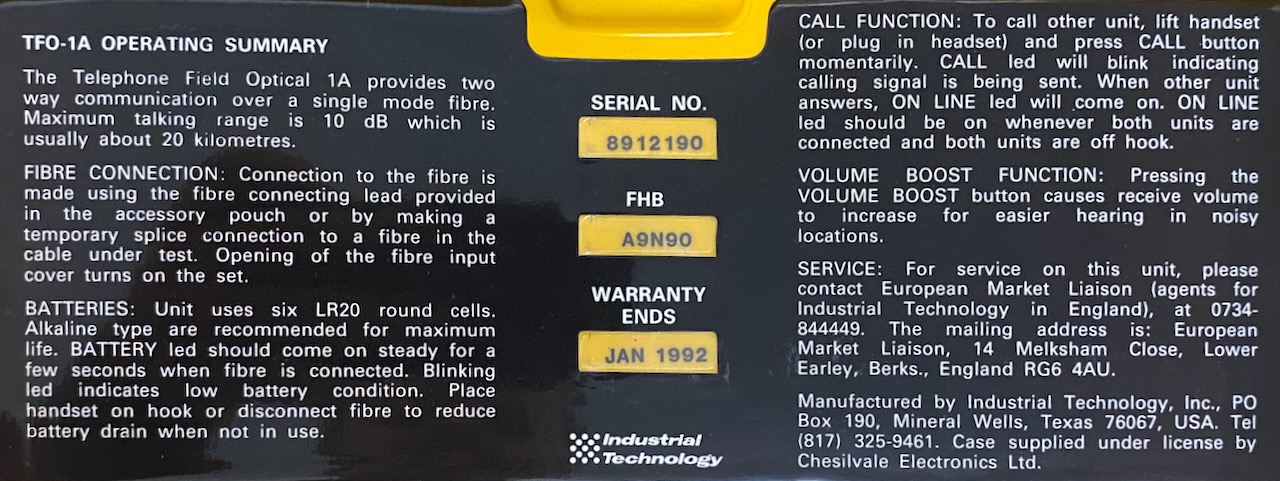
User guide (inside of top lid).
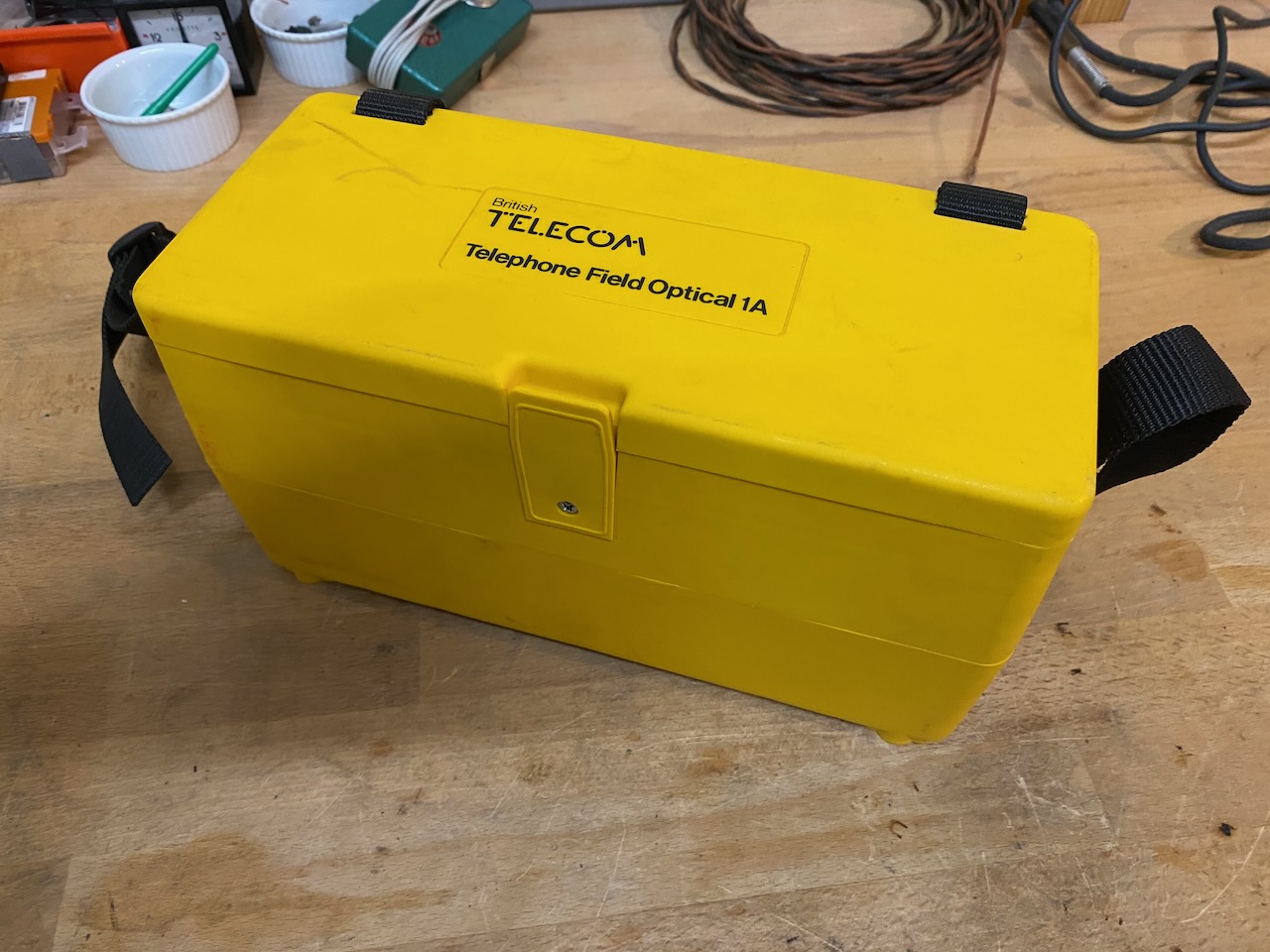
Ready for transport.
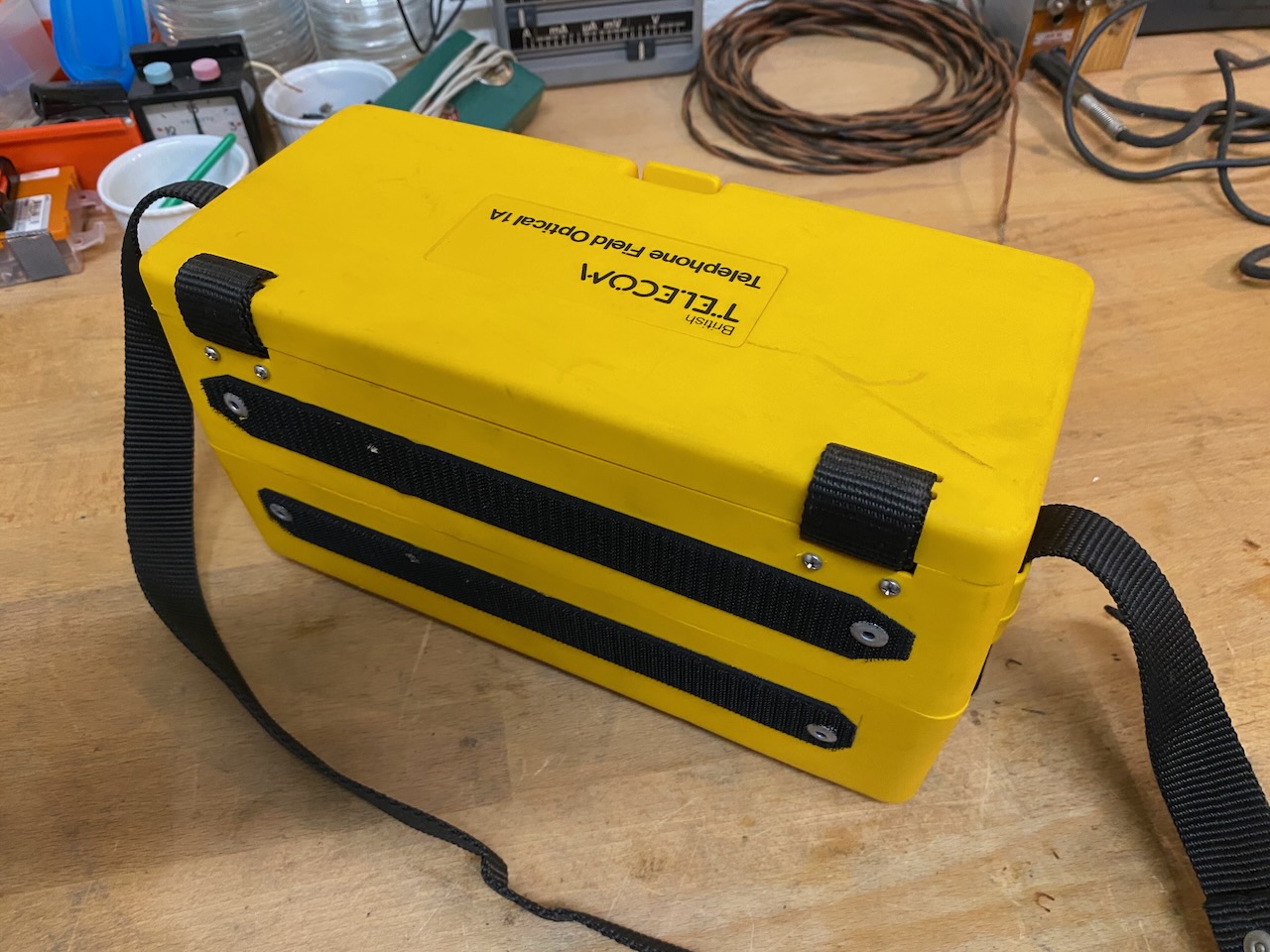
Velcro straps on the back to attach a accessories pouch.
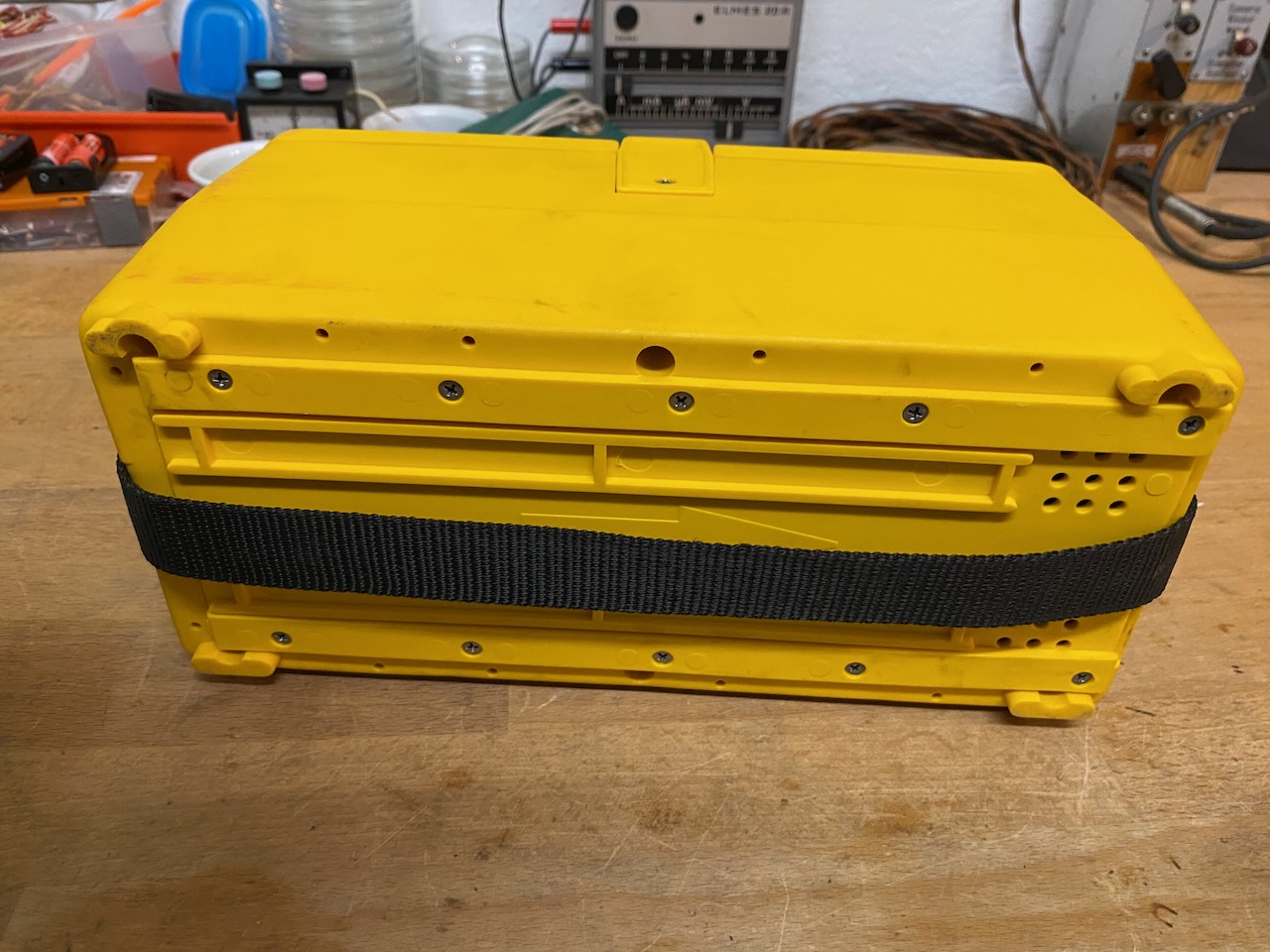
From the bottom with battery lid closed.
Creative Commons Attribution-ShareAlike 4.0 International License